We leave our hotel at 7:30 and pass fertile sections of wheat, corn and alfalfa irrigated by pumping stations with water from Lake Nassar. These lands are especially important now that the wheat Egypt usually gets from Russia and the Ukraine is not, shall we say, so readily available.
We are traveling 4 hours to Abu Simbel to see the temple and spend a night. Along the way we have a movie on the bus about the incredible effort to save the temples from flooding after the building of the Aswan dam.
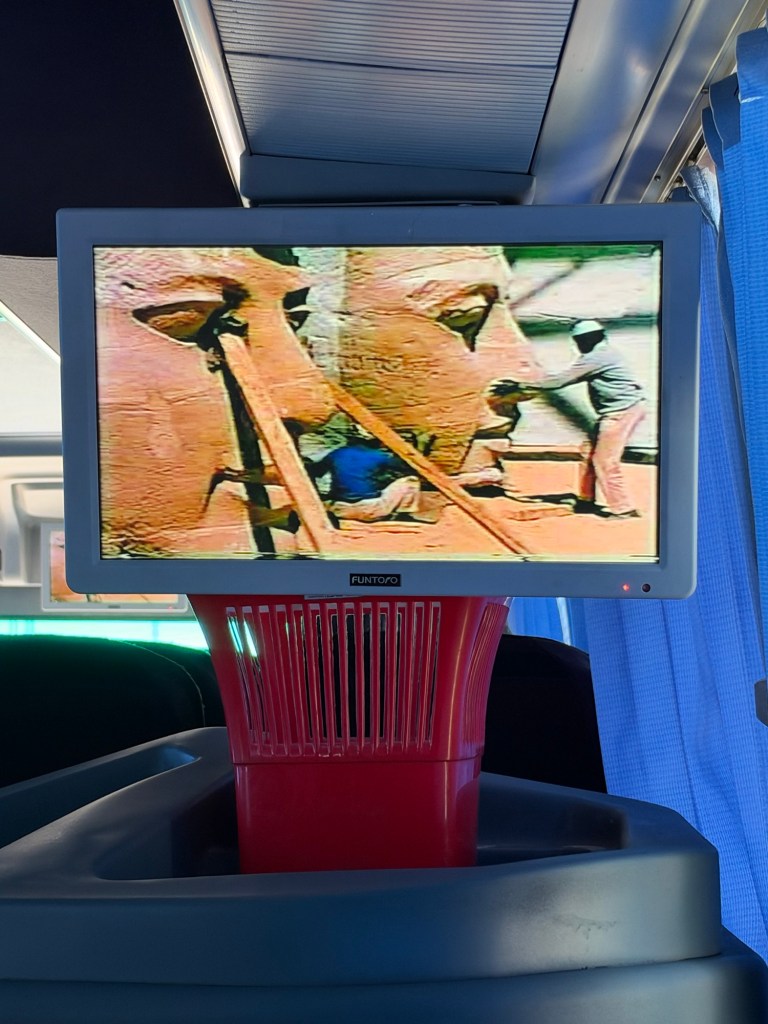
The temples were cut into 1000 blocks and then reassembled on higher ground.
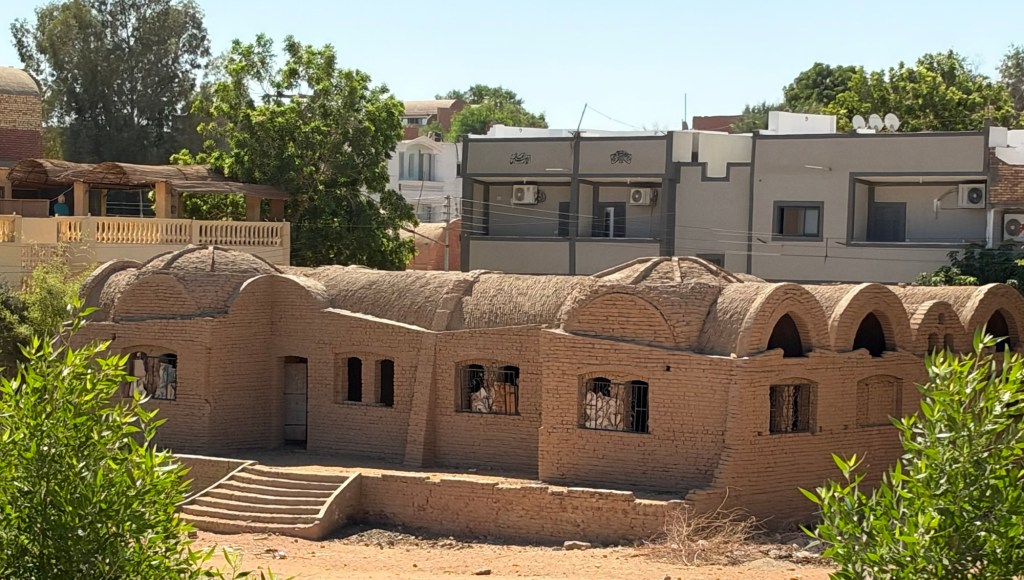
As we approach town we see housing of this unique style of domed roofs. This allows heat to rise.
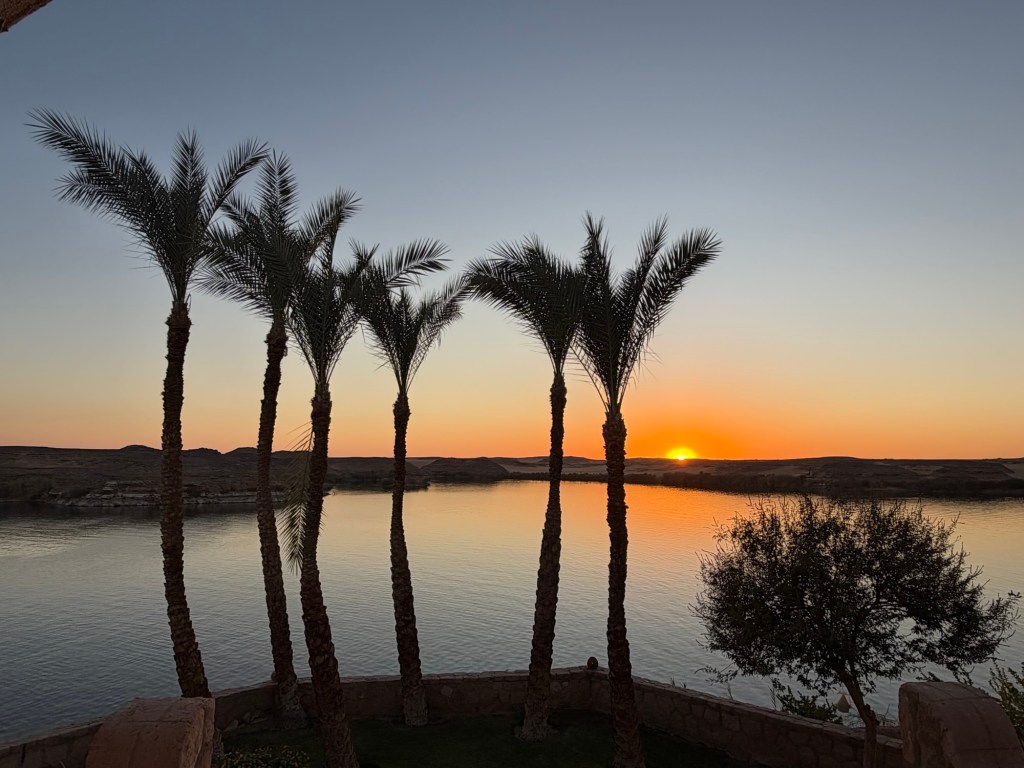
The Seti Abu Simbel Lake Resort is the most charming so far. It feels like you are really someplace different than other places. Although an extensive property each section feels private and quiet.
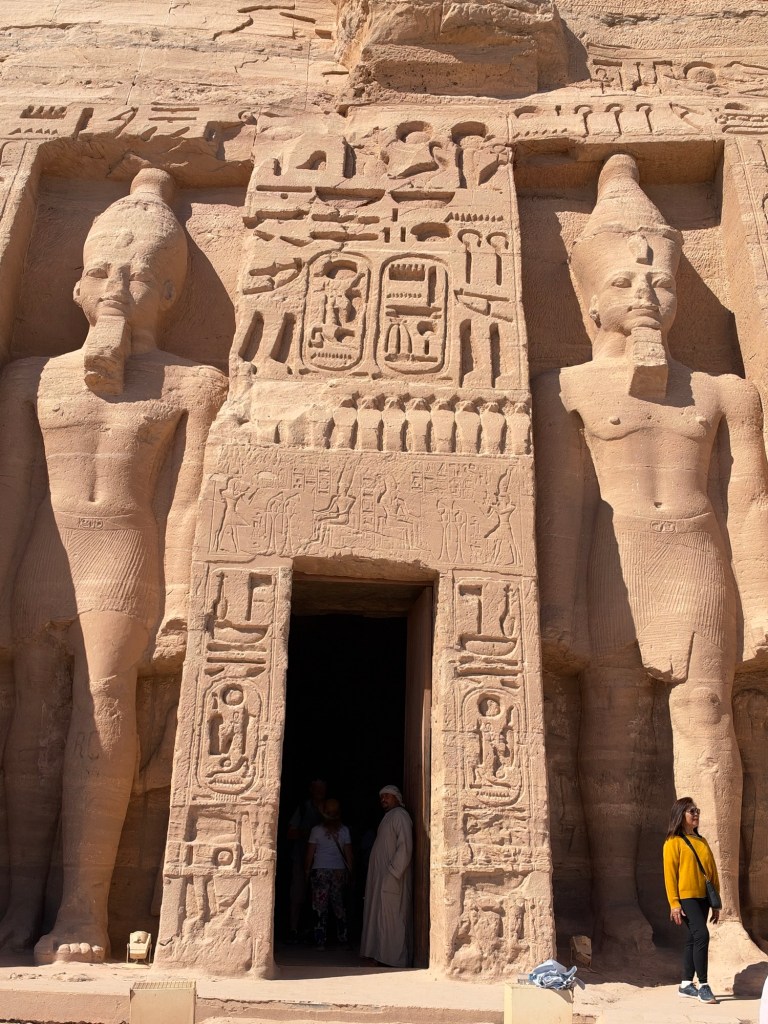
Abu Simbel was built by Ramses II, son of Seti I, and commemorates his improbable and miraculous victory over the Hittites in 1272 BC and his love for his queen, Nefertari. He chose the particular site because it is in the heart of Nubian territory, so its location clearly displays his presence and power over foreign lands.
Ramses II was Pharaoh for 66 years (1279 to 1213 BC), the third Pharaoh of the 19th dynasty. The peace treaty he signed with the Hittites is, perhaps, the first ever recorded.
Again — and we suspect this will be a recurring device — we will not describe this place because pictures are, indeed, worth a thousand words (and it takes David forever to put 1,000 words together … (Hemingway was happy with 800 a day)). So … look on Ramses’s works and delight:
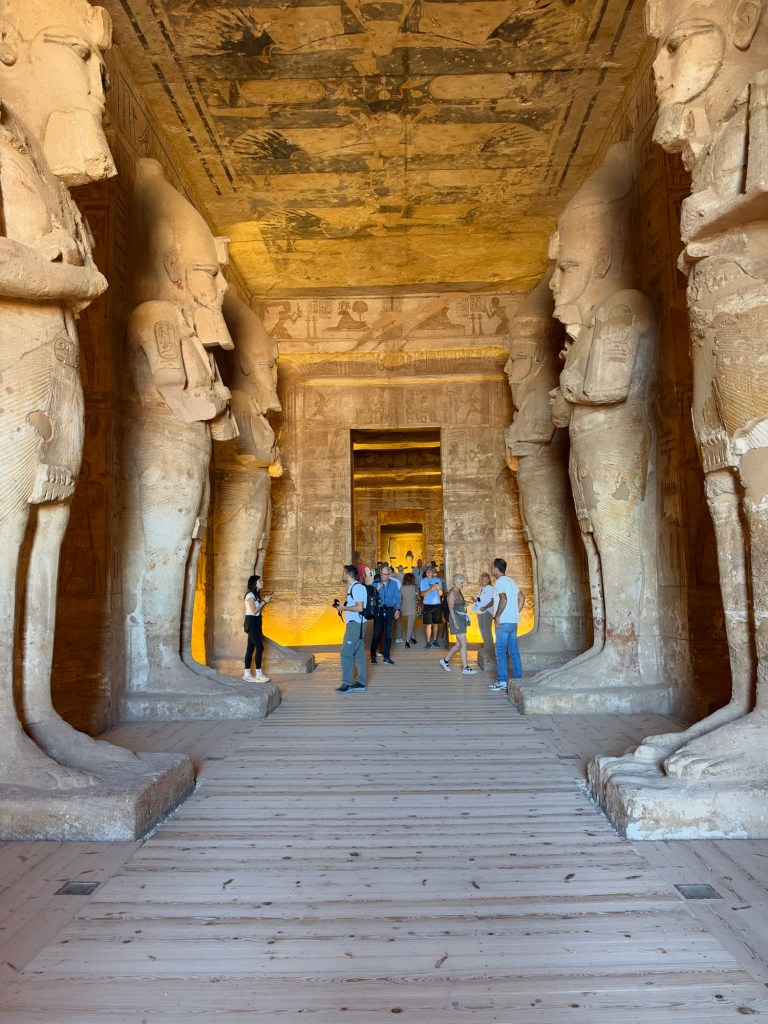
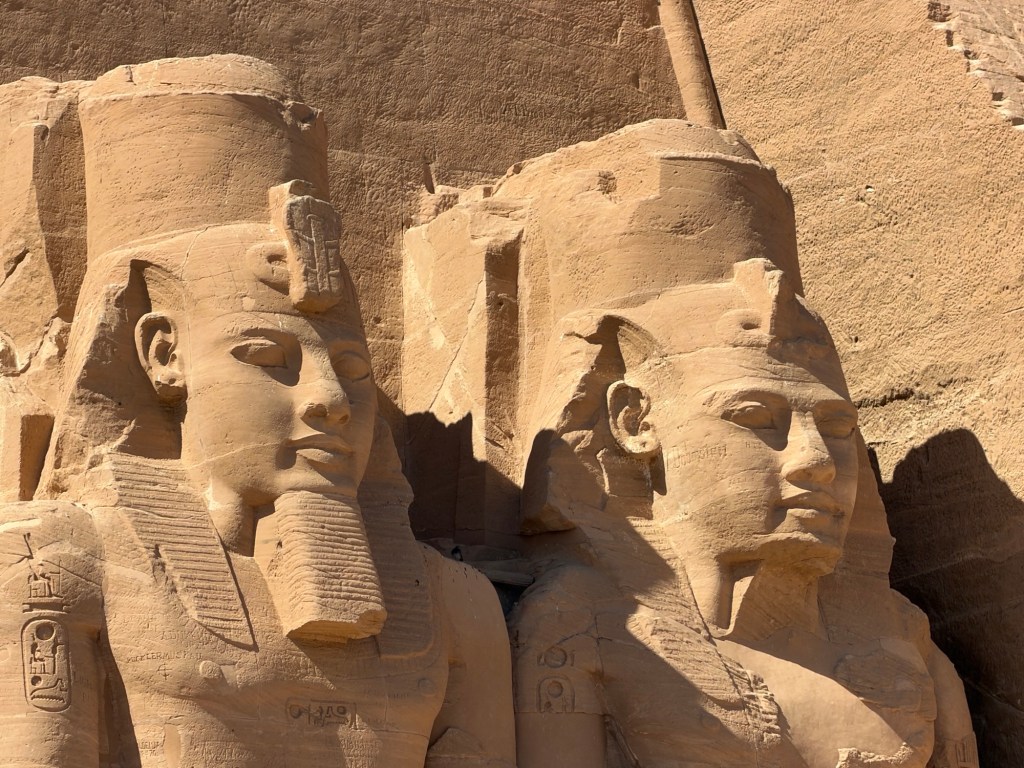
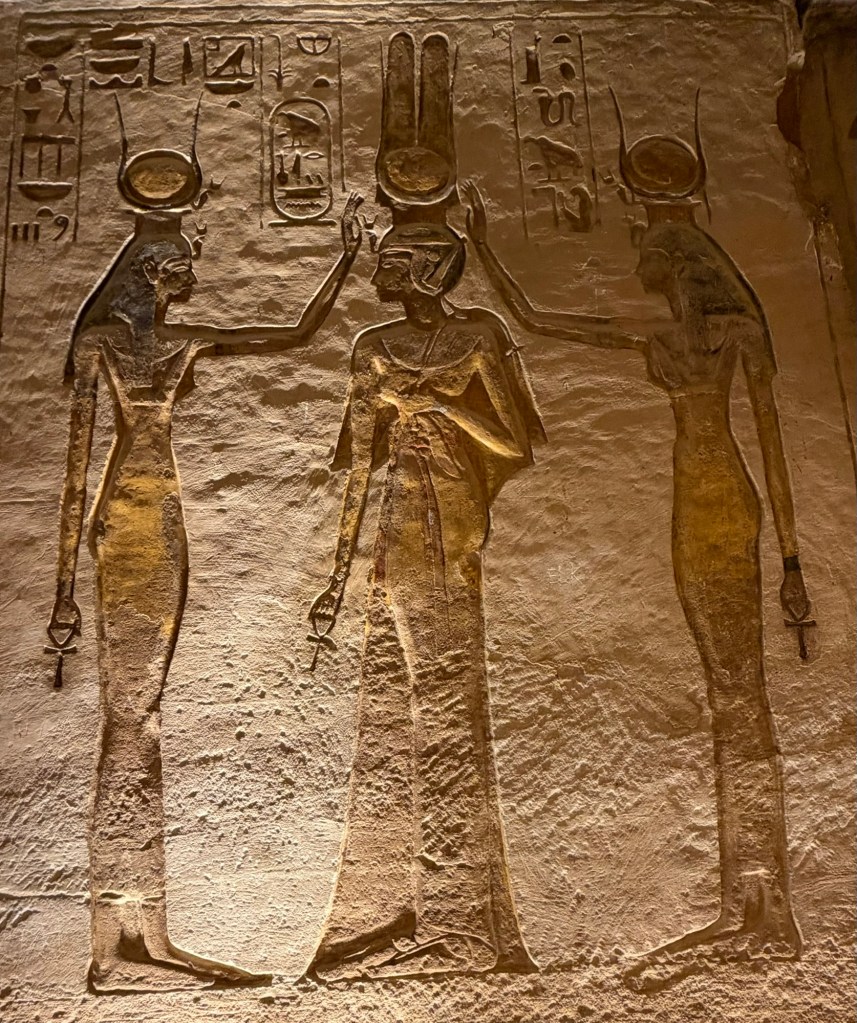
Bahaa divides our whole group into four teams and gives us a 15-question quiz. David, Cynthia, Carolyn, Katherine and Cathy score 13 correct — missing the fact that modern Egyptology began with the inauguration of the British Museum in 1758 — and win. Yaaaayyyyyy!!
We bus back to our hotel for a lazy afternoon before returning to Abu Simbel for a sound and light show after sunset. The voice-over is in French because so many of them have bought tickets, but our “whispers” enable us to get English translations so we get an illuminated story about King Ramses encountering a Hittite spy who gives him false information, based on which Ramses takes one of his five divisions and hopes to surprise the vastly superior numbers of the Hittite army. Ooops!
Ramses’s 5,000 chariots and 23,000 soldiers are ambushed, no match for the Nubians 25,000 soldiers. Ramses prays to Aton, who tells him that he is the mighiest king, that victory will be his if he forges ahead, that he should have no fear. God will secure the victory for him. So, he continues to fight and, miraculously, his other three divisions show up and the Egyptian Pharaoh wins the day … and builds the temple complex at Abu Simbel to commemorate and consolidate his rule, as well as building an almost equally grand temple to bury his beloved wife Nefertari.
As usual, words will not suffice. Just look at the pix.
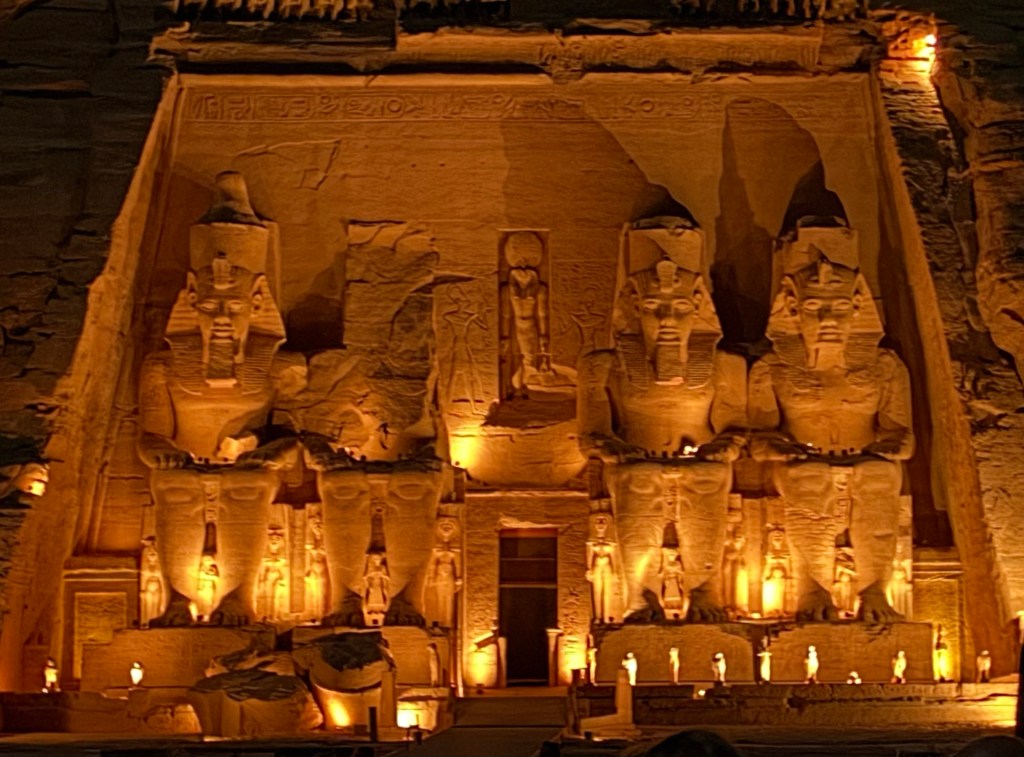
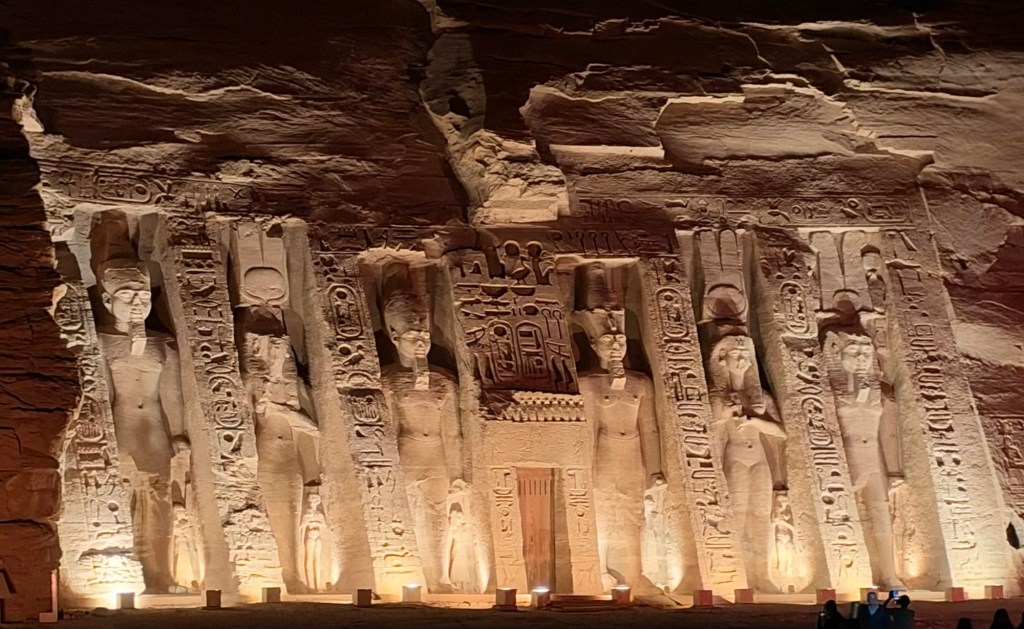
Longish walk back in the dark with flashlights, board the bus, home and to bed.

