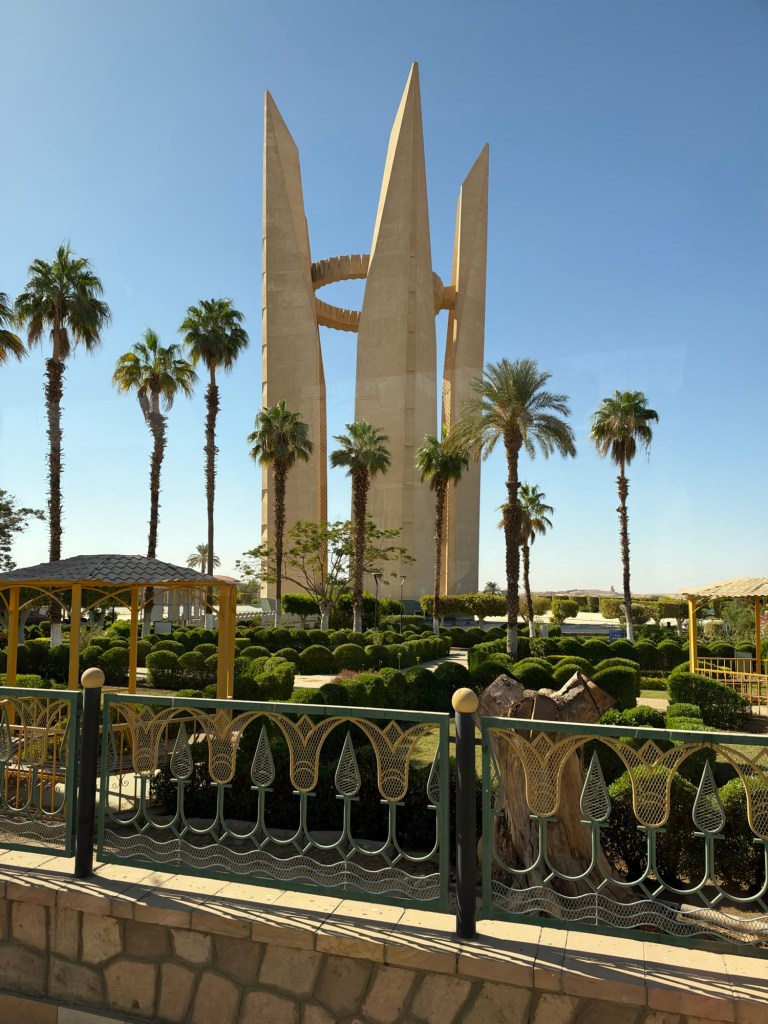
We’re off to the high dam built from 1960 to 1971 when Anwar Sadat opened it with enough Russian engineering assistance that a large monument dedicated to Egyptian-Russian amity was erected here.
The dam is 364 feet high, 12,566 feet long, 3,215 feet wide at the base and 131 feet wide at the top. Unlike Hoover dam — so high and dramatic in its “narrow” gorge, you hardly notice you’re waling on top of it.
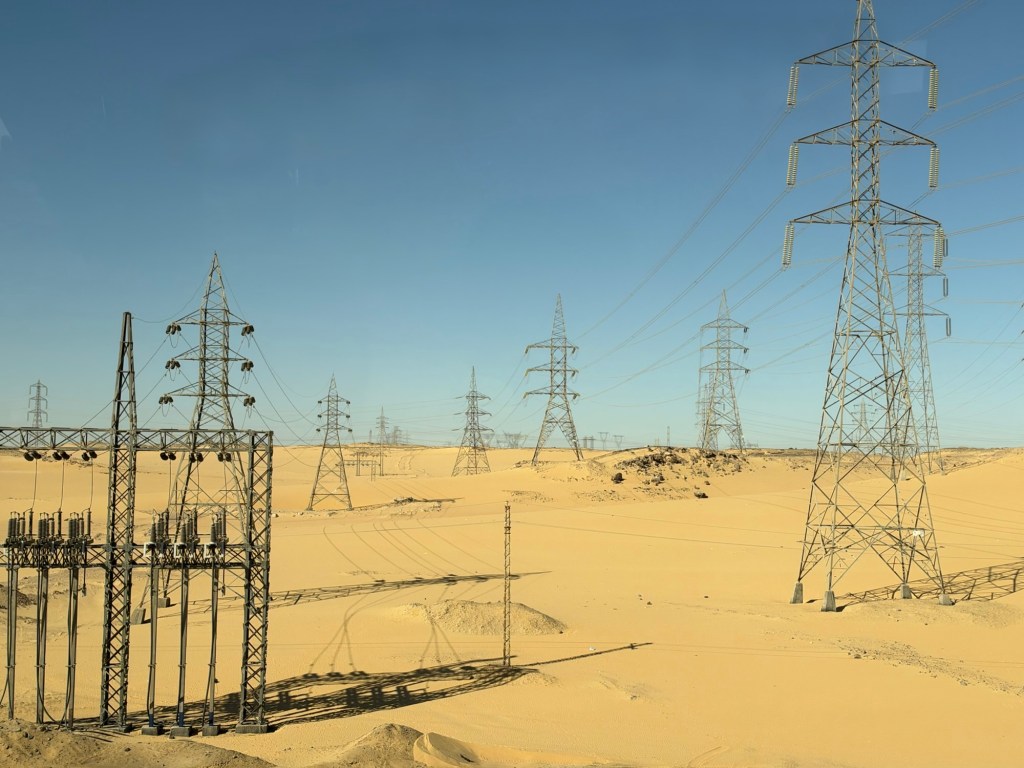
The dam is run by the Ministry of Water Resources and Irrigation. In addition to stopping the Nile’s annual floods, it provides about 15 percent of the country’s power — Egypt also sells power from the dam’s 12 turbines to neighbors — and, of course, a substantial amount of its irrigation. As well as displacing more than 100,000 mostly Bedouin people, covering their homes, businesses, and cemeteries, Lake Nassar covers land 321 miles long and 22 miles wide. It took nine years to fill.
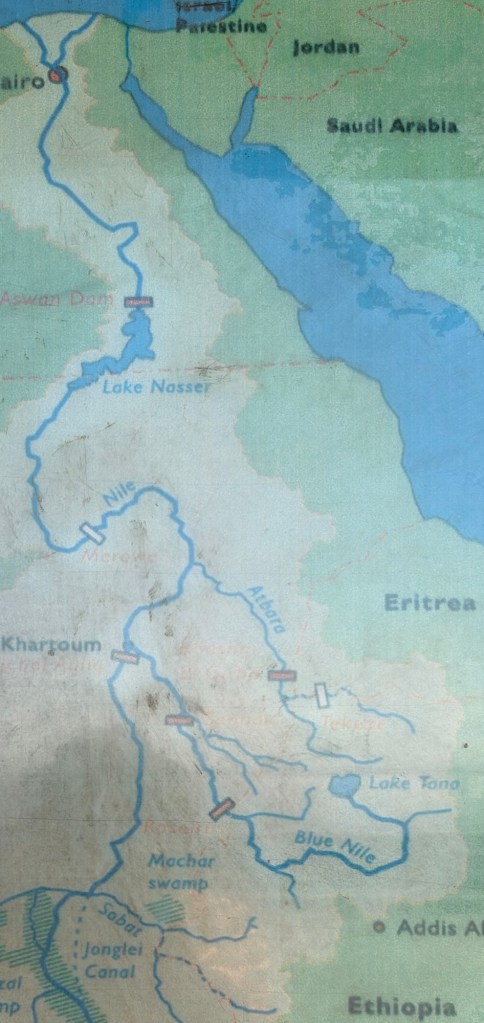
A recent dam in Ethiopia along the Blue Nile has cut the water going to the Aswan dam by about 40%. An issue.
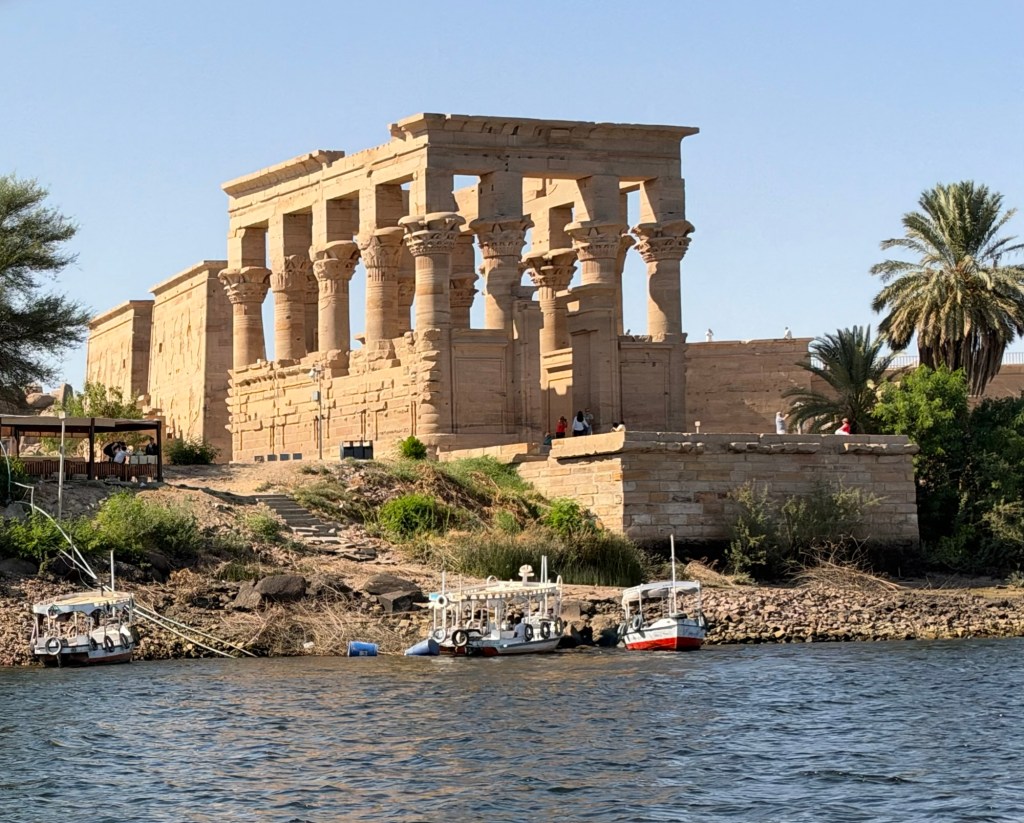
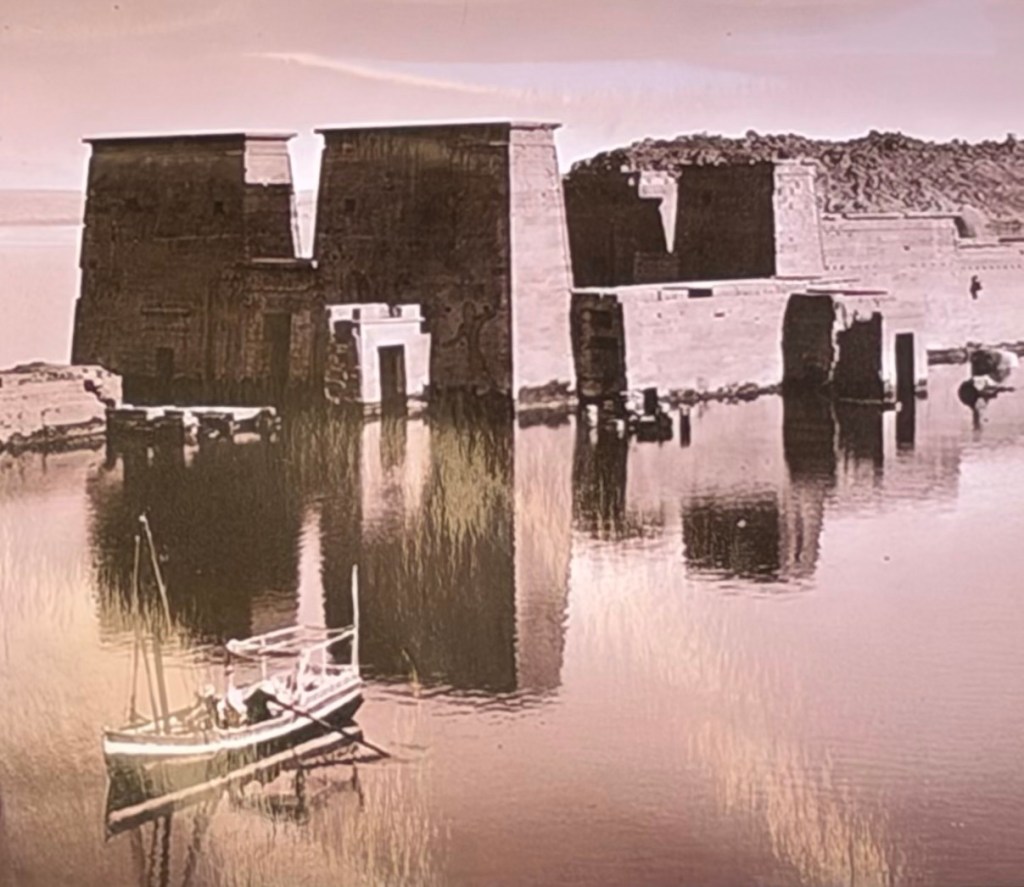
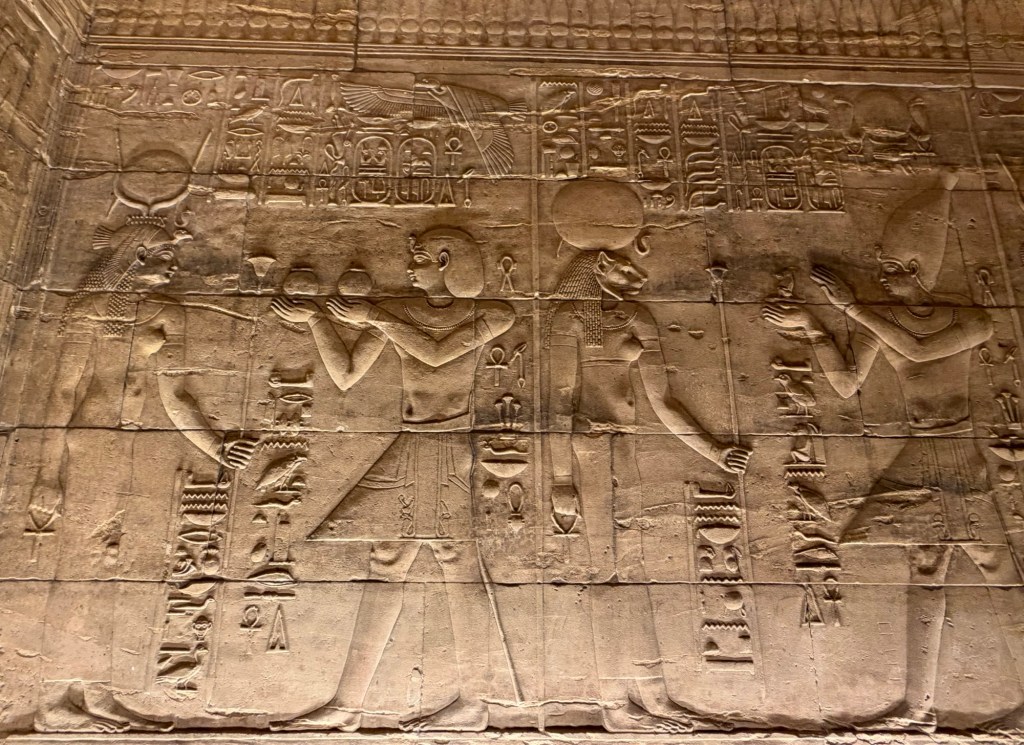
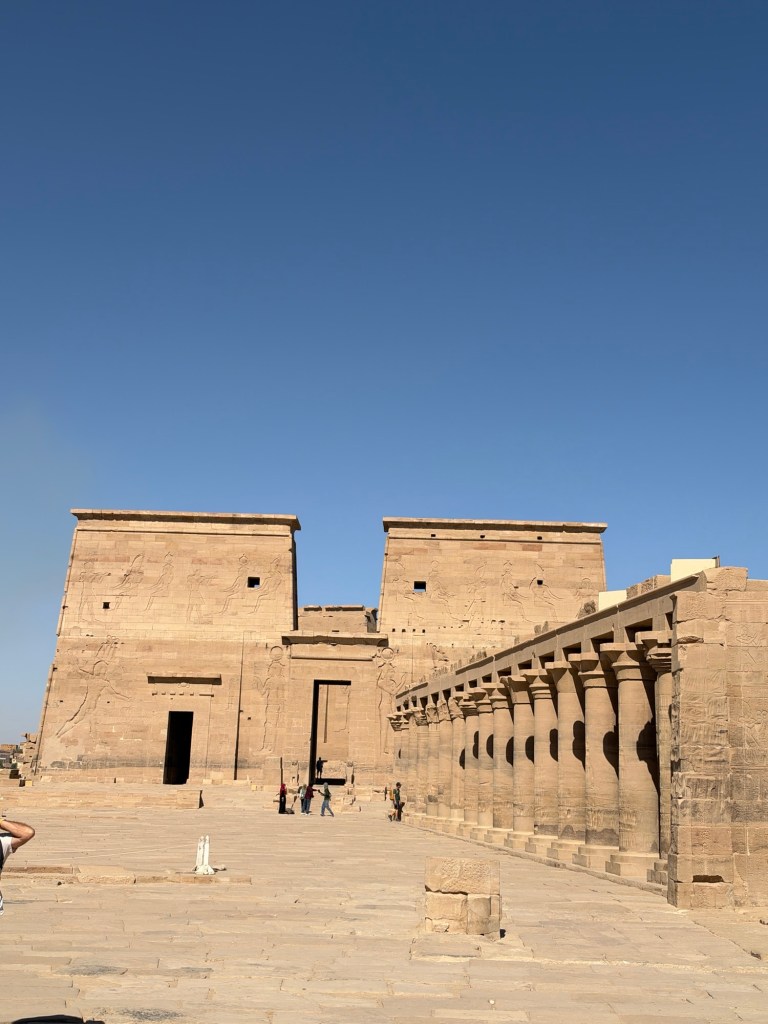
Back on the bus and straight to Lake Nassar to board a boat that takes us to the Temple of Philae, built in the 4th century AD. dedicated to Isis and now, raised from being almost completely submerged in the lake to its current position on a nearby island, site of the last written hieroglyphs. The saga of its resurrection from its watery grave is truly amazing, way too long to recount but requiring thousands of workers, painstaking engineering, and a race against time because the “resurrection” was done as the lake was filling.
On the way back to our hotel, we stop at a jewelry store so some of us can buy gold cartouch necklaces, we decide to take a cab to a cotton store. Bahaa hails us a cab whose young Nubian driver is soooo proud of his 1975 Peugeot stationwagon that he can’t contain his enthusiasm until he runs out of gas and pulls to the side of the road. He calls his brother to bring gas.
His brother’s in the hospital. So, no gas.
He calls other folk.
A white van pulls up ahead of us. People get out. We are ushered in with profuse apologies.
The cotton store was begun by the current owner’s grandfather in 1930 and Nora loves it. There is nothing for David and he returns to the hotel to write.
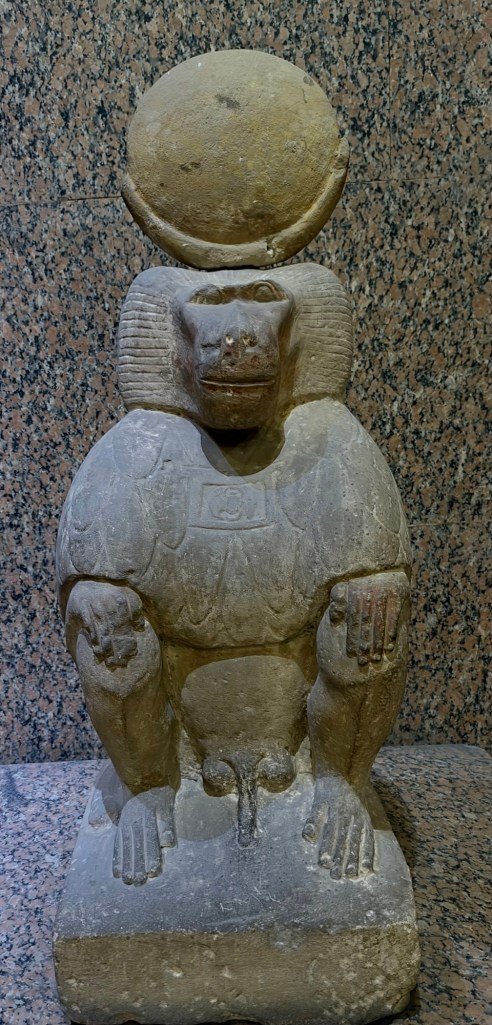
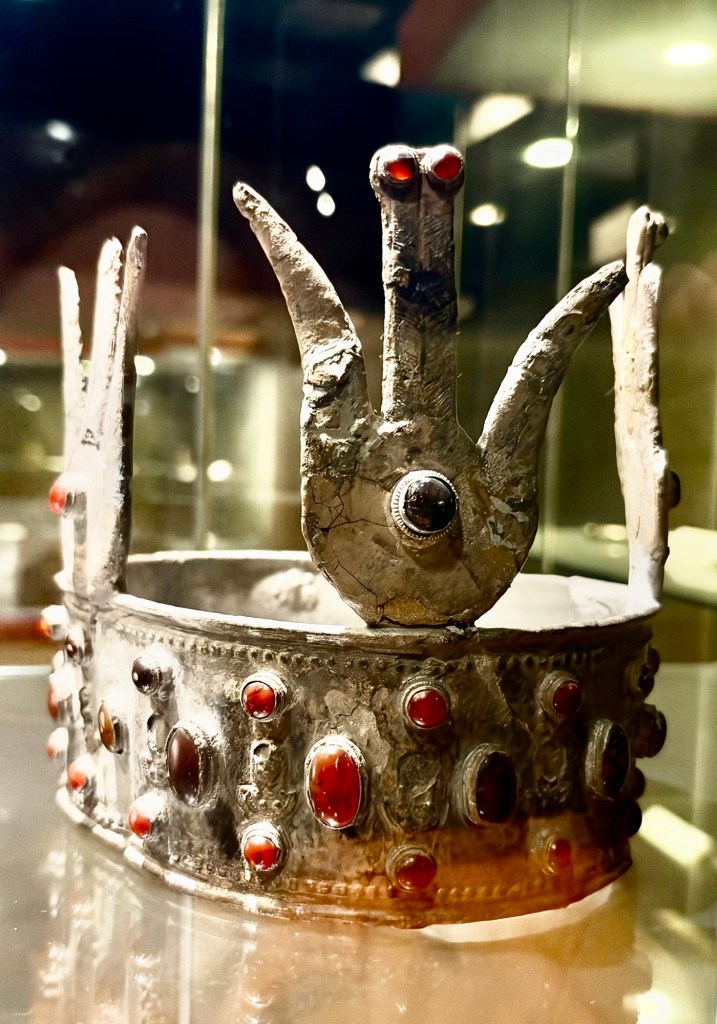
Cynthia and Darrel go to the Nubian Museum near the huge Coptic cathedral and near the Cotton shop.
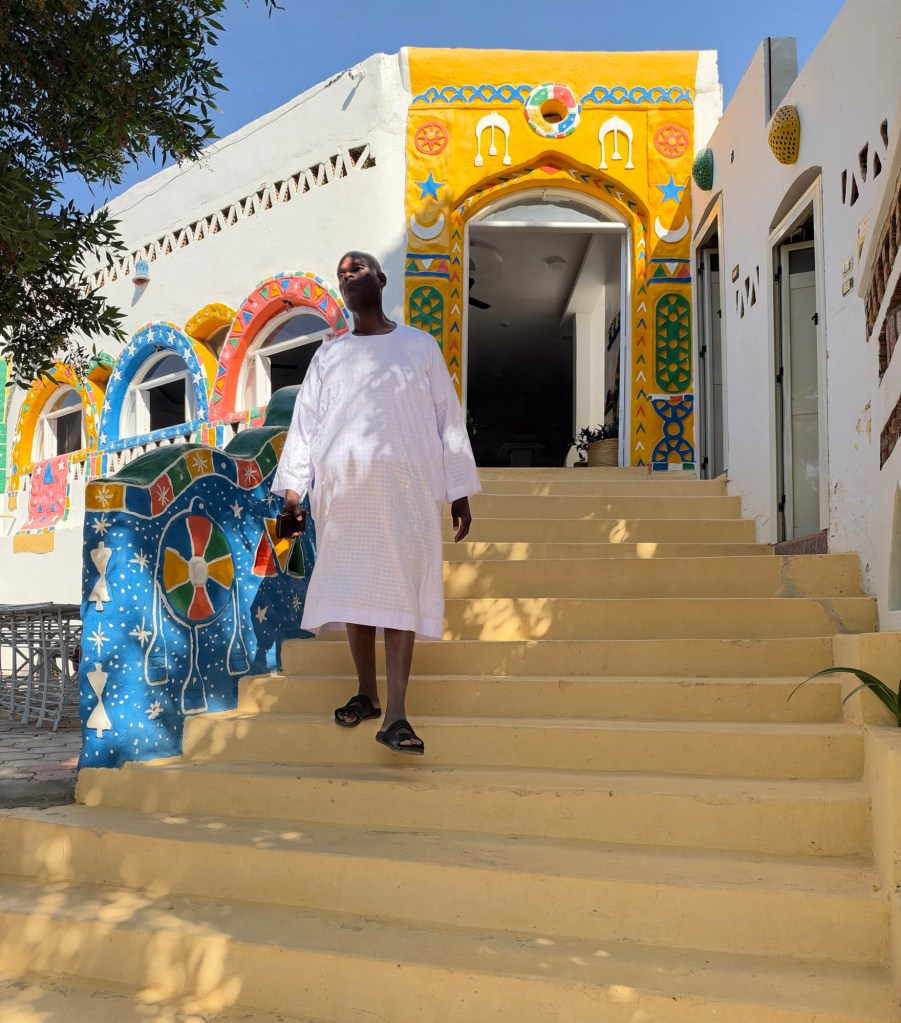
By six o’clock we’re dressed and ready to be taken to a family of four for a “home dinner.” The woman of the house, Hend, meets us at the door with her two daughters, Amira (4) and Amina (2) and a niece (9-ish). Sadly, her husband Haitham is working as a cashier at Abu Simbal, a four-hour ride from Aswan, where we will go tomorrow.
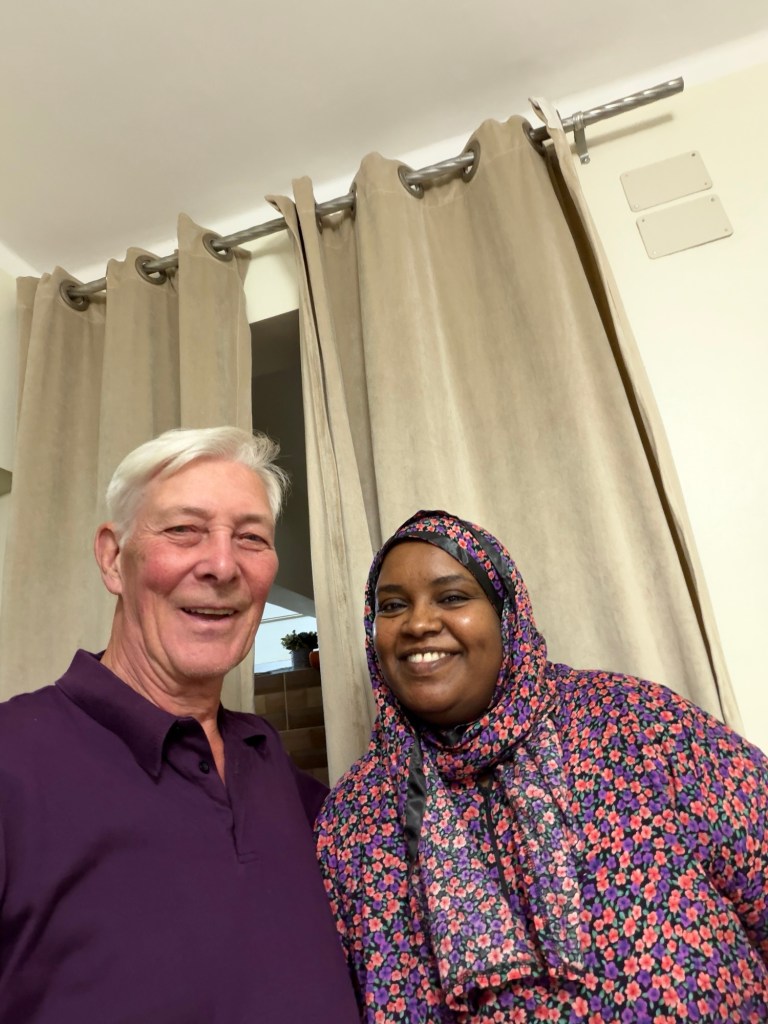
Hend worked for several years with a UNICEF program designed to stop genital mutilation of girls. (There are 4 types.) She was cut at age 5 and said it will not happen to her girls.
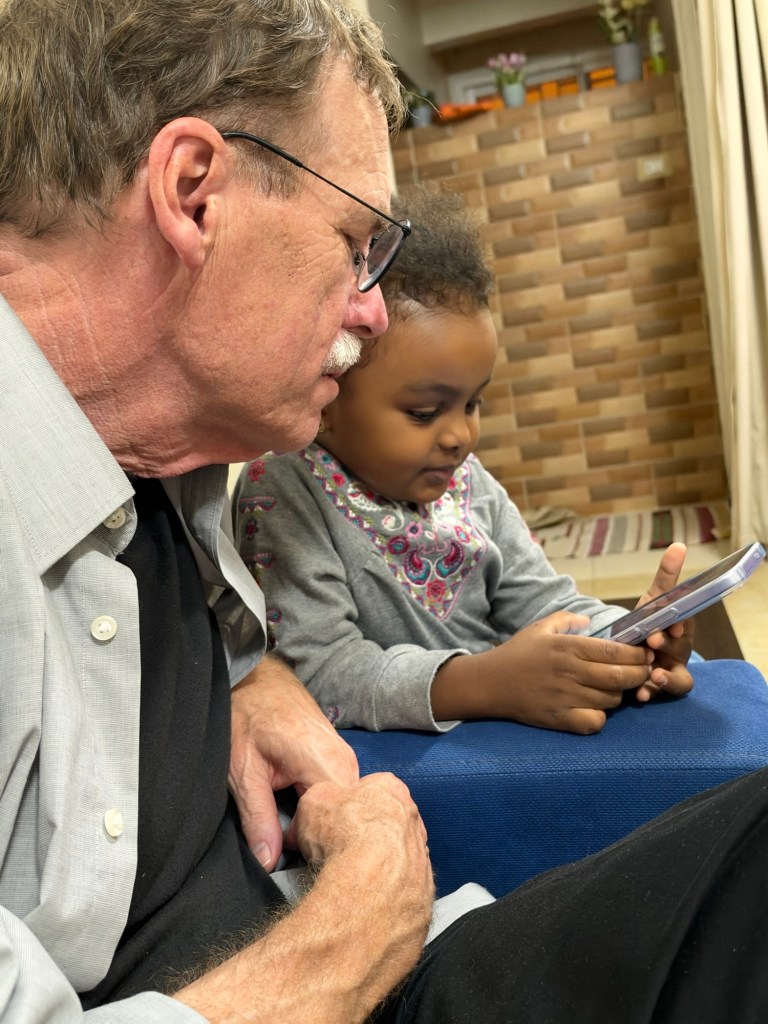
The visit is chaotic; the kids whirling dervishes in the living room where we eat on our laps and juggle the kids and their toys. Her mother, who lives we next door, sits with us for a while.
We’re retrieved after about two hours and return to the hotel.
Fall gratefully into bed.

