Bespoke omelet, poached eggs, tea and lovely pastries and cappuccino for brekky before meeting in the lobby at 9:00 for the official initial briefing. Our group is now joined by Tony and his wife Maryanne, who began touring with OAT and others more than 30 years ago, so we are now seven with one more arriving for tonight’s dinner.
We’re given our entire Jordan itinerary, told to drink only bottled water, advised that any salad we’re served will be ok, and admonished NEVER to pay the original price of anything, anywhere. Any questions? No.
“Yalla!” Let’s go.
We board a small bus and drive 30 minutes east to the top of a hill on the west side of the city to see a hilltop called “The Citadel.”
This pretty large place looms over the center of the “old city”. It has a vast variety of ruins and barely reconstructed buildings, burial caves, temples, mosques, and other structures because, over the course of two millennia, it was built and replaced by the Assyrians, Babylonians, Greeks, Romans, Byzantines and Umayyad empires.
The Archeological Museum is there with many artifacts from different eras. The standing coffins were something new.
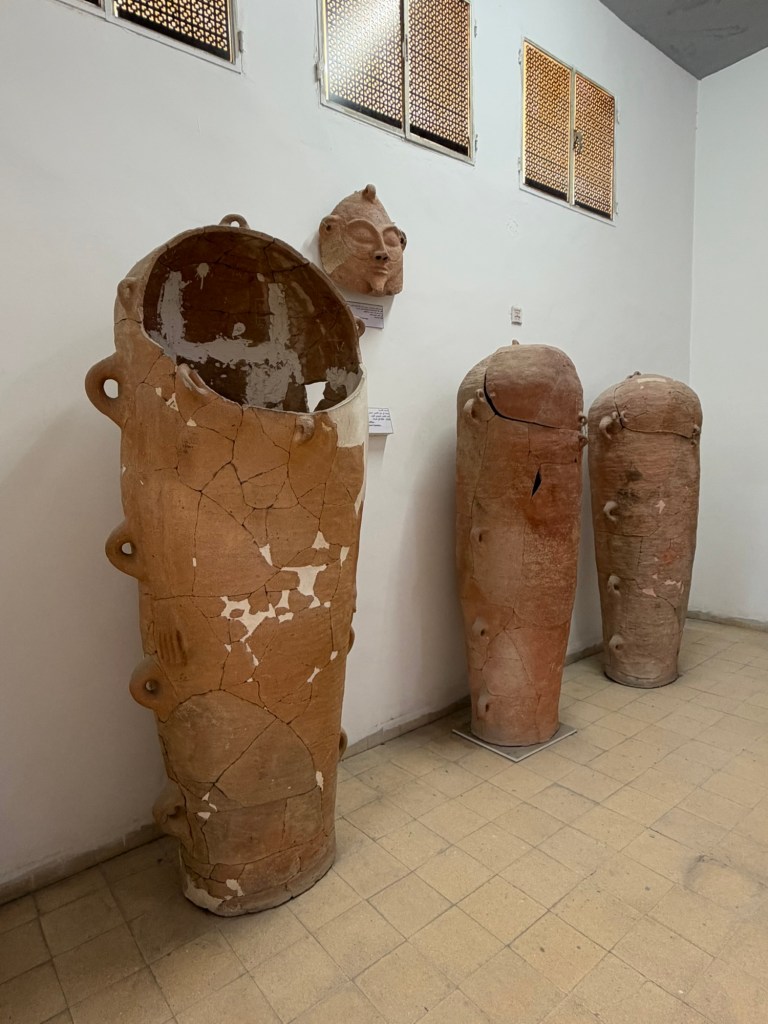
Lotta strum un drang.
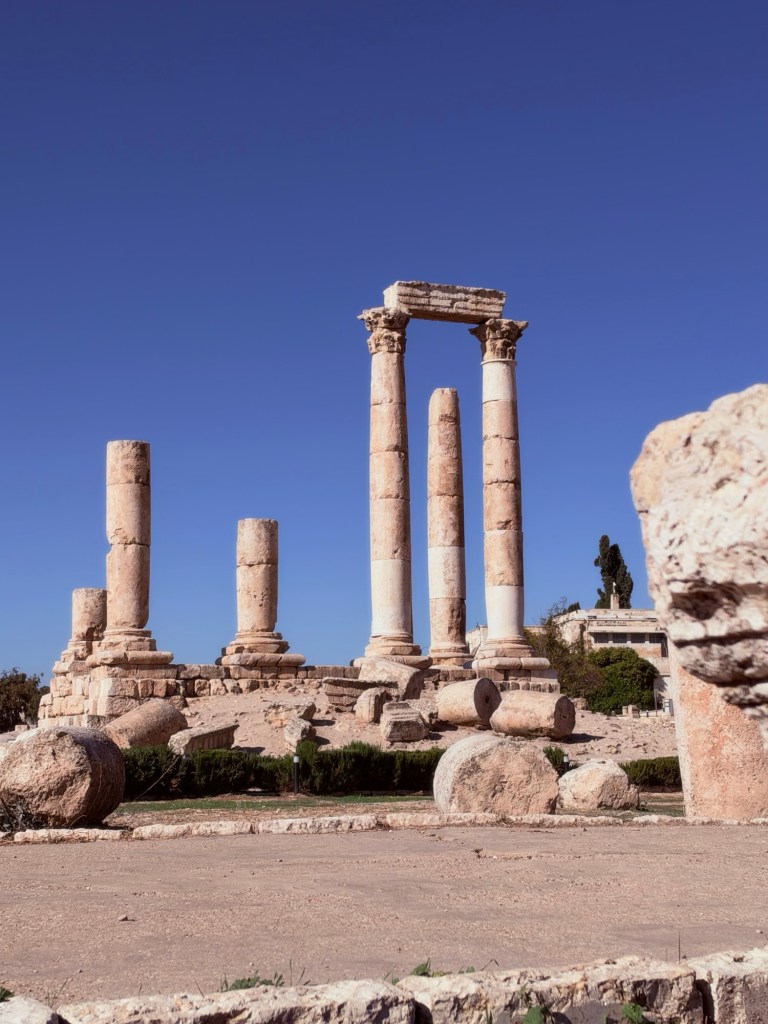
First stop: the Temple of Hercules — a moniker apparently affixed by knowledgeable archeologists because only he could have been big and strong enough to have torn down the pillars of the main Greek temple. They know this because they have found two limestone fragments — a hand with four remaining fingers and an elbow — that must have come from a mathematically extrapolated statue of 39 feet high. Soooo … duh … who but Hercules?
Long live myth … and we actually don’t mean that ironically.
More impressive, actually, are the views of Amman, which was originally, like Rome, built on seven hills, but now sprawls over 21 hills and valleys on ALL sides of this hill, which was the seventh to be “originally” established.
We check out some intricate water work cisterns buried in the ground and connected in a way that removes sediment, and walk around an almost totally ruined religious structure that must have been — if its apse faces east, christian church, if its niche faces toward Mecca, a mosque, and if its bimah faces Jerusalem its a synagogue. This one, somewhat surprisingly, is Christian.
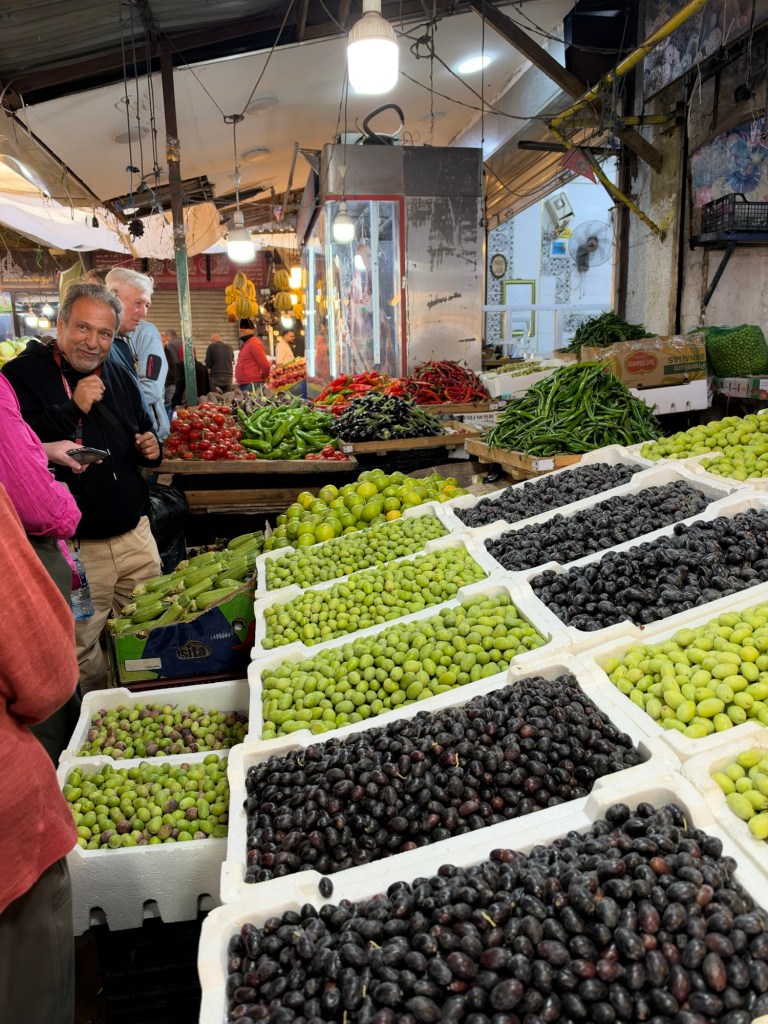
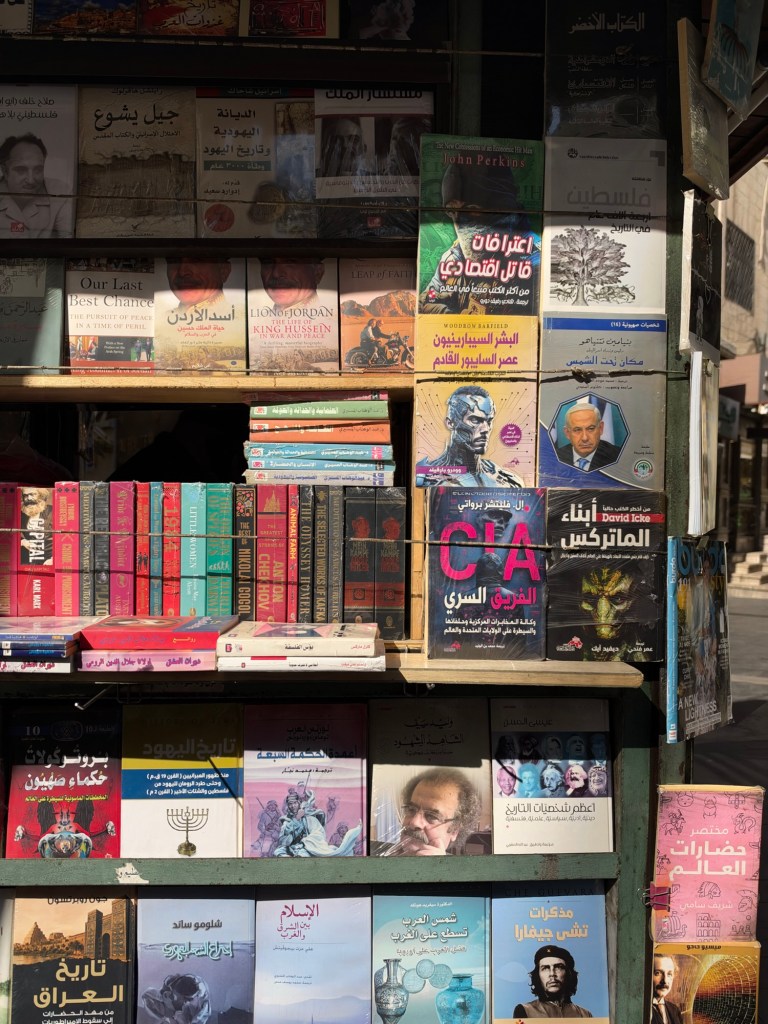
We leave The Citadel and get deposited downtown in central city to walk many of the Jubal Amman streets Cynthia and I walked yesterday, and to have lunch in a very down-home, no tourists place with very good food and a lot of people. Sweet pastry confections and ice cream made with guar gum — so a sticky texture — at a food alley for dessert. Then, we walk on downtown old town streets to the Roman amphitheater.
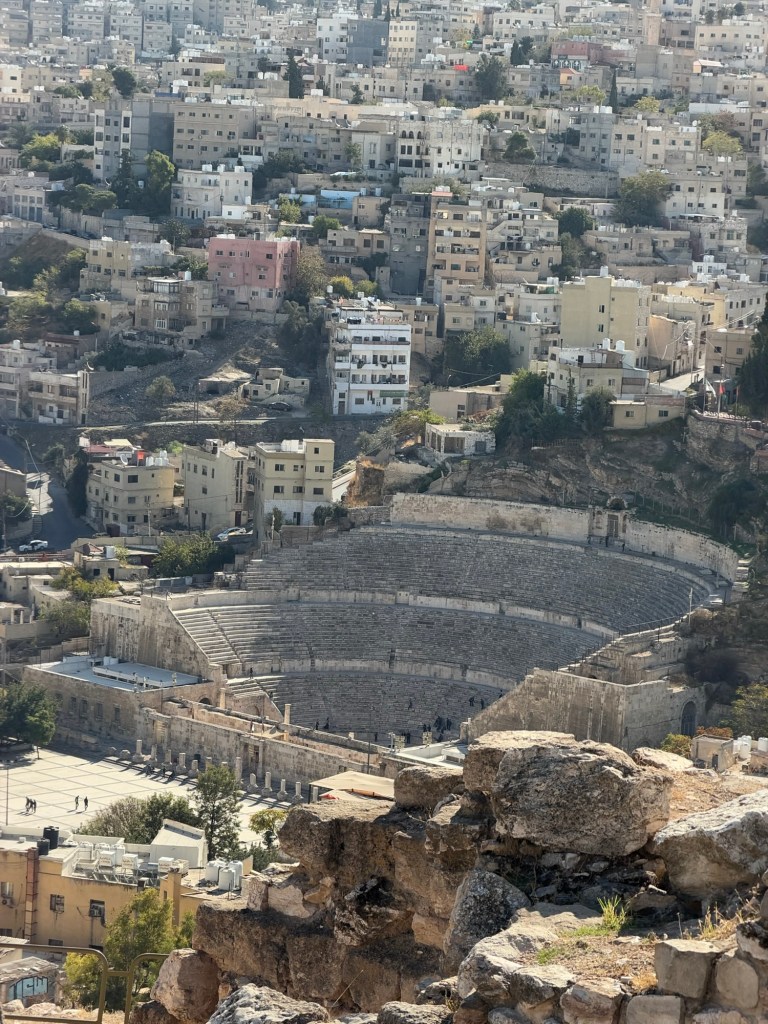
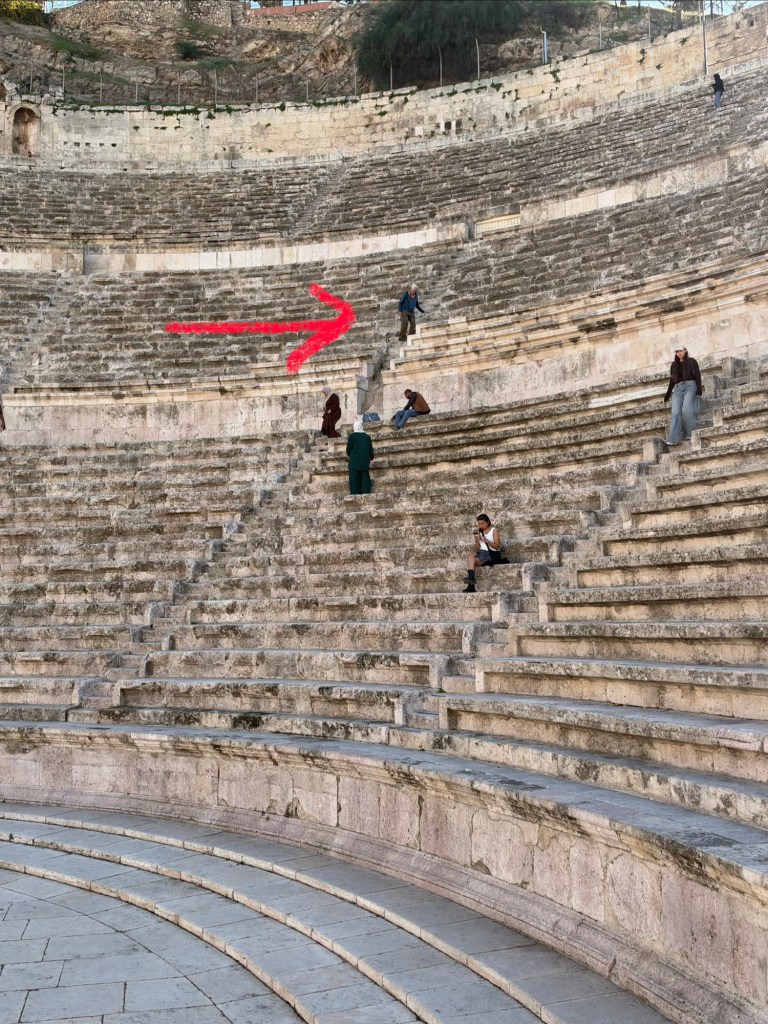
Tall, wide, imposing. Lots of stone. The entire area between the stage and first row of seats can be flooded with water so the audience could be treated to realistic naval-battle re-enactments. Stand in the center of the space and hear your spoken words echo resonantly off the stone seats piled 62-plus rows high.
We get back in the large van and stop at a liquor store — atz right, a liquor store in this 98 percent Muslim country — so a few of our group can load up. Then wend back to our hotel on congested streets.
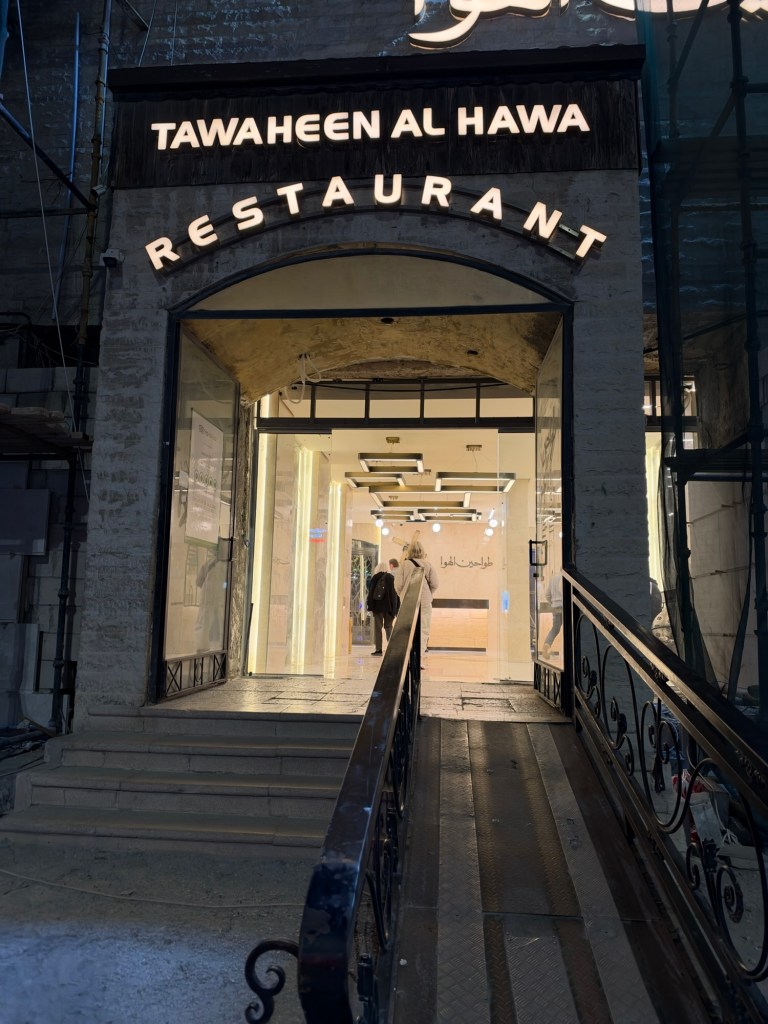
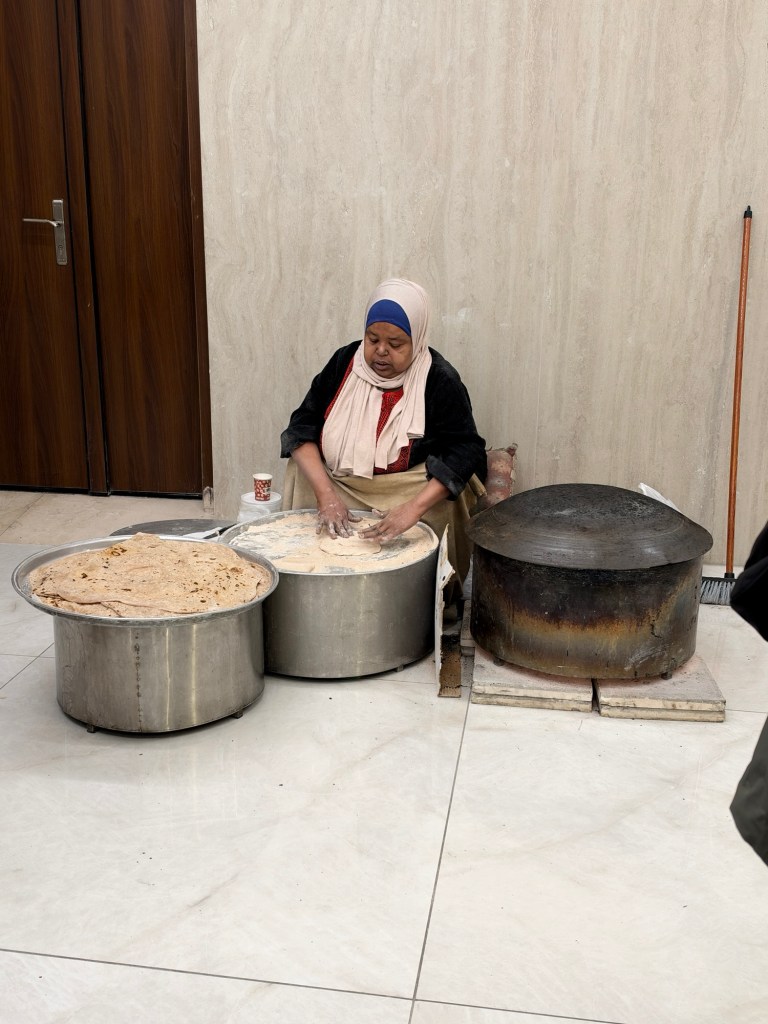
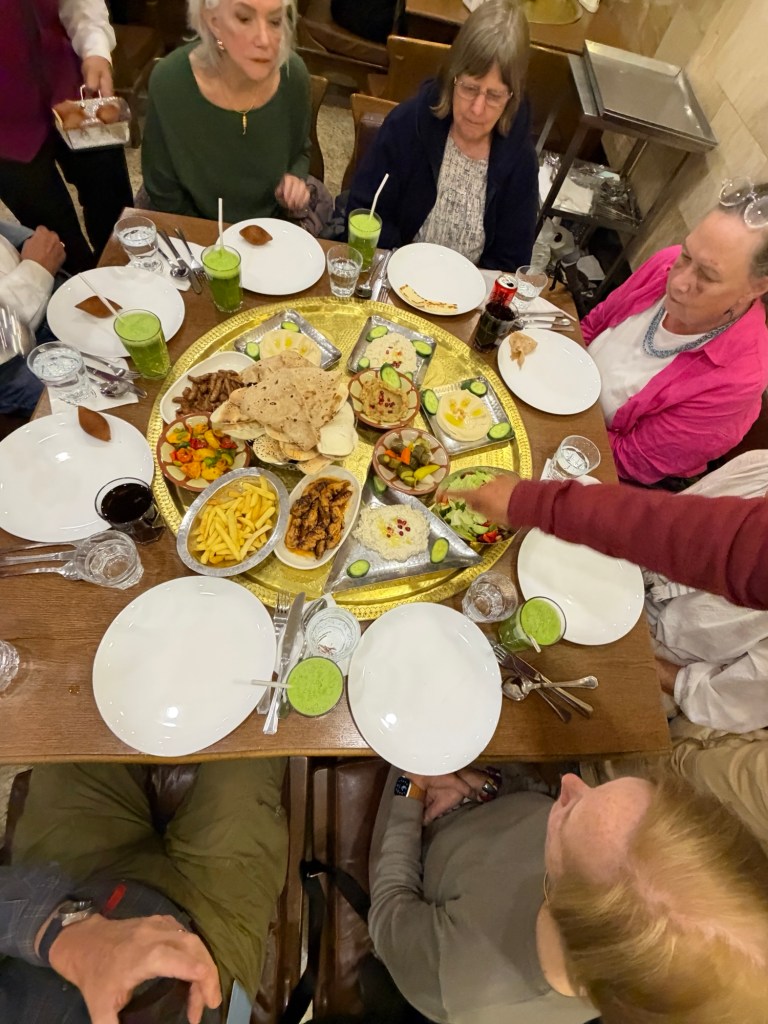
Dinner is at the Tawaheen Al Hawa restaurant, which is huge with many nooks and crannies filled with very low tables and plush chairs three inches off the floor. We are brought an overwhelming variety of appetizers — meats, breads, vegetables, sauces, humuses, etc. — all placed on a large copper serving platform set in the center of the square table, and then brought packed assortment of grilled meats and veg. For the main course, and then brought green oranges that are peeled into pineapple-shaped designs and are surprisingly sweet.
We return to the hotel rather swiftly in sparse traffic and …
Lights out.

