Great bed, all the hot water you want in a shower, HUGE breakfast buffet with bespoke omelets and we order an Uber to take us to the Jordan Museum.
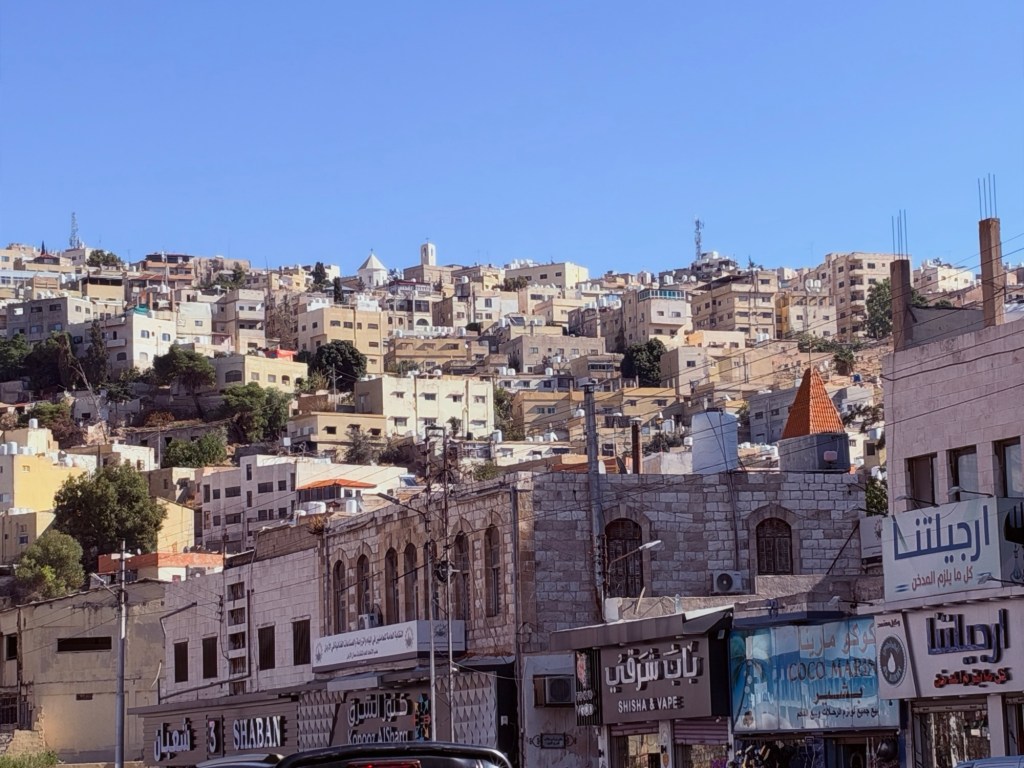
Amman is a vast city built on the hillsides and crests above at least several narrow valleys — permanent, not like rainy season wadis. In places, it looks as jumbled and crowded and unplanned as Mexico City’s congested suburbs. The Uber ride in a Chinese, all-electric five-seater is elegant and smooth and lasts 20 minutes due, mostly, to distance. Including tip: Five bucks. How can drivers who depend on gasoline — about $5-plus per regular gallon (diesel is $36 per) — make it here?
Donno.
We enter the museum through a gate and cross a nearly empty parking lot with a few small, yellow school buses and enter a rather nice courtyard with several trees. Knots of tween girls in school uniforms run to us. “Hello.” “What you speak?” “Where you from?” Giggle and shimmy.
The museum is neither dauntingly large nor very inhabited. It’s a fascinating stroll through Jordan’s history, from Paleolithic times to the present in spacious rooms with pretty good English signage.
A spacious room at the beginning of the “walk through history” is devoted to Jordan’s resources and the ways the country manages them, especially important because Jordan has almost no water and no oil.
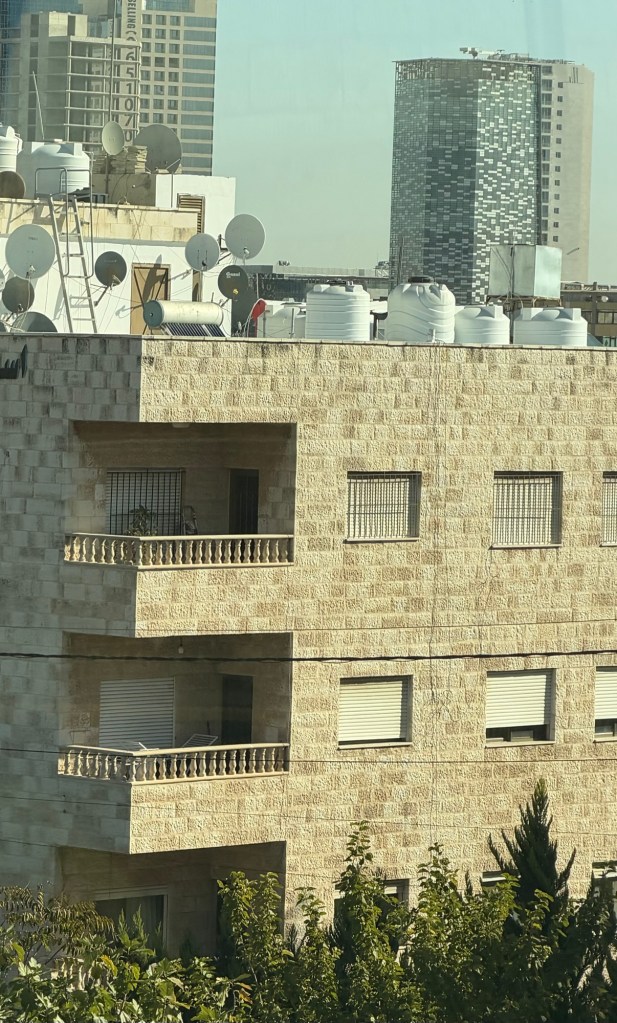
Families get to fill water reservoirs typically on their homes’ flat roofs once a week. That’s correct. ONCE A WEEK. The government opens the flow of water to different neighborhoods on different days. Typical plastic rooftop tank: 2,000 liters (61% of population); typical five-minute shower: 40 liters. Typical family: 4-6 people.
The first part of the permit exhibit that we see is the Dead Sea scrolls. From 3rd century BC, they contain biblical writings. Most of the text is written in old Hebrew but also Aramaic, Greek and Nabataean. They were discovered in the West Bank when it was part of the Hashemite Kingdom of Jordan. Photos of the scrolls is not allowed.
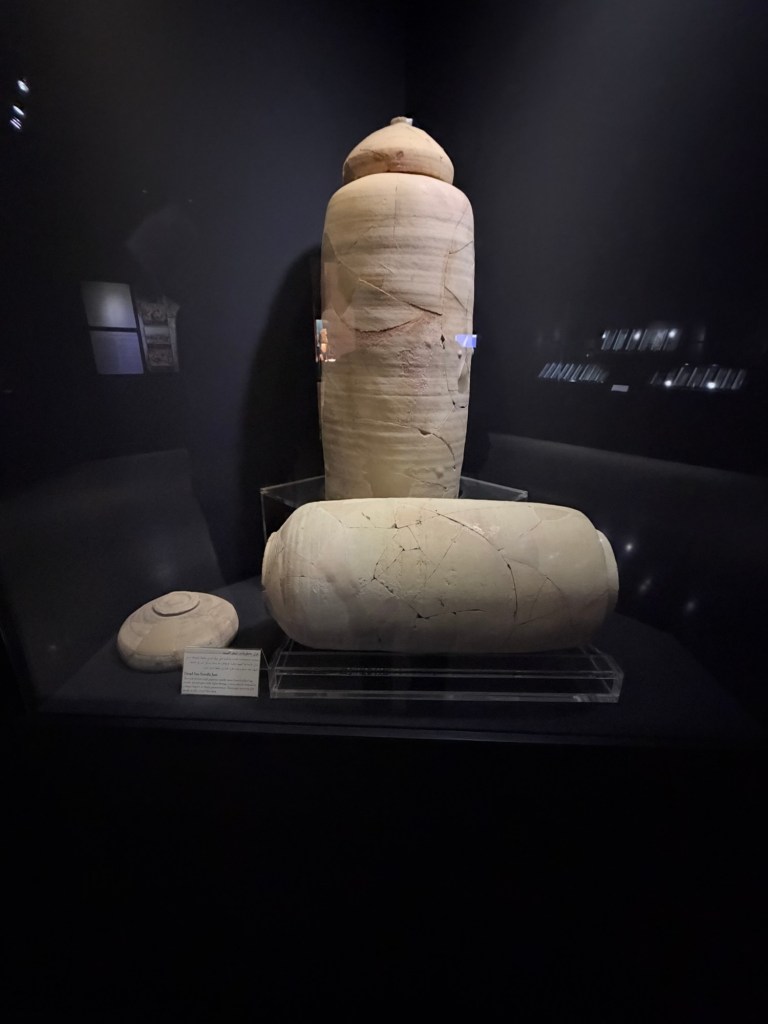
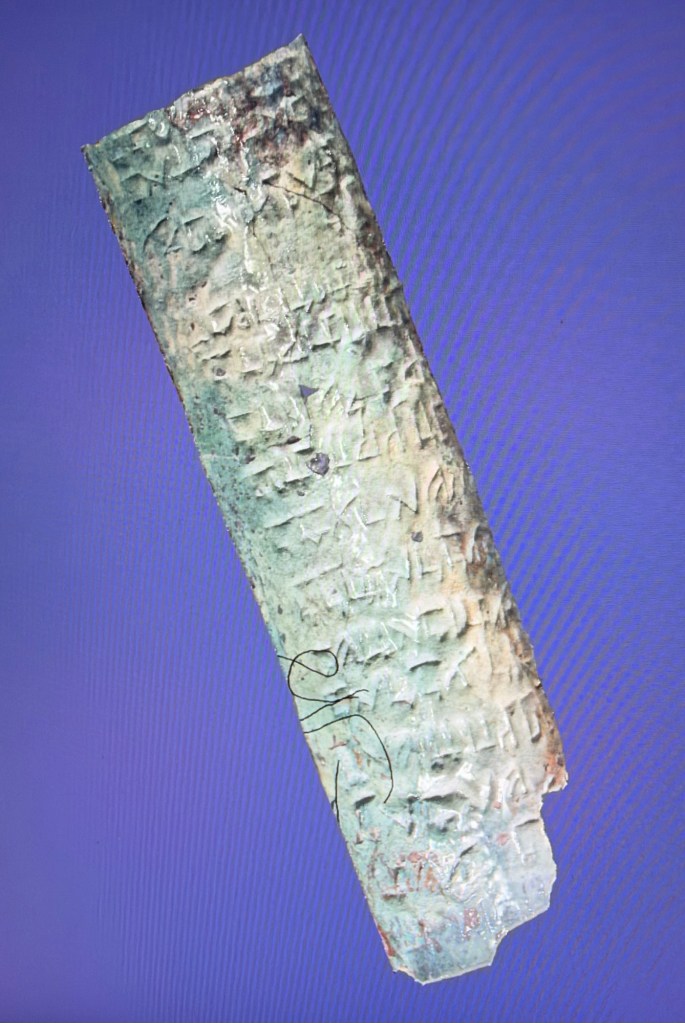
In addition to the paper and leather documents, three copper scrolls (the only copper scrolls) were found rolled together. They could not be unrolled and so they were cut into strips in order to be read. The copper scrolls described the content and locations of buried treasure.
The history walk covers an “Ascent of Man”-breadth of human evolution and endeavor in and, depending on the time period, around Jordan. For example, about halfway through, when Alexander the Great conquered the area, the Greeks ushered a vast interchange of trade, art, philosophy, politics, agricultural practices, etc.
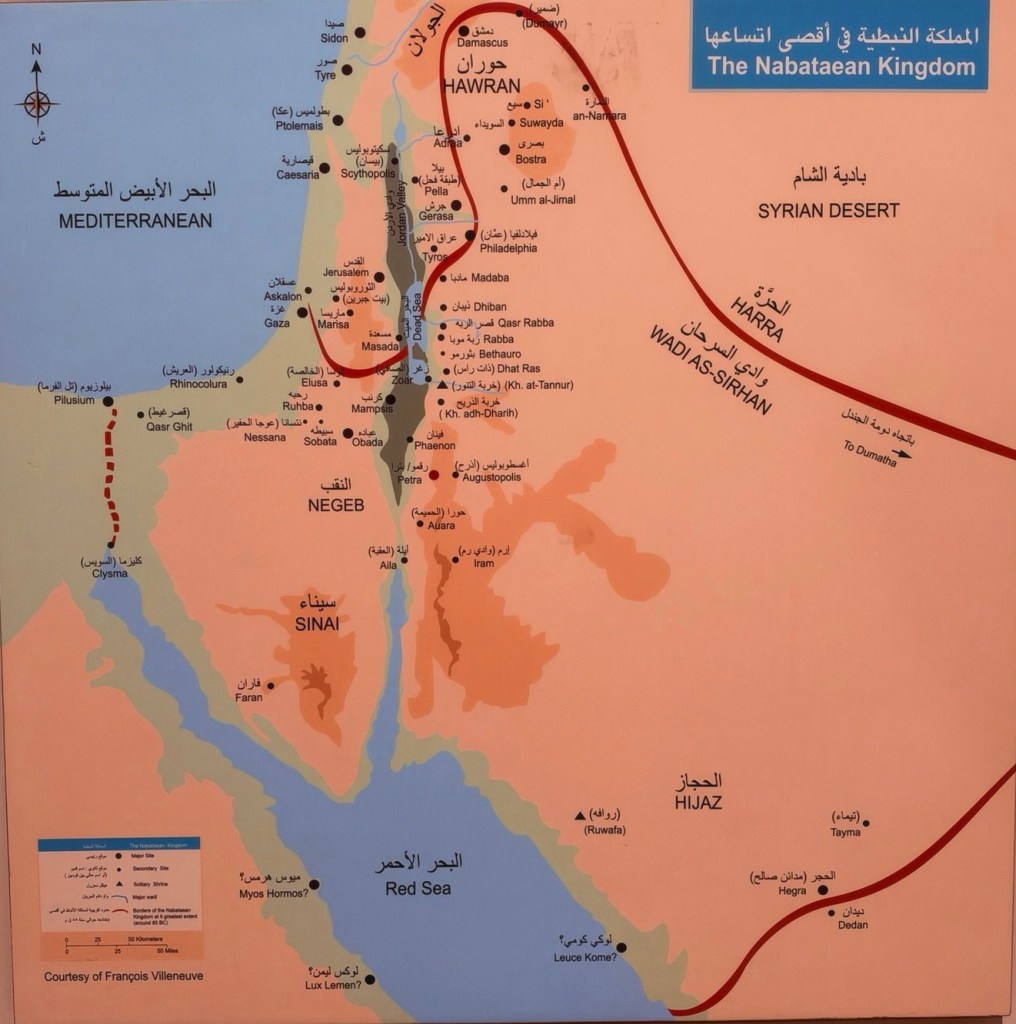
They also kinda sorta brought an end to the Nabataean Kingdom, which had thrived in Jordan from about 400 BC to 106 AD (CE for the irreligious), until Trajan, who took over from Pompey, did a Steven Miller cum Hegseth. One result: Petra no longer the capital of the kingdom and its architecture revised by the Romans.
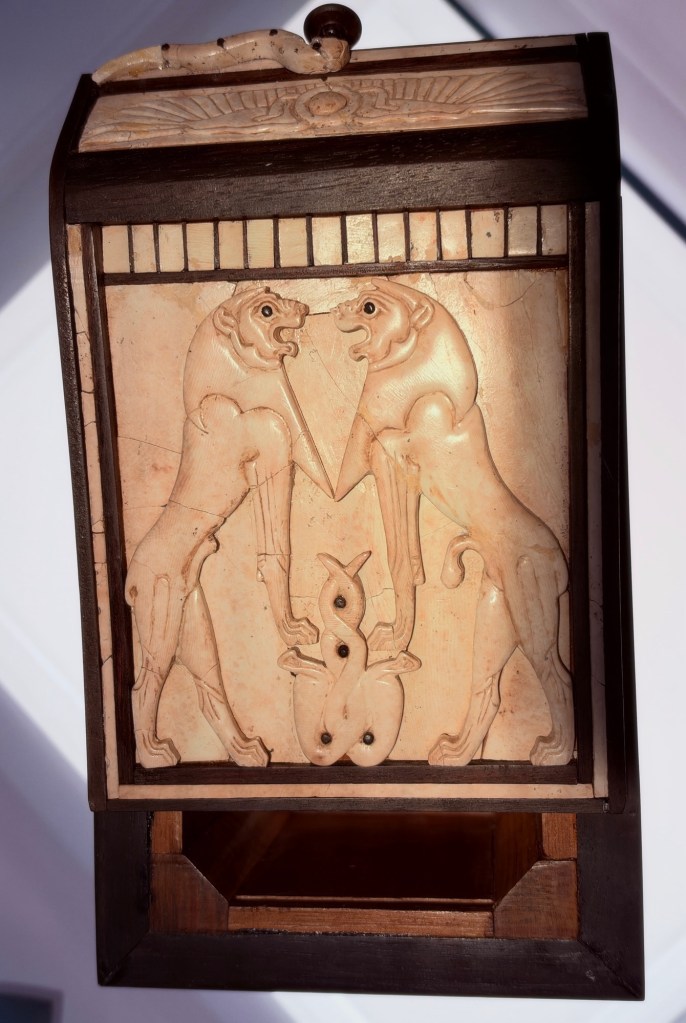
We pass through rooms that visually depict the development of the alphabet from when it diverged from hieroglyphics in 1800 BC to its present modern Amharic and European forms.
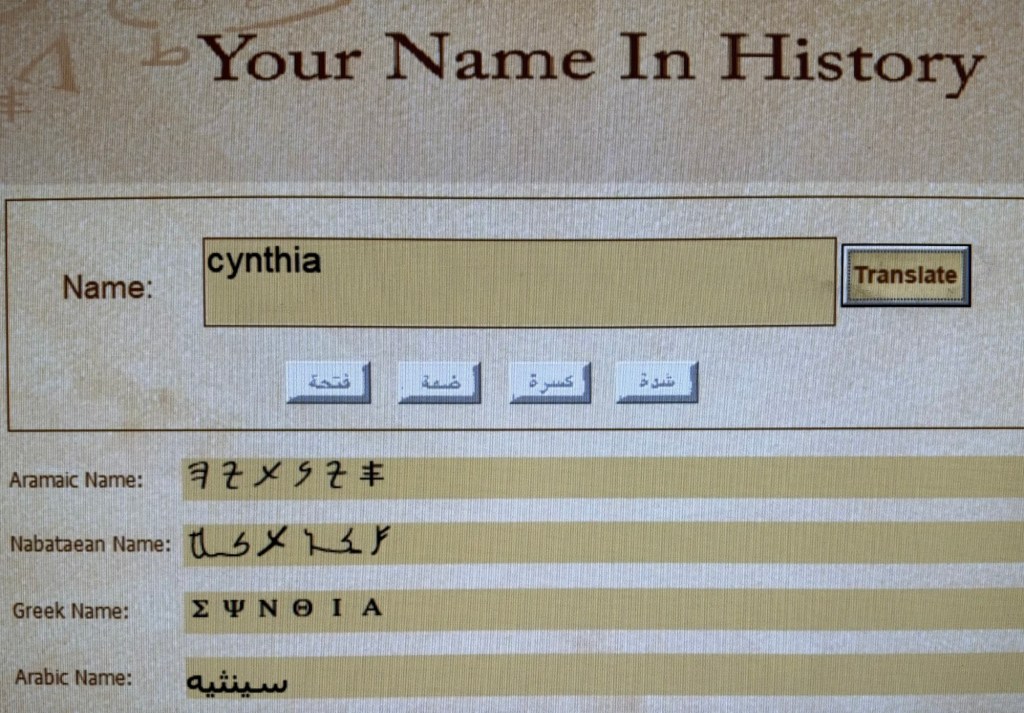
We finish with some truly strange and inspiring statues from Ain Ghazal.
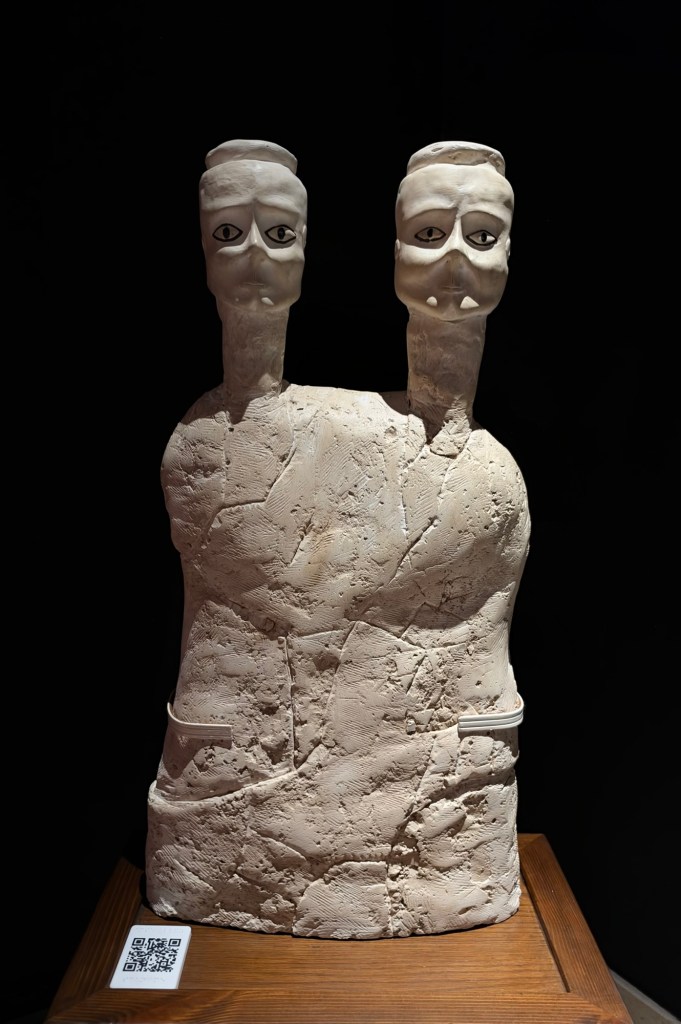
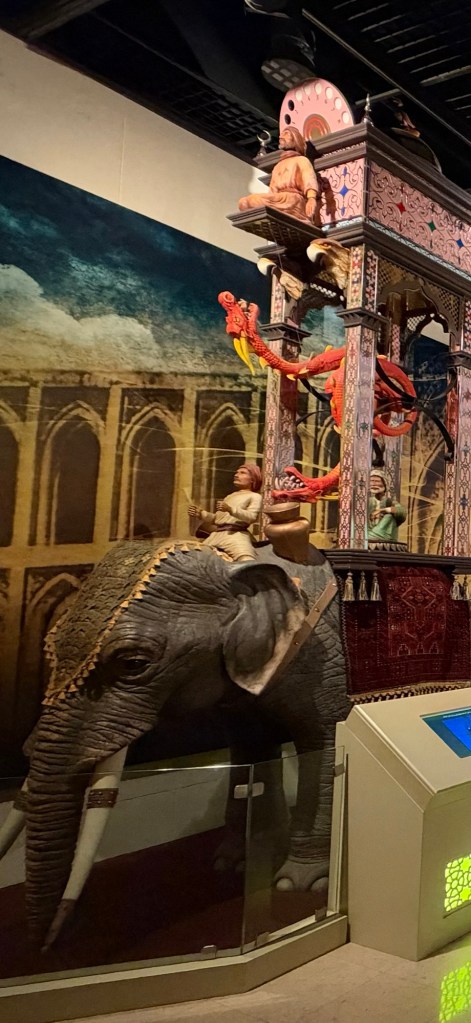
The second floor is all about innovations of Arabs and Muslims. Relatively minor but clever is the Elephant Clock. Balls and a vessel that slowly sinks in water combine to move hands on hour and minute displays.
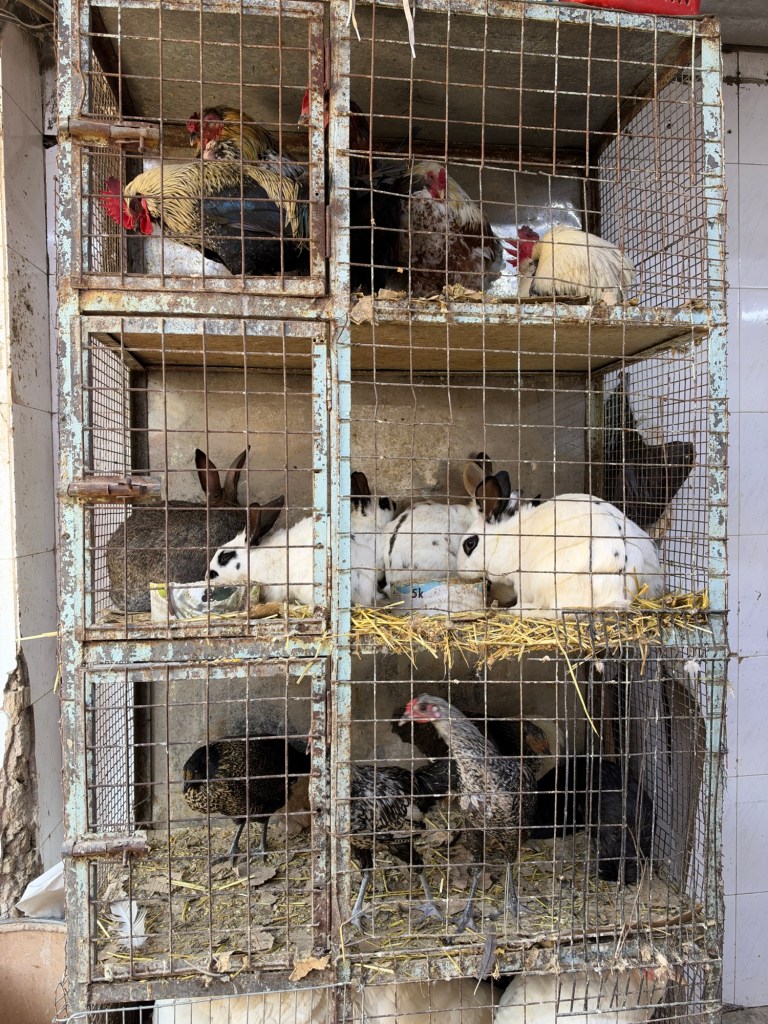
Out of the museum, we walk around the convoluted and bustling streets, getting lost, bumping into iron posts, and walking through a market district with sections for spices, animals (men selling carrier pigeons, men skinning rabbits, men selling chickens, cats skulking everywhere. We pass into the clothing section — “Jellaba here, fine … you must see.” — we pass by a few blocks of sewing machines.
We get lost again.
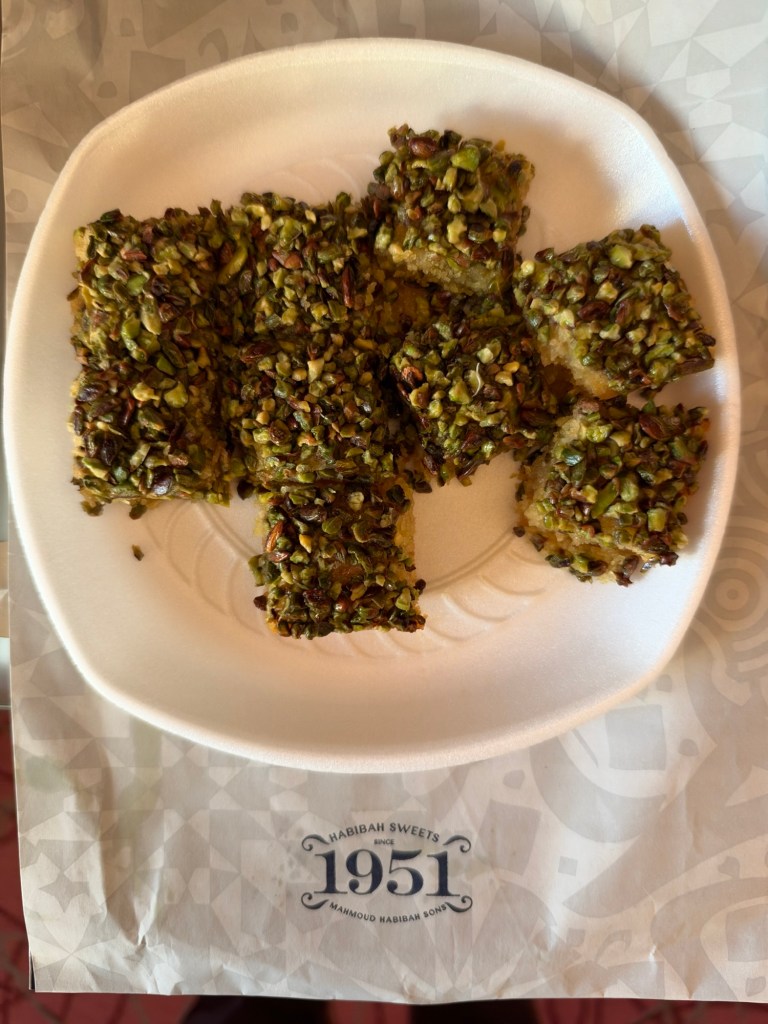
Cynthia finds our destination, Habiba confectioners, where she buys sweets and we order an uber whose driver is kind enough to find a supermarket that sells tonic as he makes our way back to the hotel.
We meet Hani, our Jordanian guide for the next five days, and three women from Minnessota (Katherine, her sister Christine and their friend Donna). We have dinner together in the hotel and hit the sack early.


One response to “November 9, Amman”
So glad you got there well and are hitting the ground running. What a vivid, beautifully written description! Makes me want to visit. Thank you! Have a great time!xocSent from my iPhoneOn Nov 10, 2026,
LikeLike