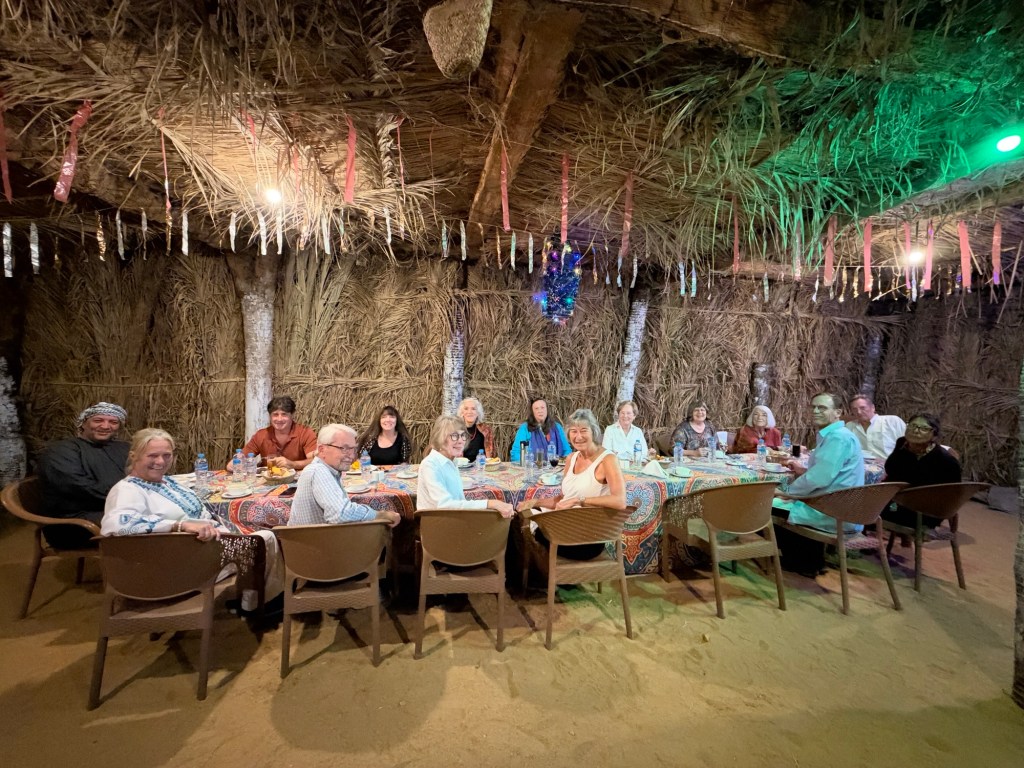
Our boat, the Aton Sun, moors at the village of Daraw and we offload into, as my mother said in Brazil, “picki-uppies,” to wind for quite a way through a large dusty, dirty town to the livestock market, which, for three days, hosts the camel market (cows or goats, sheep, other days).
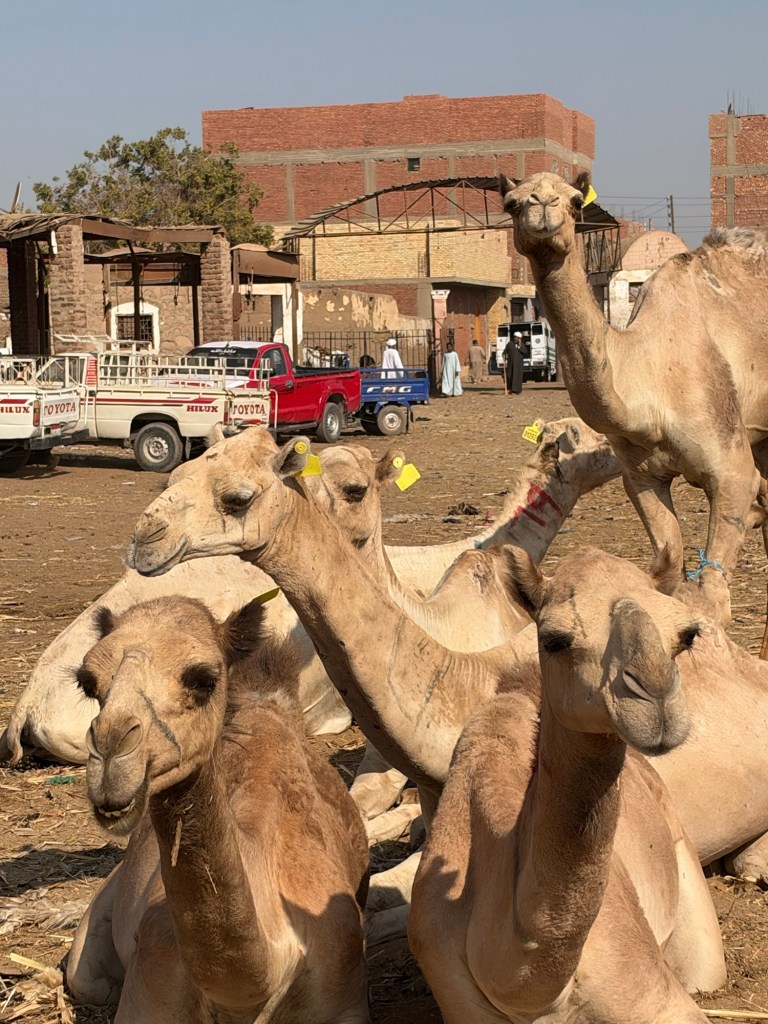
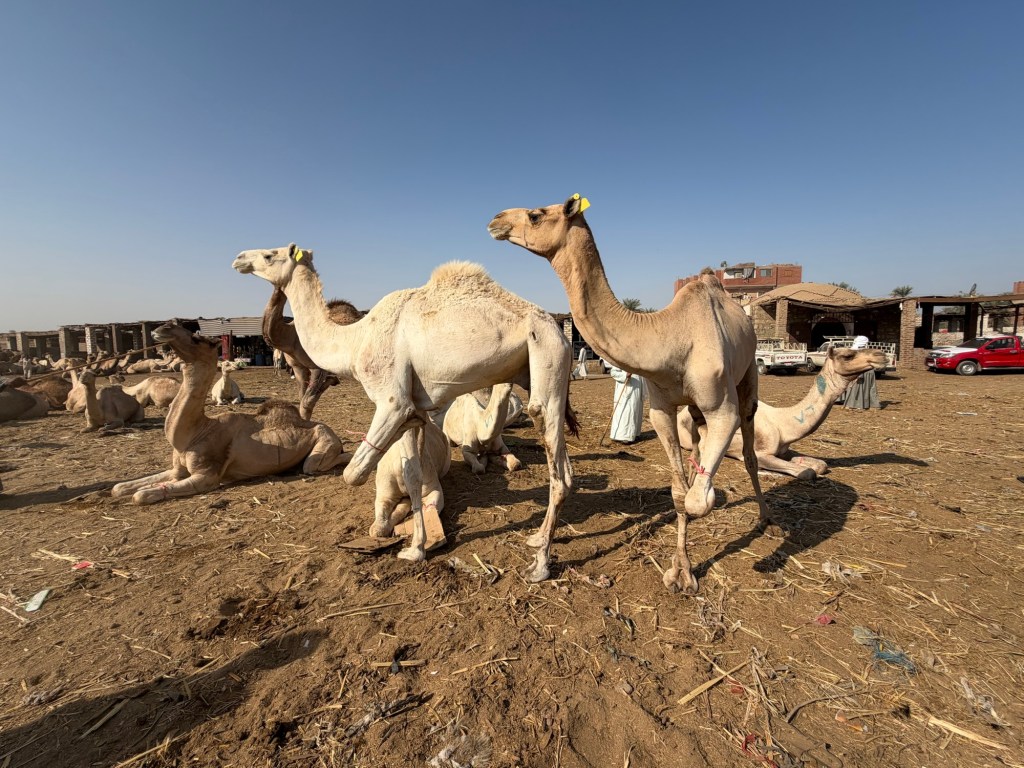
Not a market for the faint-of-heart-animal lover. The camels all have one foreleg bent back and tied so they cannot easily walk or fight (the aggressive ones get both front legs bent and tied). Walking them to platforms from where they are packed six to a Toyota, is both painful and, clearly, a highly developed skill that involves at least three people.
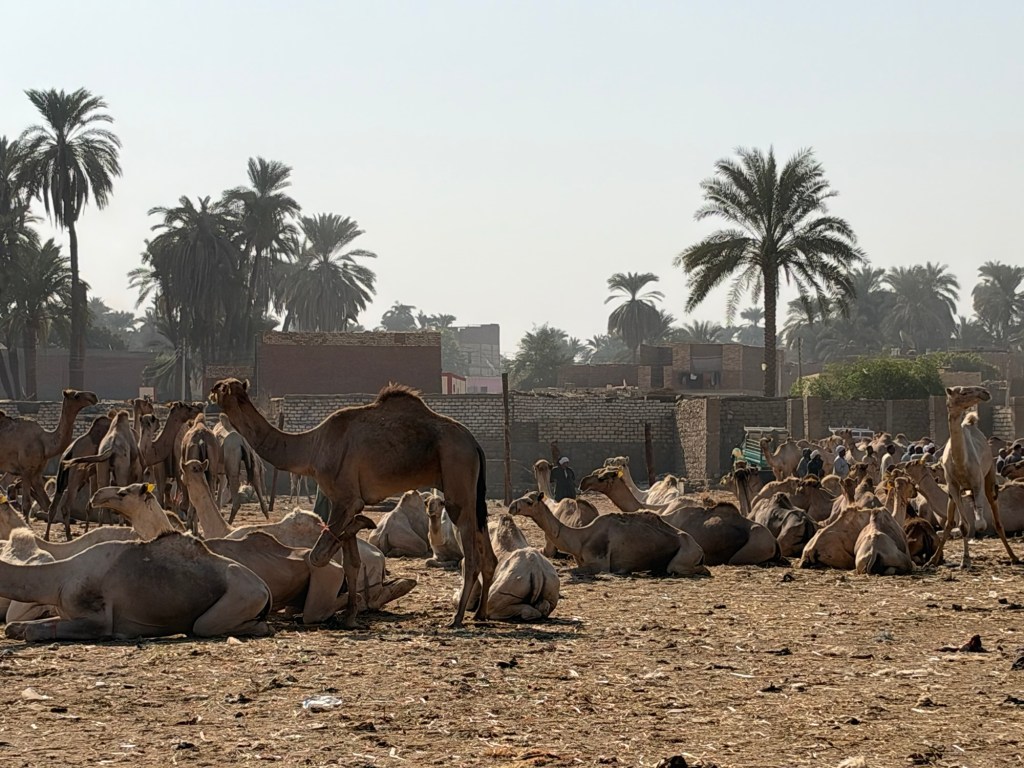
Hundreds … no … maybe 500 to 600 camels are here. They are bought and sold for tourism (rides), meat (food), transportation (sugar cane, etc.), and milk (exported to gulf countries mostly). They live about 25 years and cost about 30k to 170k Egyptian pounds ($600 to $3500). Darker furry Moroccan camels are making inroads. How old?: 2 teeth = one year old, 2 teeth plus 2 molars each side = 4 years old. They add molars as time goes by..
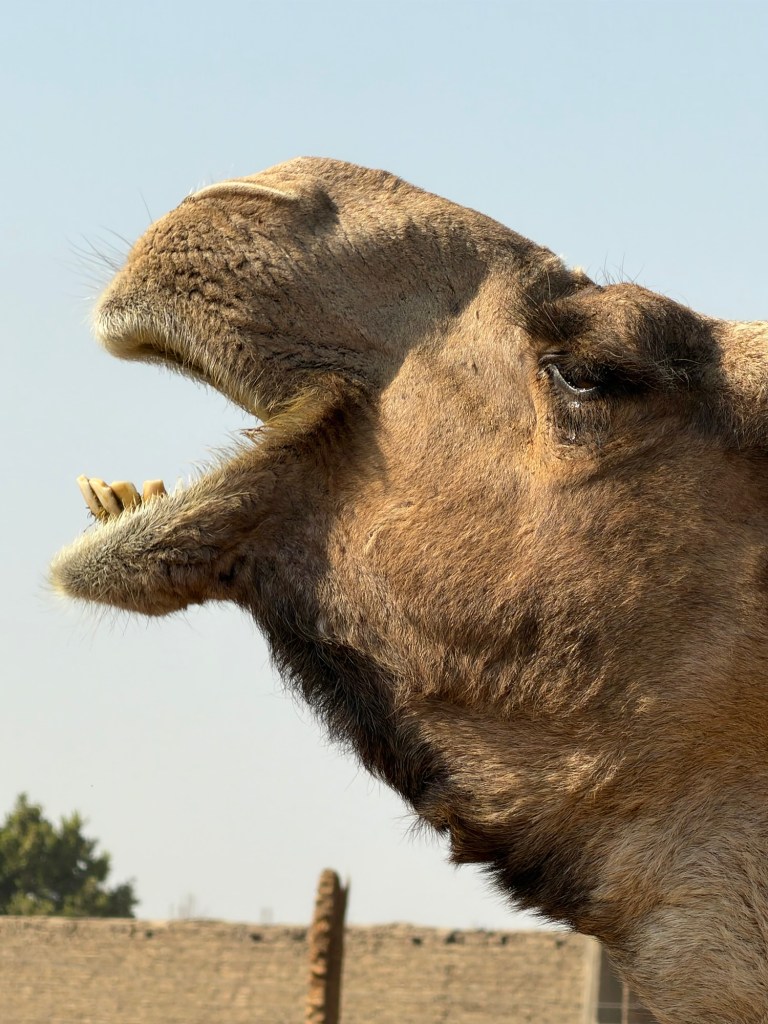
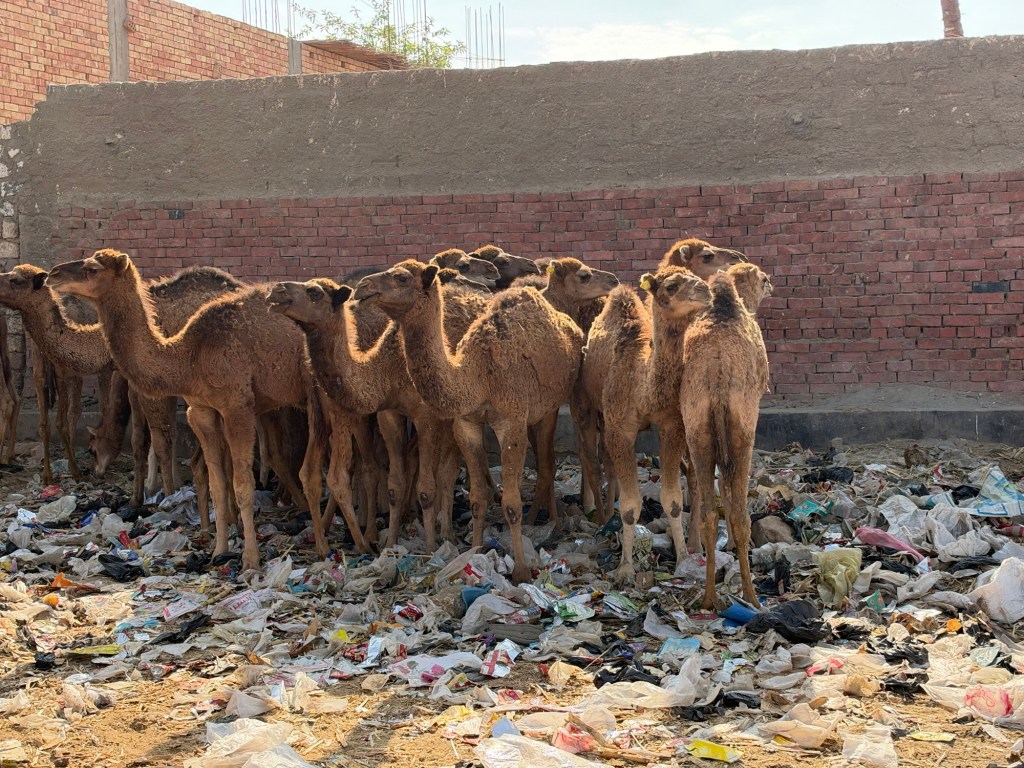
Other factoids: the market began in 1920 and is 40 walking days from Sudan, whence most camels come. They are quarantined in Abu Simbal (yellow ear tags).
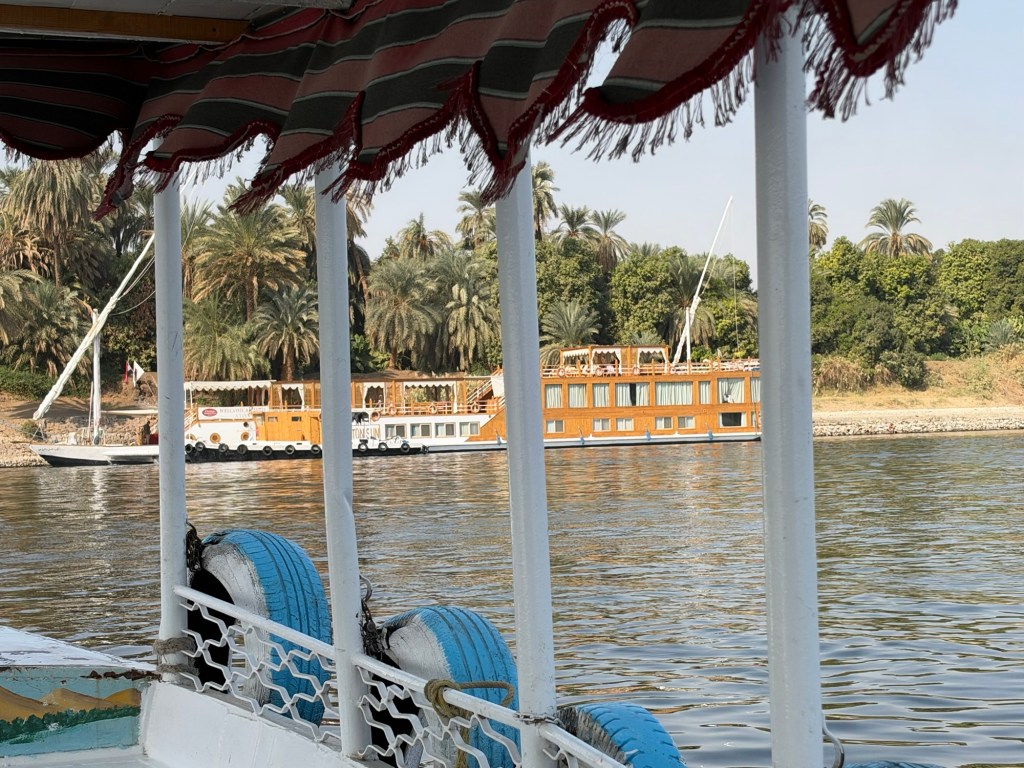
We joggle in our trucks — not quite like the camels — and the small boat back to the Aton Sun and cruise to Kom Ombo, a town surrounded by sugar cane and Egypt’s only “double temple”.
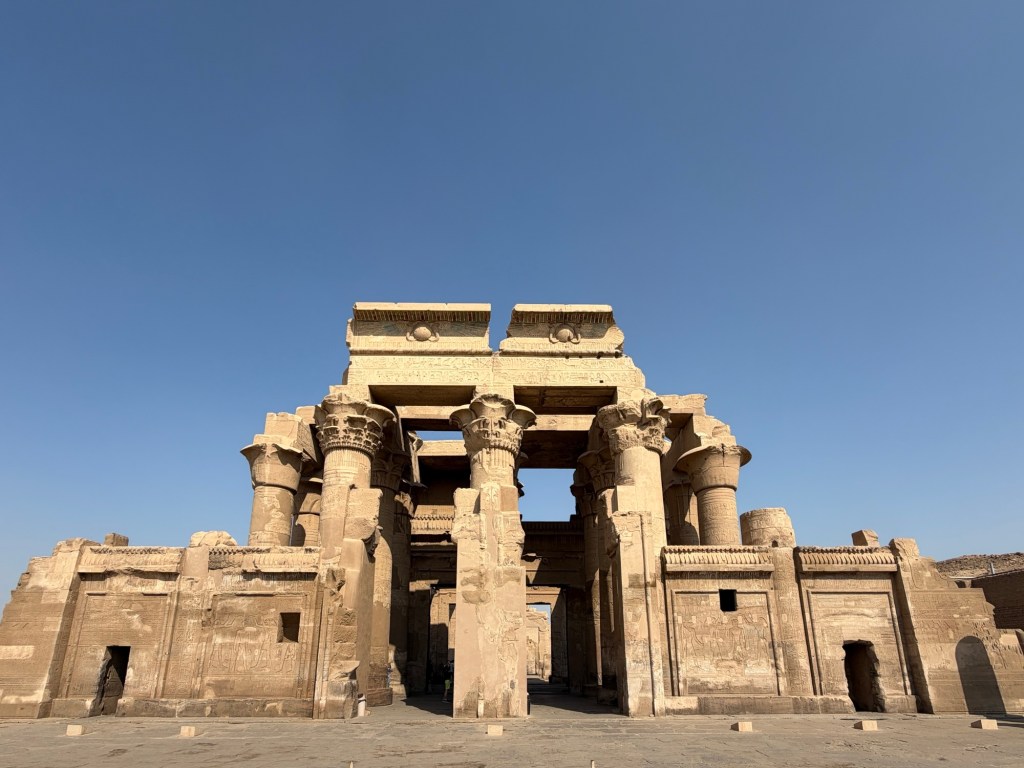
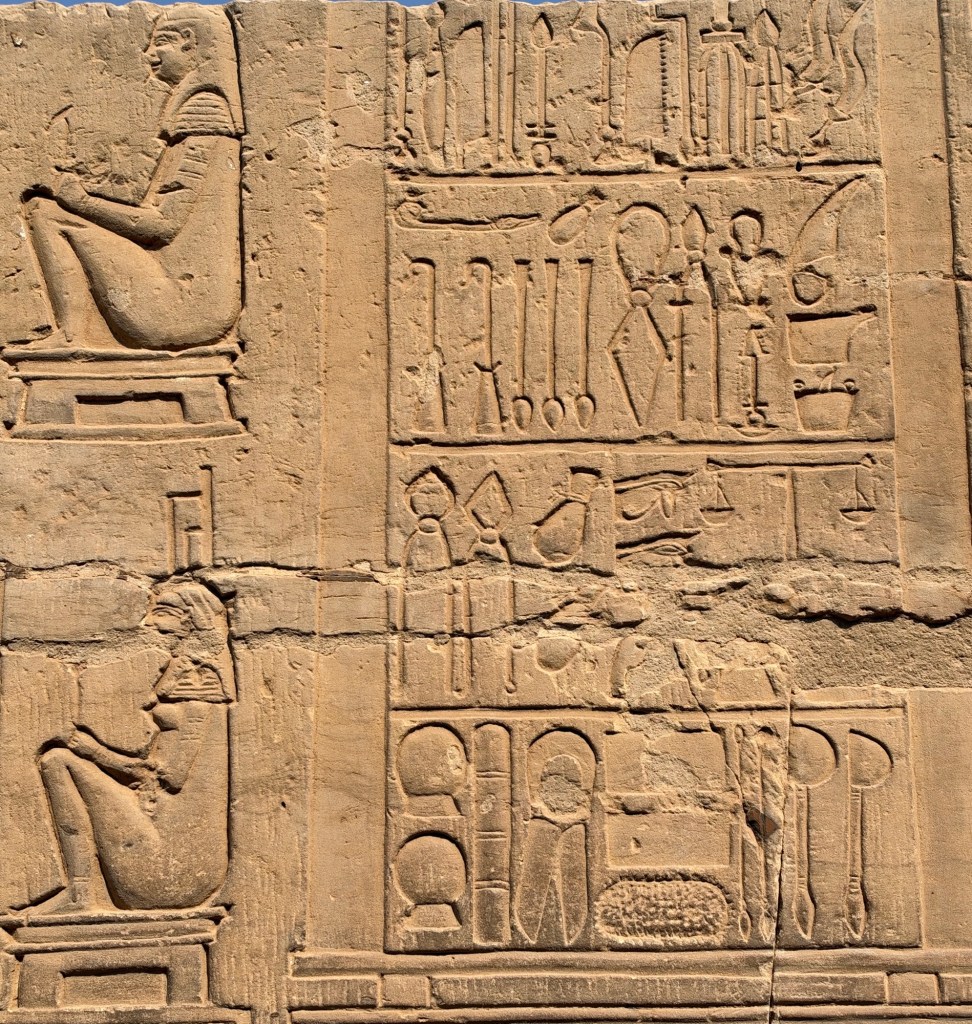
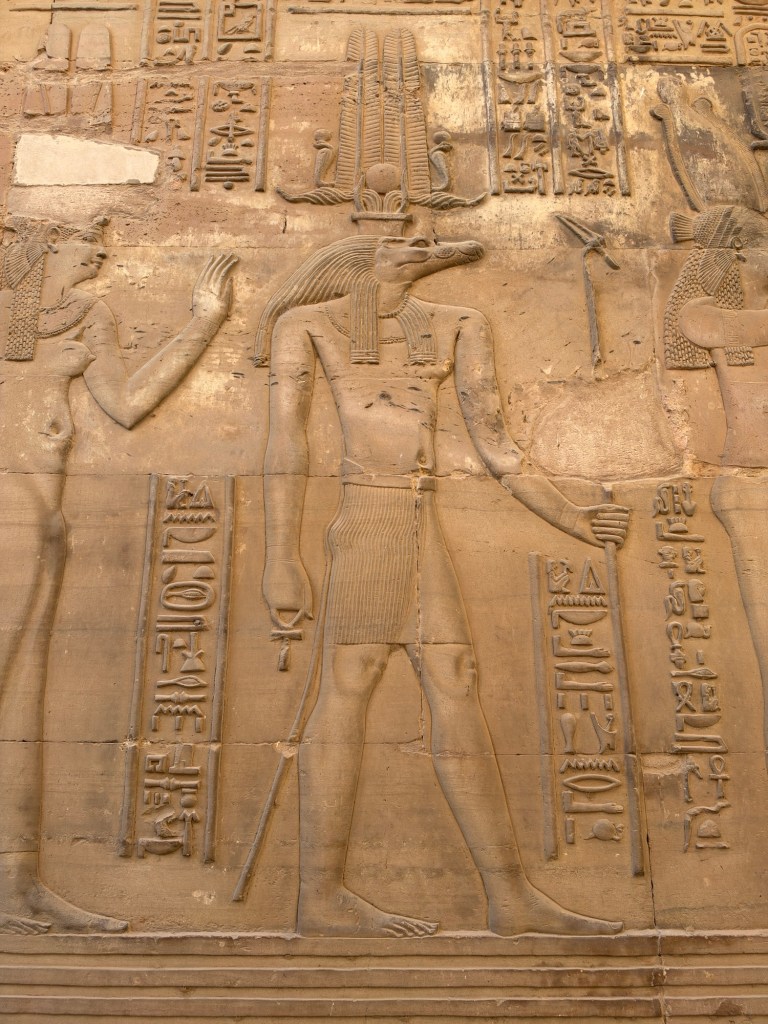
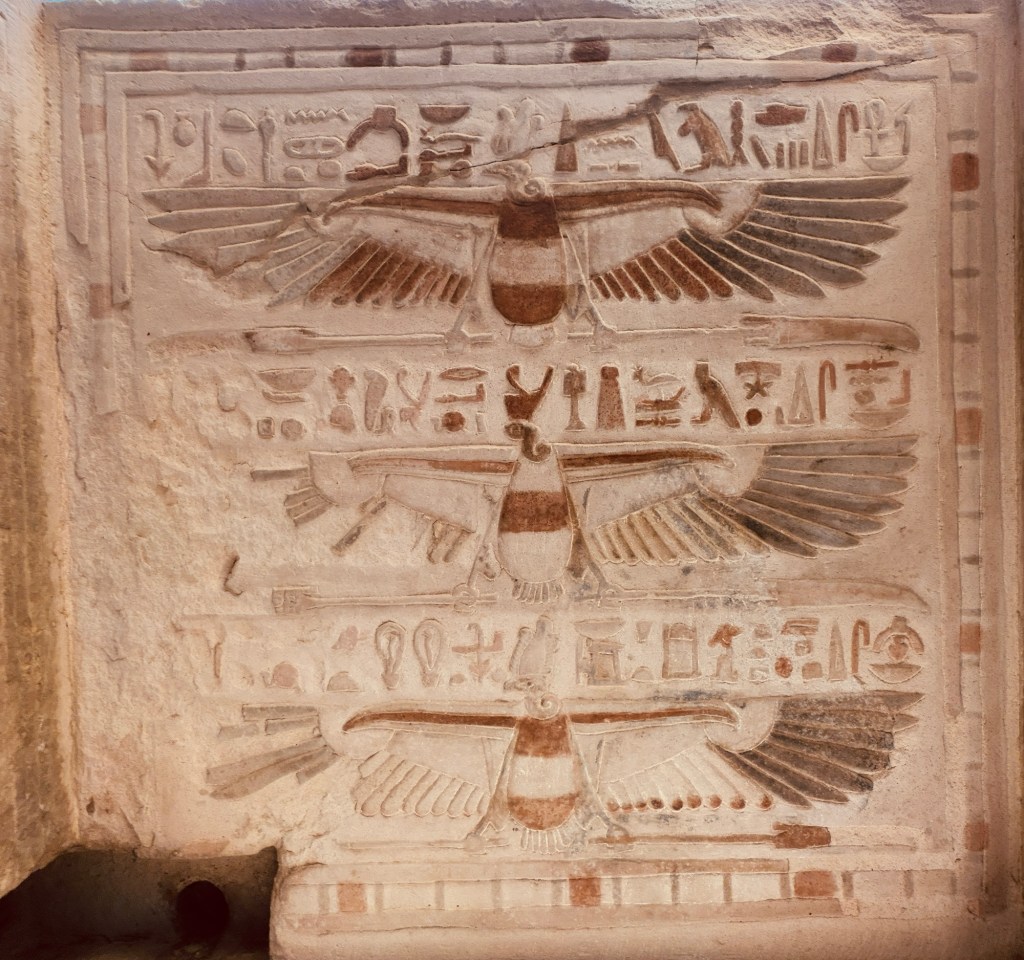
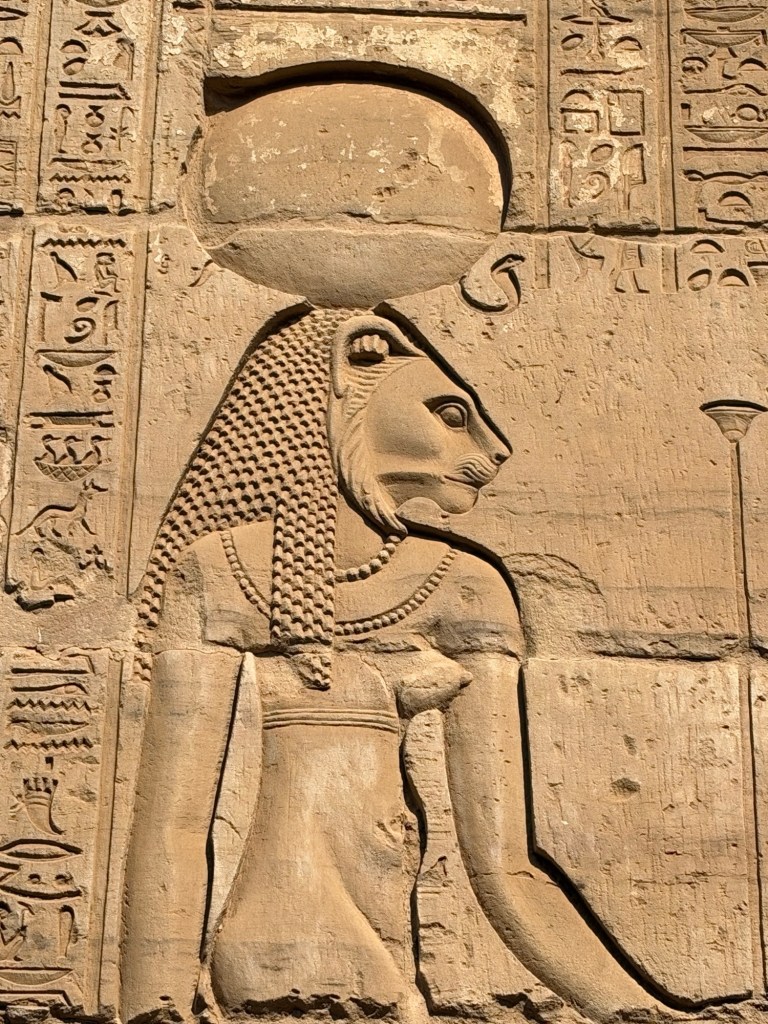
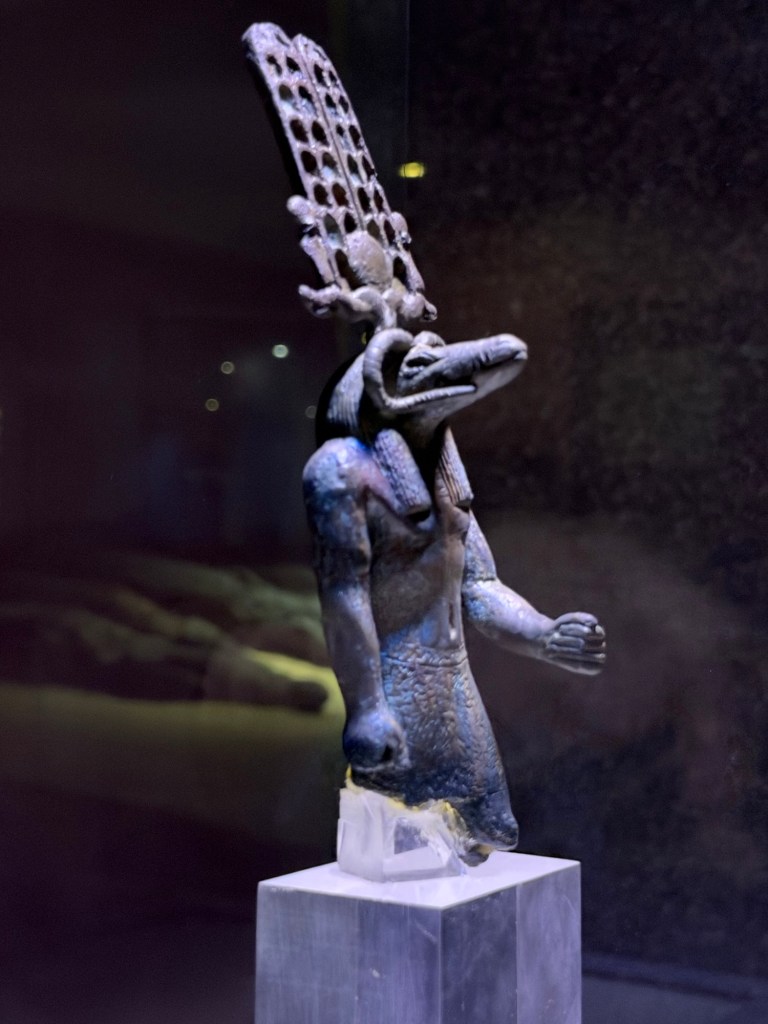
Its two-door entryway with one entrance opening into a corridor and rooms dedicated to the crocodile god Sobek and the other to the falcon god Horus. It’s of the Graeco-Roman era so the column capitals are not simple papyrus leaf. Inside the main structure, an engraving is thought to be the world’s first depiction of medical and surgical instruments and procedure.

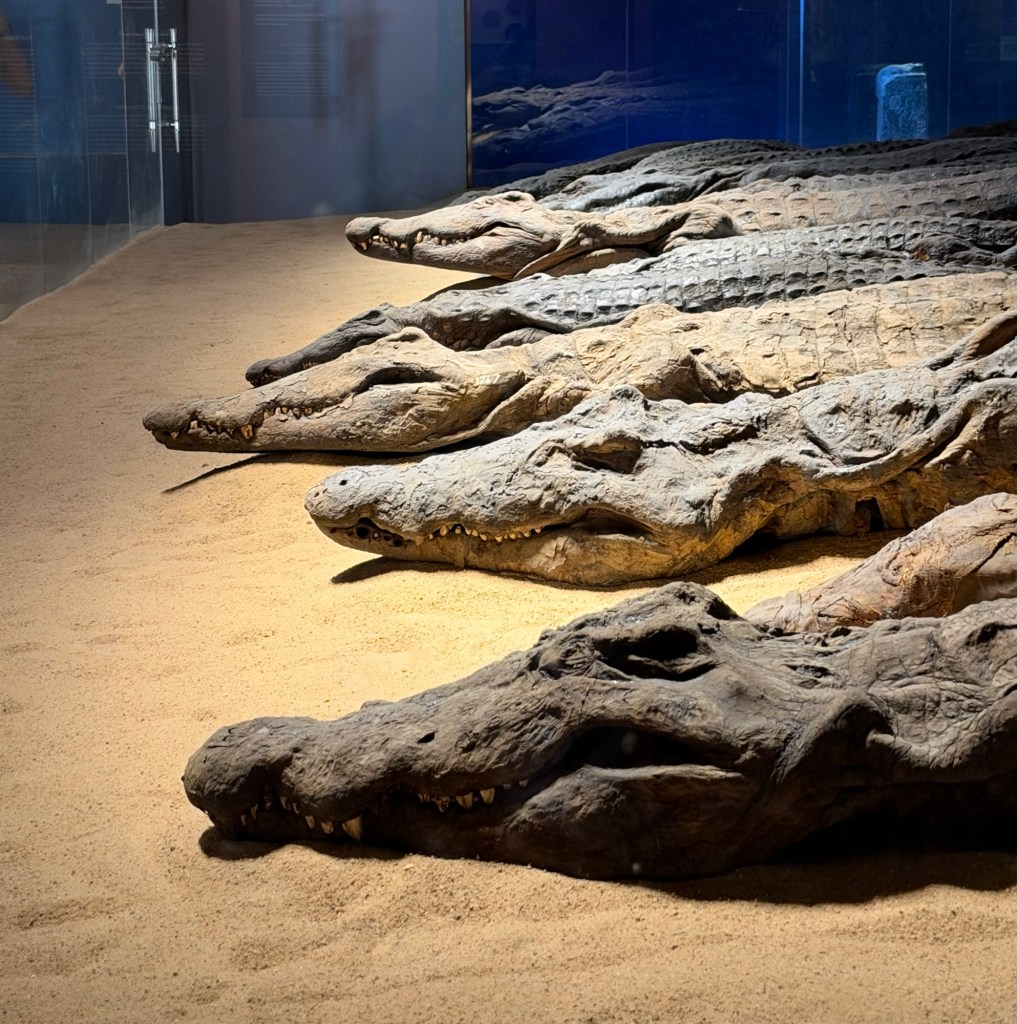
There is a crocodile museum near the temple. Mummified crocodiles and statues.
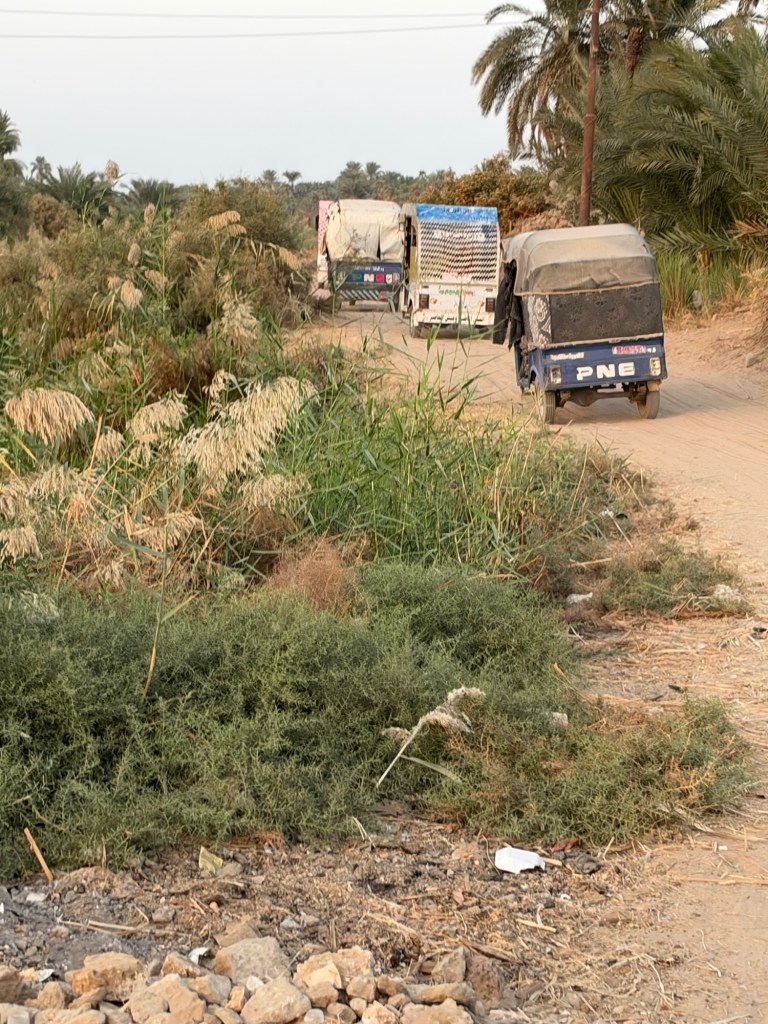
After lunch on the boat we disembark and catch tuktuks to Fares village to meet and observe a local craftsman.
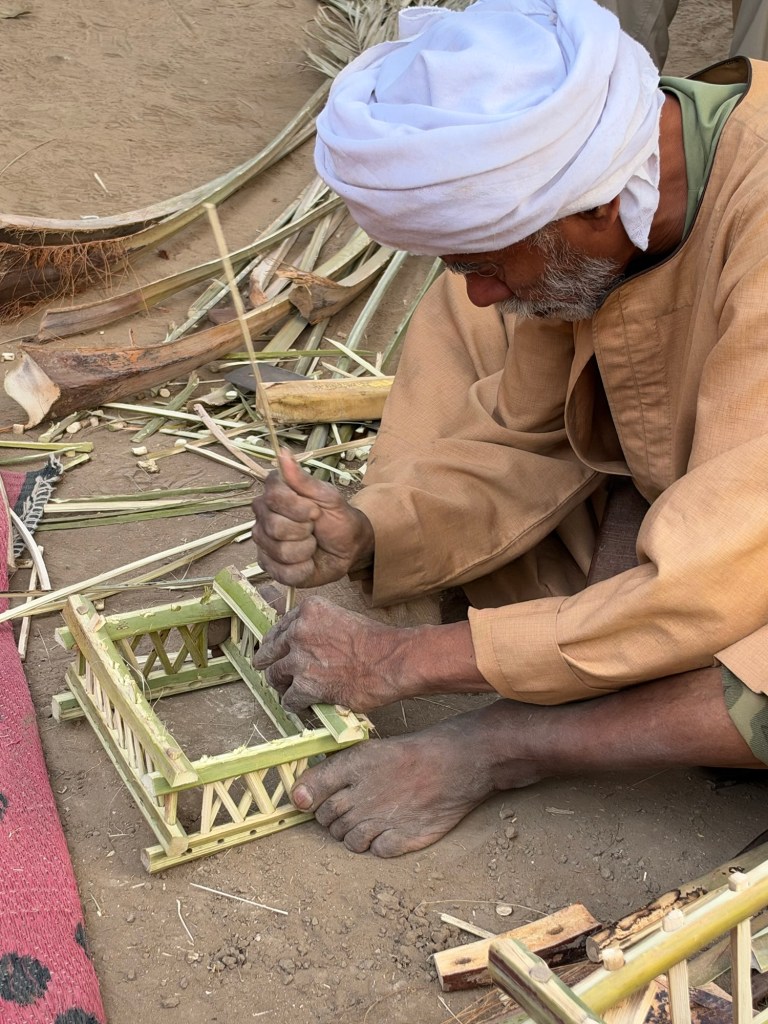
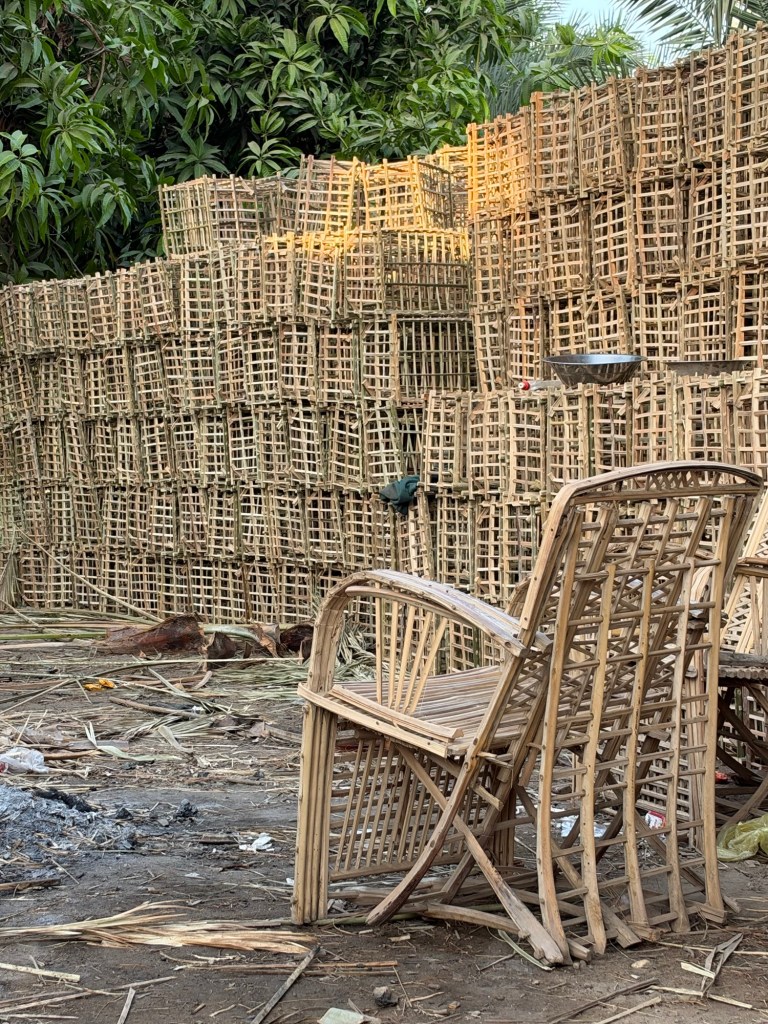
Mahammod creates crates and furniture from dried palm fronds. He is very fast and sells the boxes to gardeners for packaging produce.
We return to the boat to clean up and rest.
Dinner is on shore in an open-sided thatched building rented to the tour company.