We wake to a hazy morning, put bags in front of our rooms to be taken to our bus (later to take us to the airport and fly to Aswan), have brekky (and see LOTS of strangers across a crowded room), and board the bus to visit two mosques.
Along the way, we pass Cairo’s 3.86-square mile cemetery with streets, electricity, and satellite dishes on the roofs. We pass beneath the citadel, whose long high walls tower over the road, and debouch at the entrance to both the Sultan Hasan Mosque and Madrassa, and the Al-Rifa’i Mosque. A madrassa is a school. Hasan was killed by a prince who wanted power … his burial place unknown.
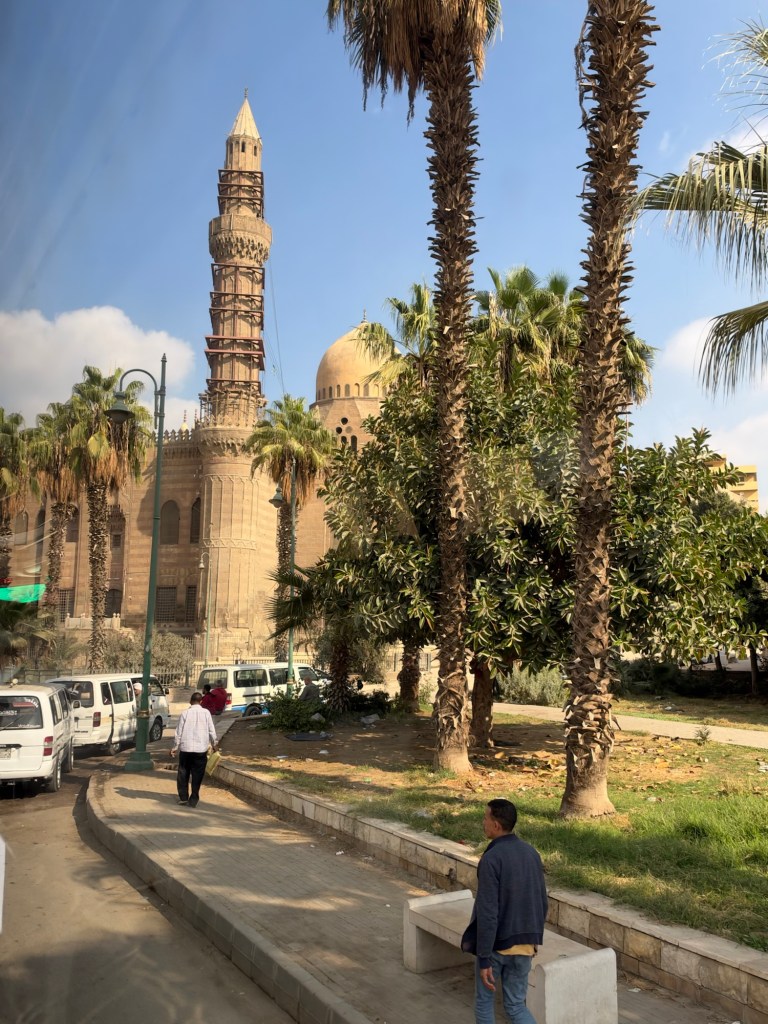
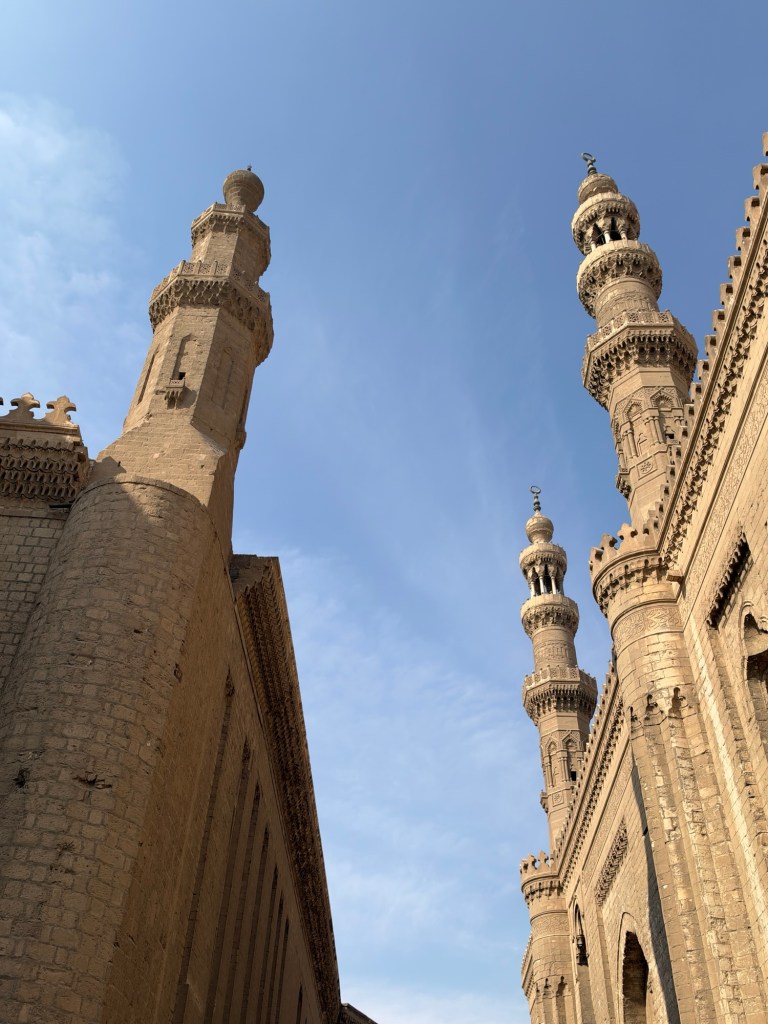
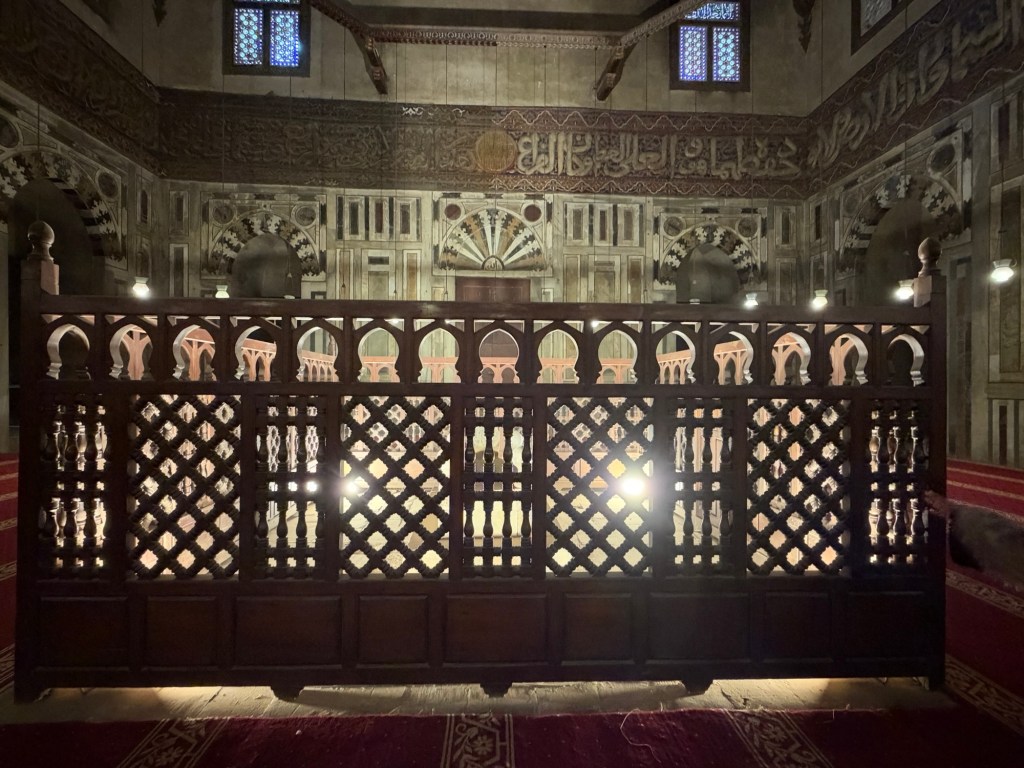
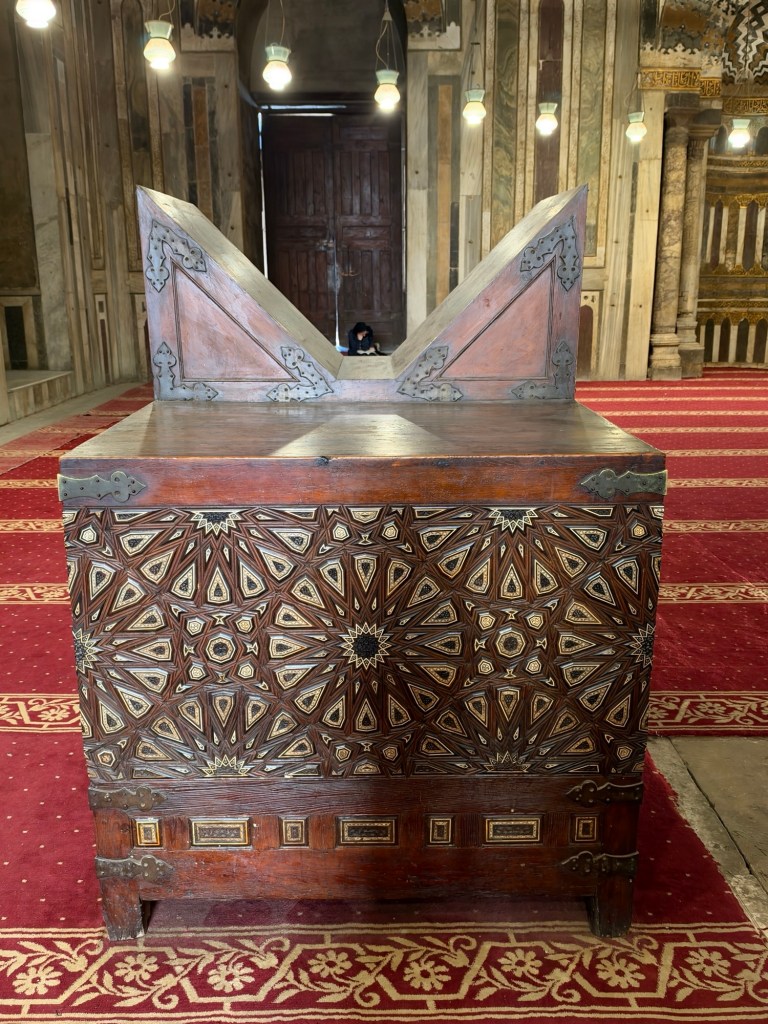
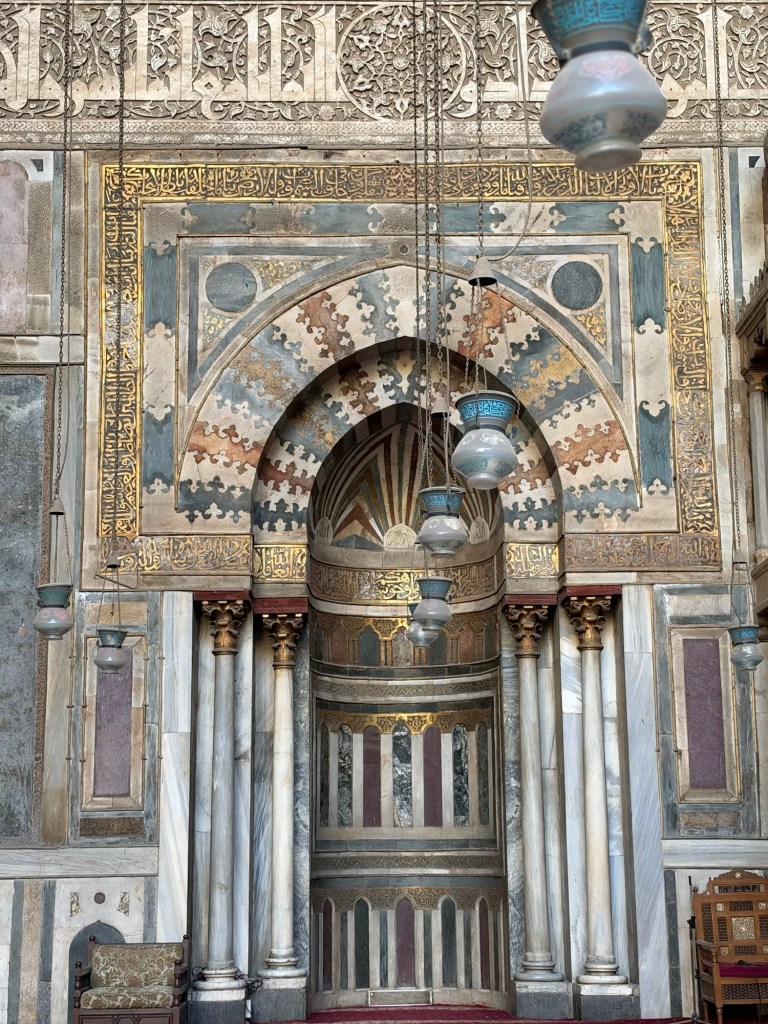
Neither mosque is as large as the one built by the King of Morrocco, but both are massive and cavernous and different and beautiful in different ways. The Hasan mosque on the left is the biggest in Egypt and was built from 1356 to 1363. Its school teaches the four doctrines of Islam (Malki, Shafi, Hanafi, and Hampali (the most strict, which is found in Pakistan and Afghanistan). The mosque runs an attached market, using the proceeds to fund students free studies, though some pay room and board.
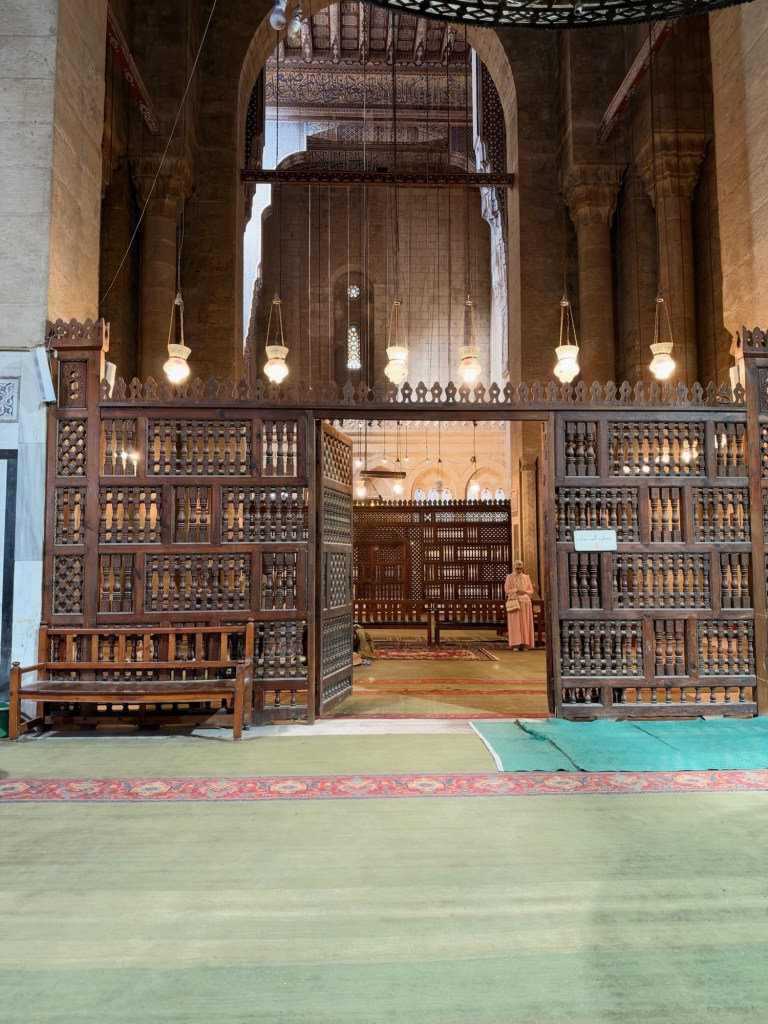
The other mosque was built in 1868 and opened to prayer in 1912. It contains the tomb of the last Egyptian king as well as Shah Pahlavi of Iran.
Unrelated factoid: We can see a third mosque up on a hill. Between two of its minarets is a clock tower installed in 1822 as a gift from the French to Mohammad Ali, who returned the favor by giving Louis XVIII the obilesque now gracing the Place de la Concorde. Some serious gifting there ….
So … two mosques, Hasan is in the Mamluk style — circular structure at the top of its spires — and the other is in the Byzantine style.
We bus to the airport, get walked through a variety of ticketing, security and baggage and zip a quick hour-anna-half to Aswan, Egypt’s southernmost major city sitting astride the Nile River’s so-called “first cataract.” Tricky fact that: It’s actually the last of six cataracts — the first five cataracts are in the Sudan and begin in Kartoum — but they were named and numbered by explorers heading south from Aswan, searching for the source.
Aswan airport and dam are surrounded by a lot of military — F-16s but no F35s because the US gives those to Israel — because loss of the big dam would be, as you might think, a VERY BAD THING.
We bus from the airport in the Sahara desert, go past the “low dam,” the one built by the British in 1902 to help Egyptians grow cotton for the empire, and arrive at our hotel a block off the river in Aswan, the 414,000-populated capital of the governorate (think province). Origin? A trade center for the Nubian caravan route to Kartoum in Sudan.
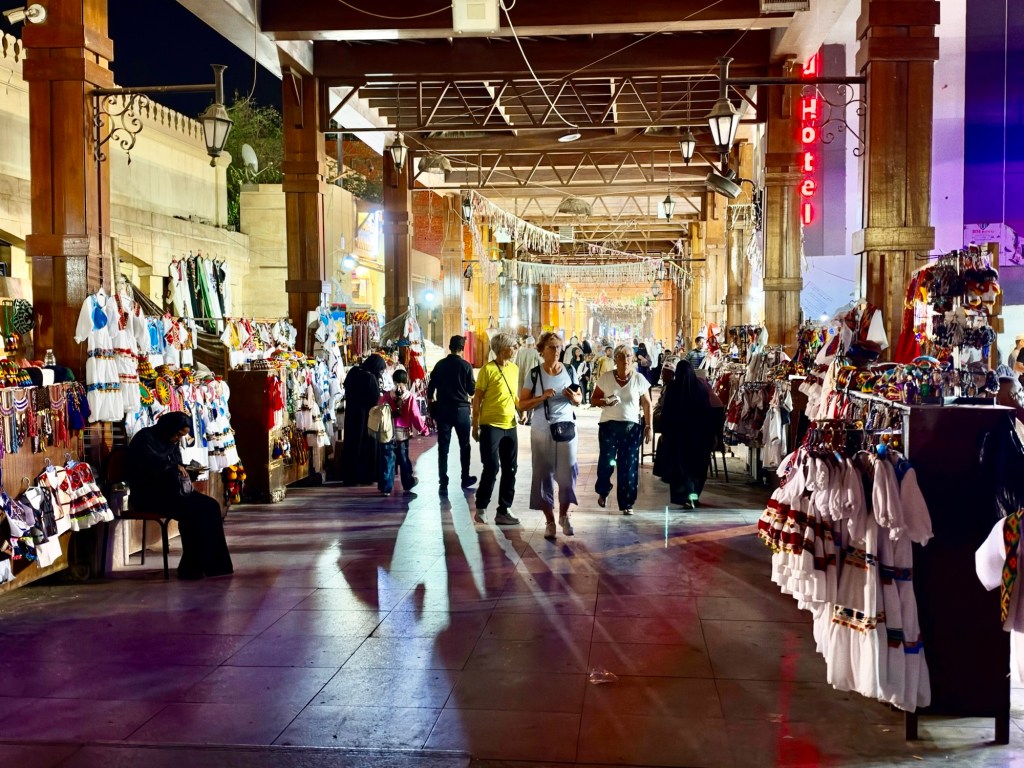
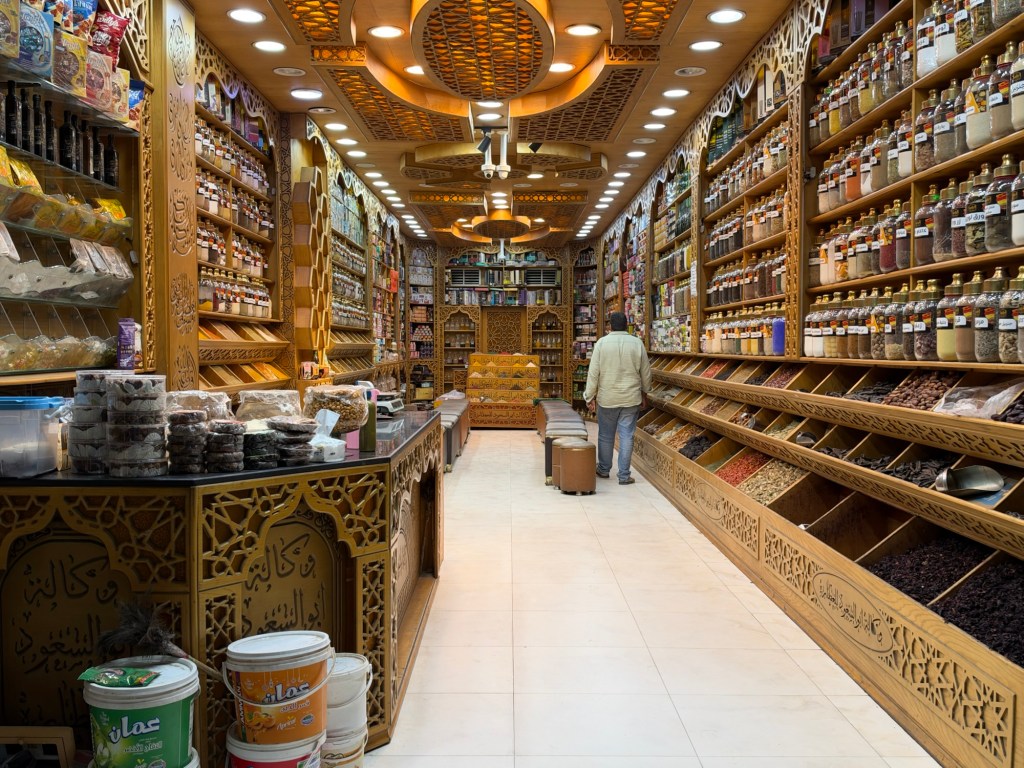
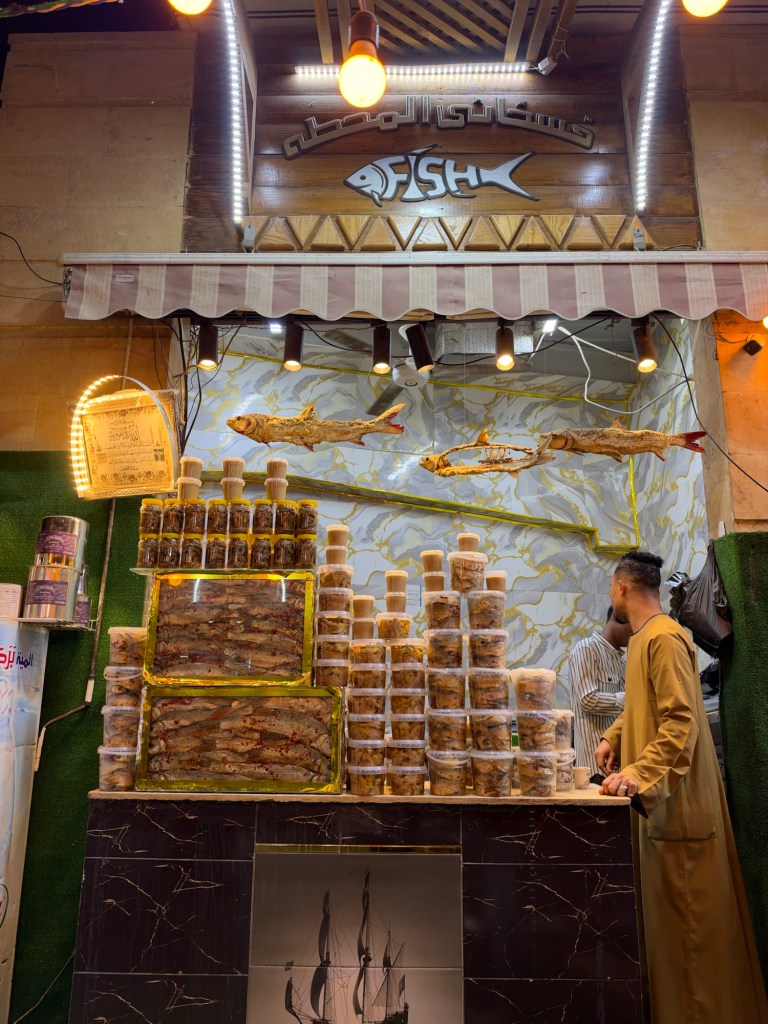
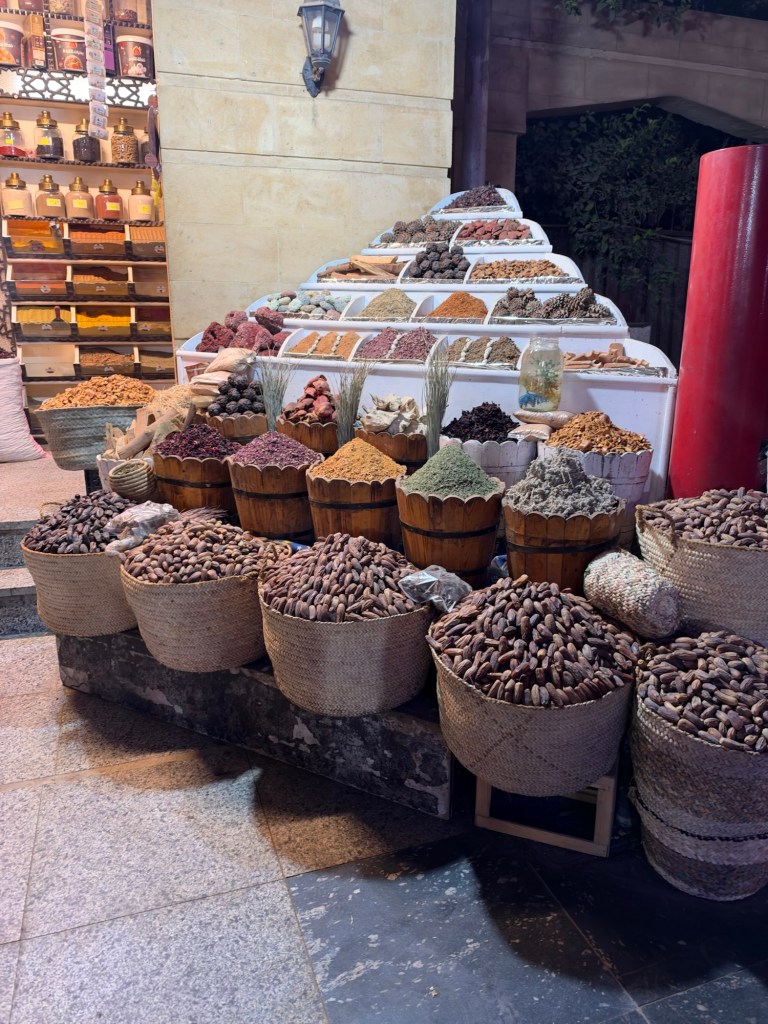
We all hit the spice market before dinner, strolling through a souk-like wide alley chock-ablock with shops of spices and just about anything else you might want.
Dinner.
Bed.

