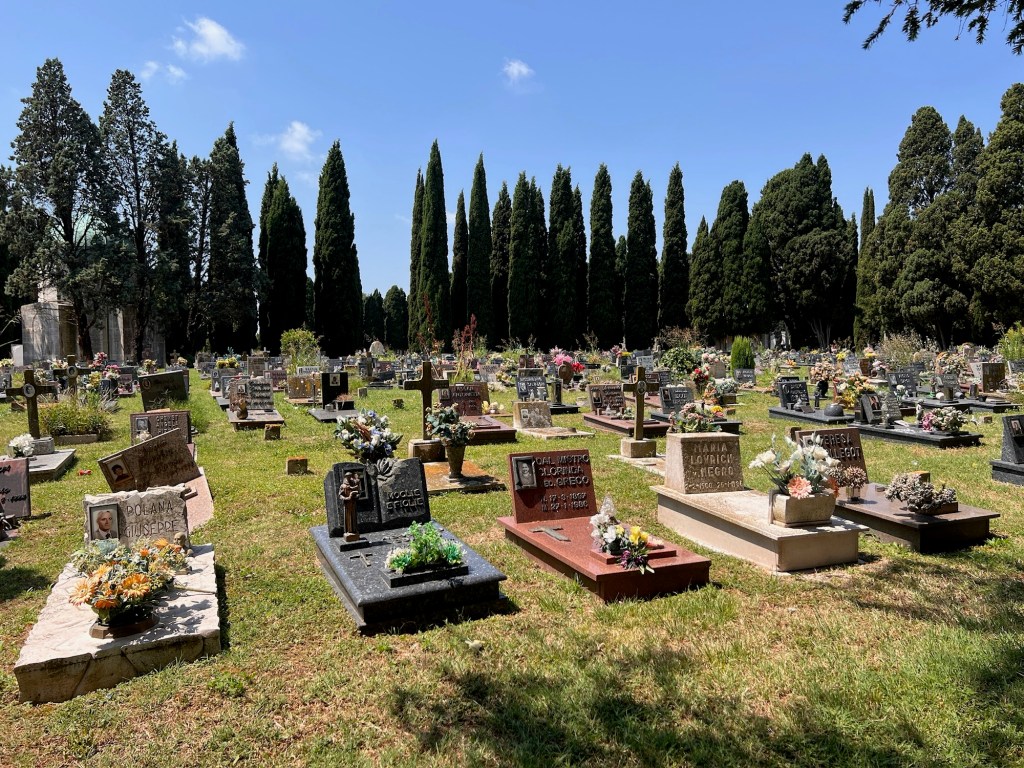
It’s a divide and conquer day: Darrel and I board a few vapos to wander in the St. Michele island cemetery while Nora and Cynthia walkabout the city with shopping tentatively in mind.
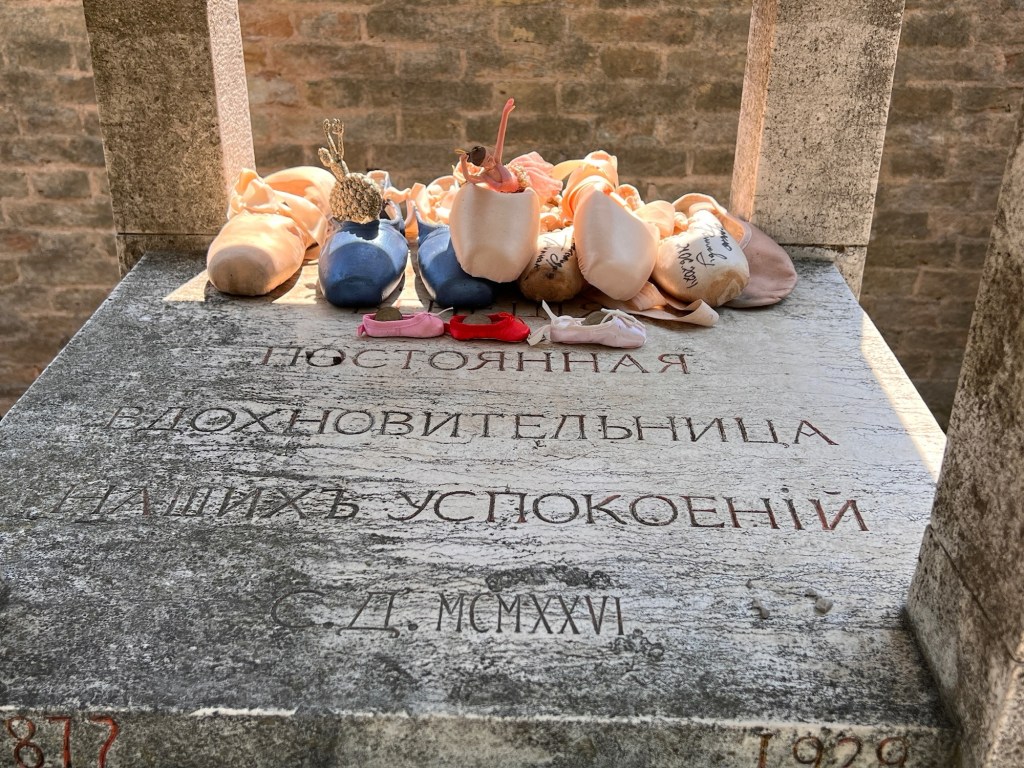
The cemetery: Sprawling, dozens of sections separated by trees and walls and chapels, but all fairly well marked. Despite the sign at the entrance that forbids photography, the few other tourists we see click with abandon. There’s Ezra Pound, Igor Stravinsky and his wife, Emma, and, unexpected by me, Sergei Diaghilev whose tomb is adorned with ballet slippers and a few coins of several nationalities. Here and there, wooden boxes on stands, like street libraries, house written remembrances from visitors.
Meanwhile Nora and Cynthia wander through town. While doing the history tour Cynthia spotted a shop with beautiful fans. She took a photo nearby in order to find it later.
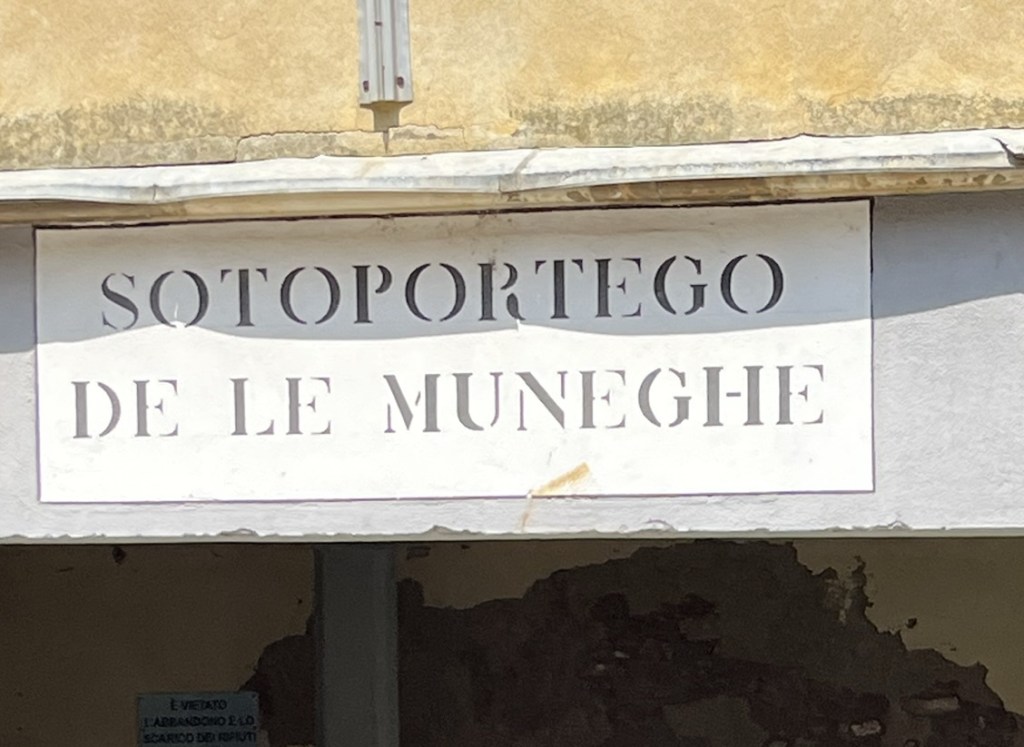
Even with a place name it is easy to get lost in Venice. Our phones gave different directions. Nora uses iPhone maps and Cynthia Google. Someone told us that GPS can be 50 feet off. We never find the fan shop. But, it is fun to wander.
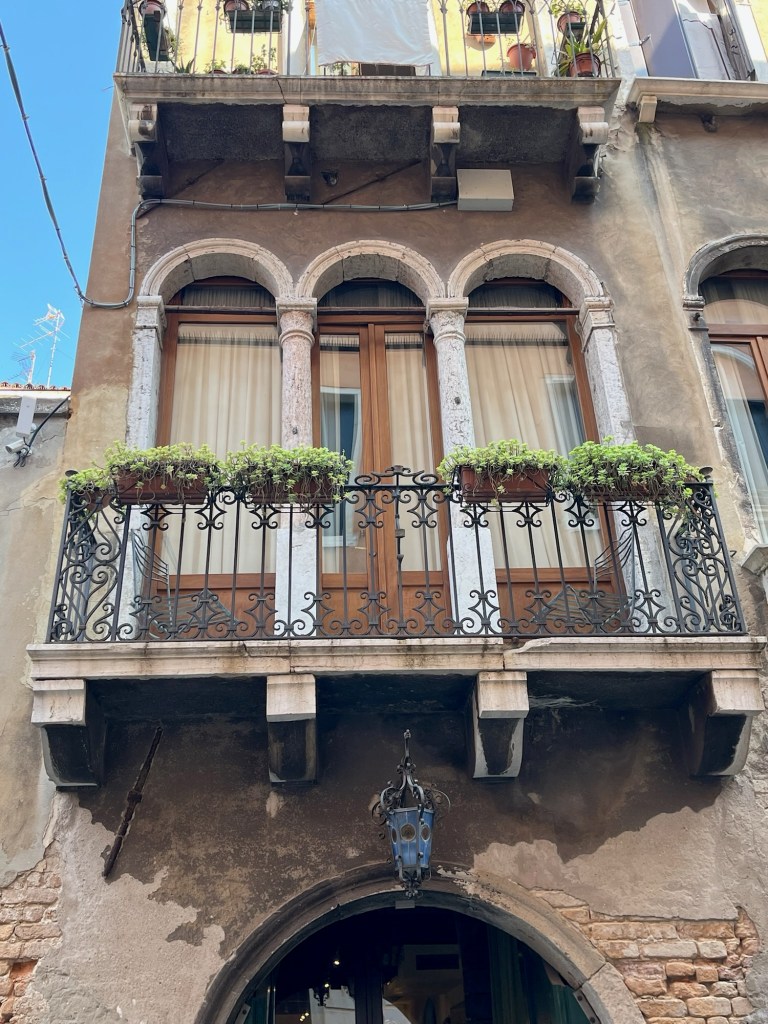
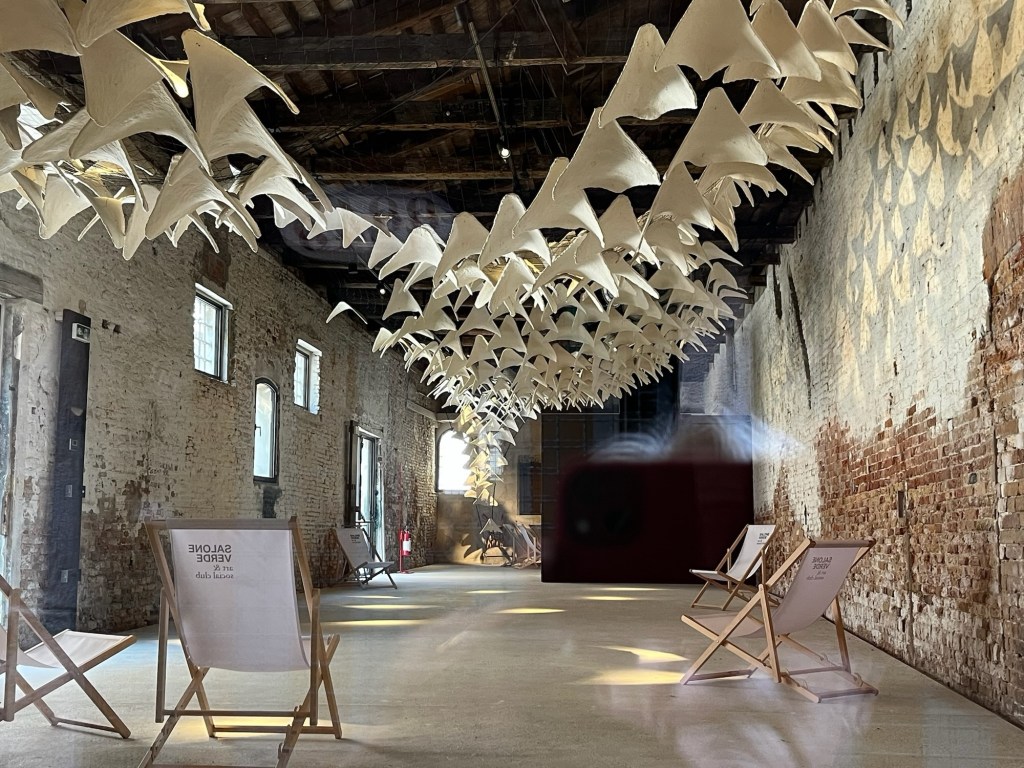
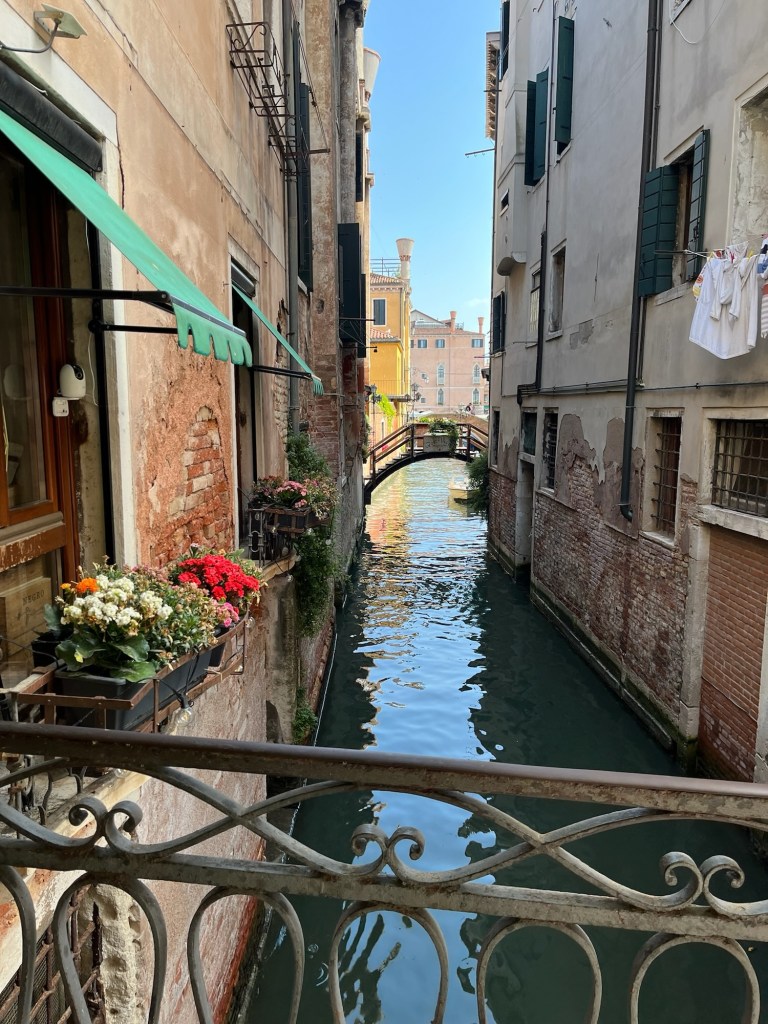
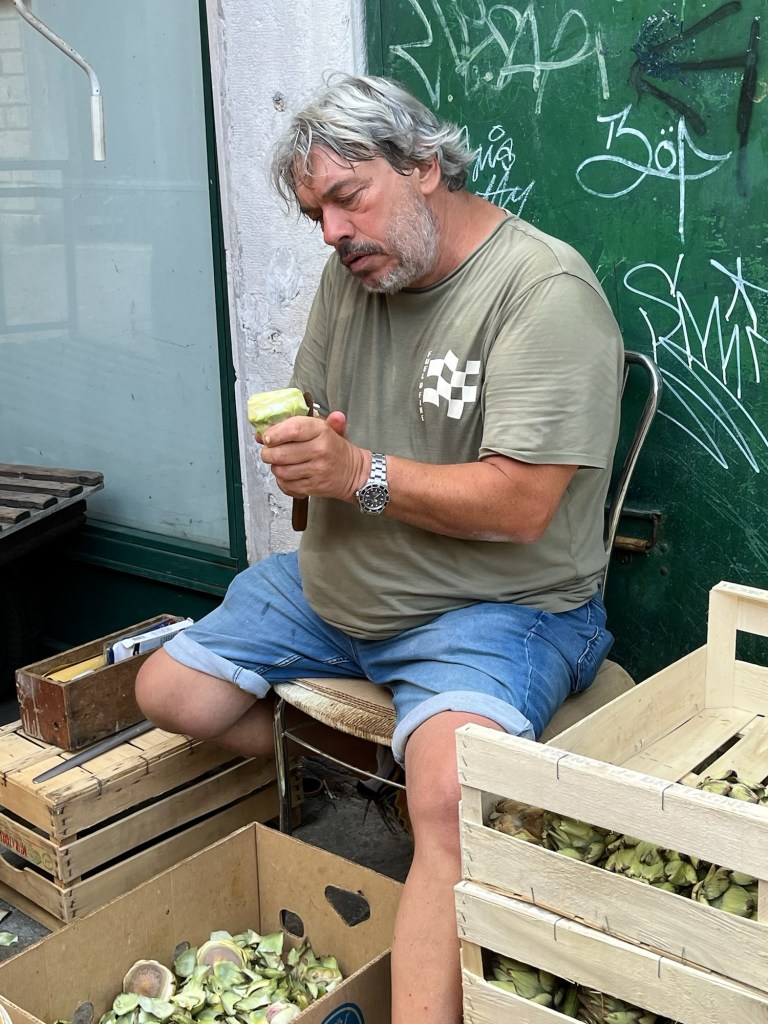
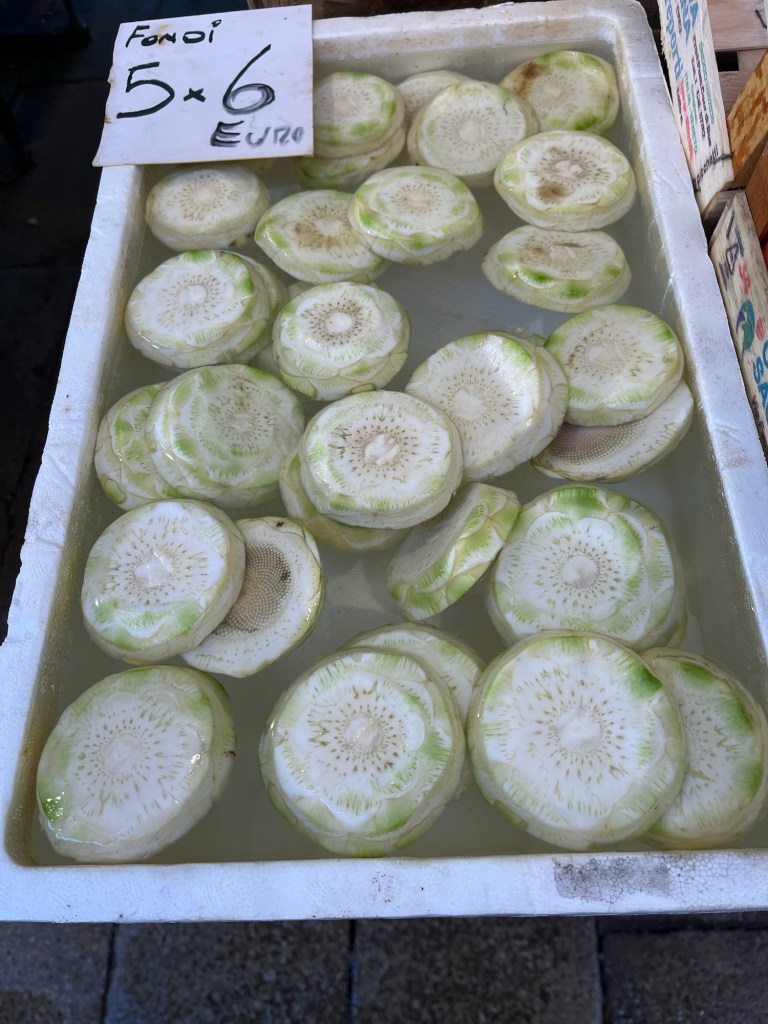
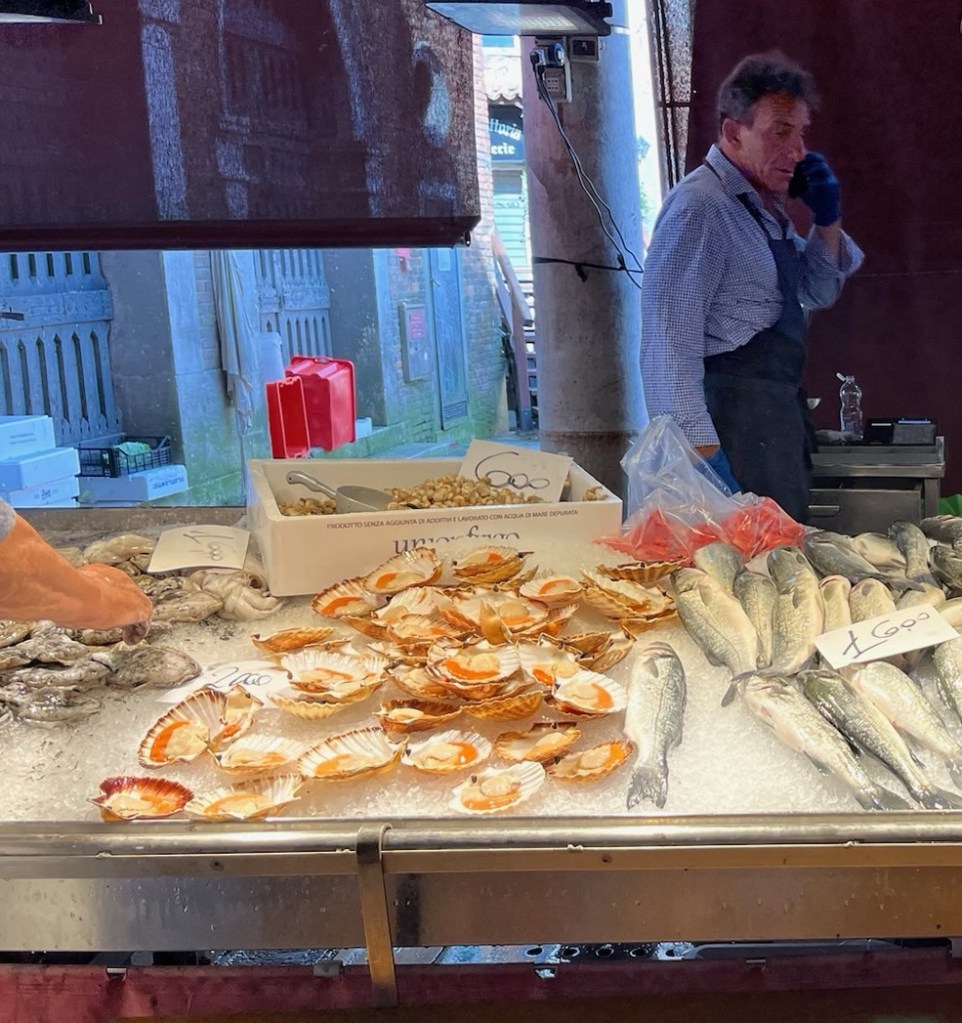
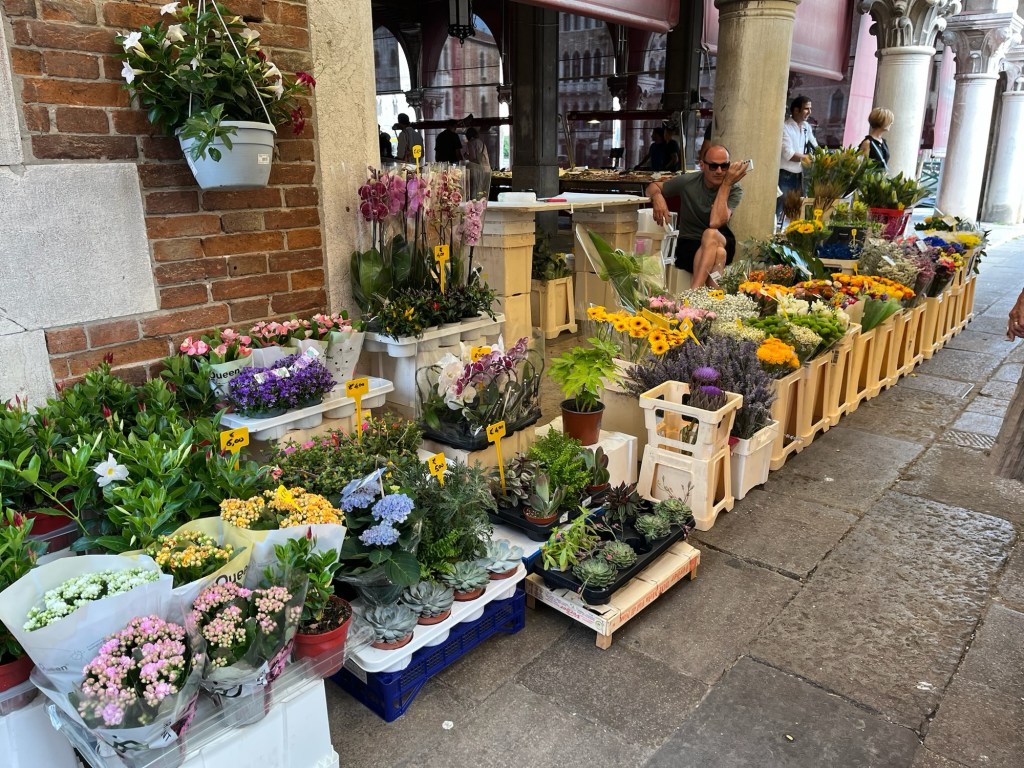
And, the market. Not the grandest I have seen but still interesting. A market with gondolas nearby, artichokes peeled to a slice of heart, and scallops with the roe intact.

Nora finds an art supply store and debates buying a set of watercolor pencils. She decides they are too expensive but for the rest of the week tries to get back to the store – with no success.
How to shop in Venice:: Buy it when you first see it. You are unlikely to find it again!
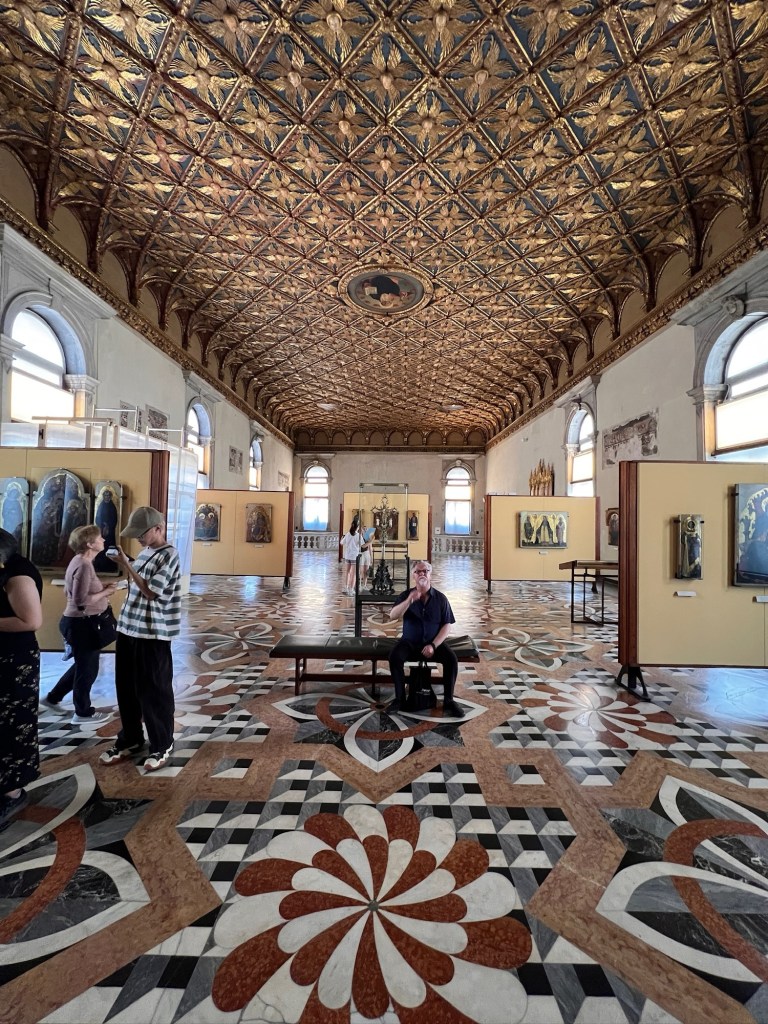
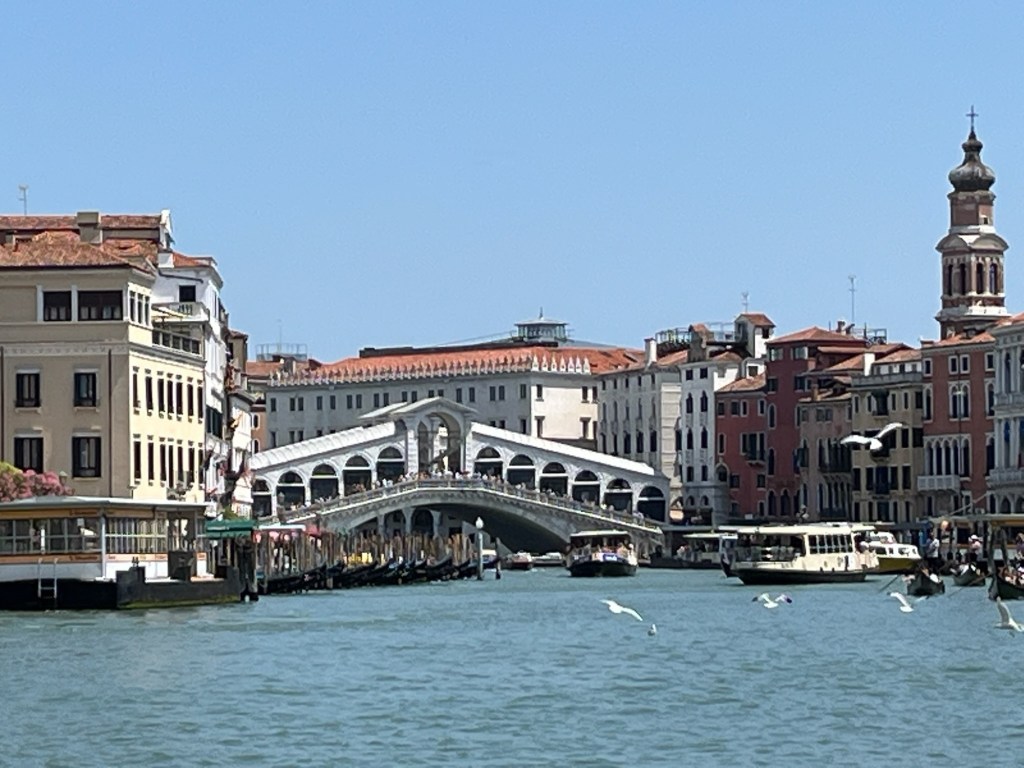
The four of us reconnect at Gallerie dell’Accademia, right on its own vapo stop on the Grand Canal. Aperol spritz under umbrellas in the cafe outside while waiting for our timed entry tickets, which it took us four tries to buy at breakfast.
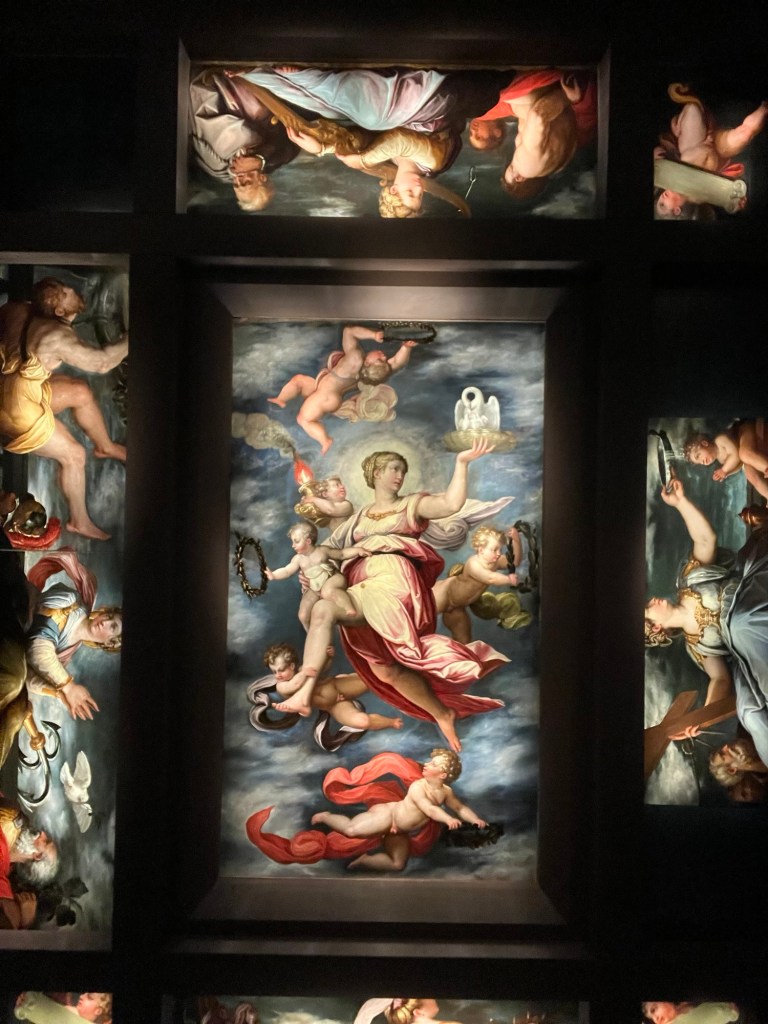
Gorgeous Veroneses and Titians — The Presentation of the Virgin — and artists I never knew: Giambono and de Ceneda and Conegliano and Giorgione. The Accademia is full of VENETIAN artists whose lush, colorful, exuberant works of traditionally religious themes and people seem to jump out of their elaborate gold frames and come to life.
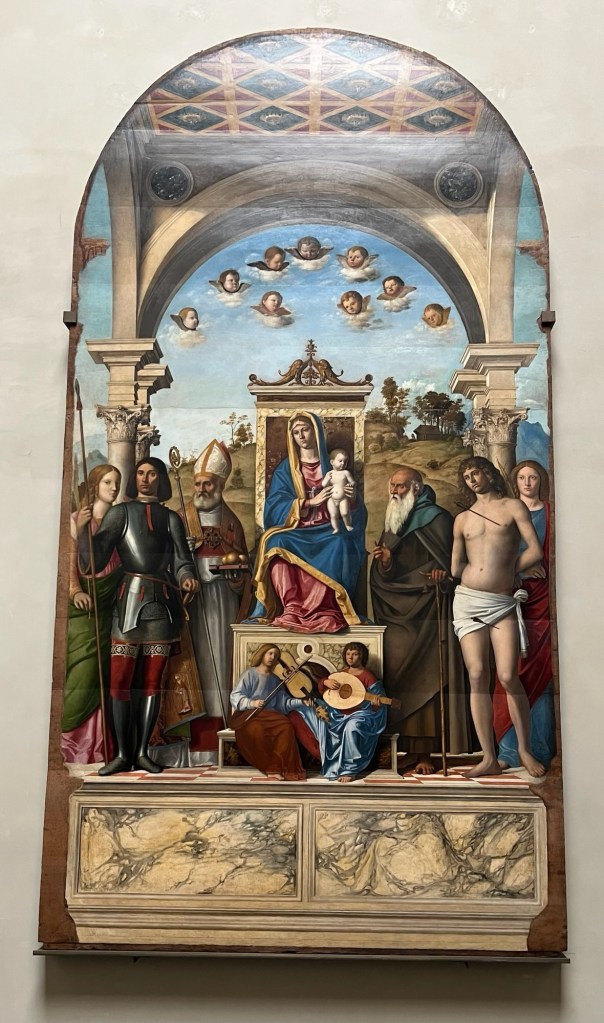

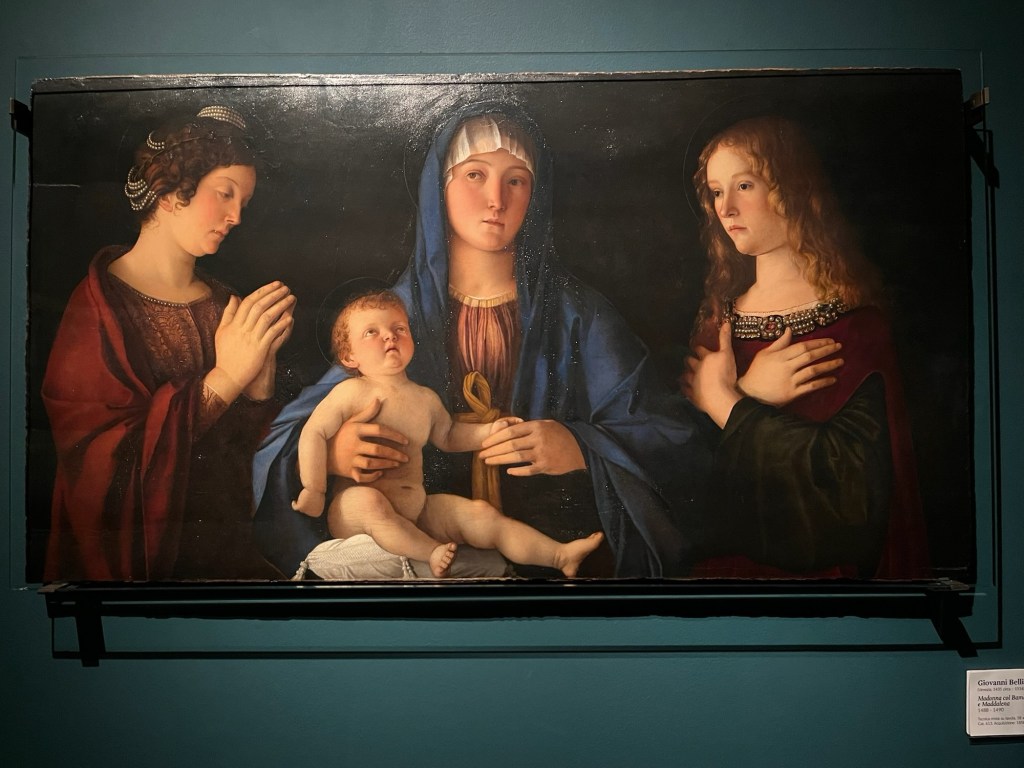
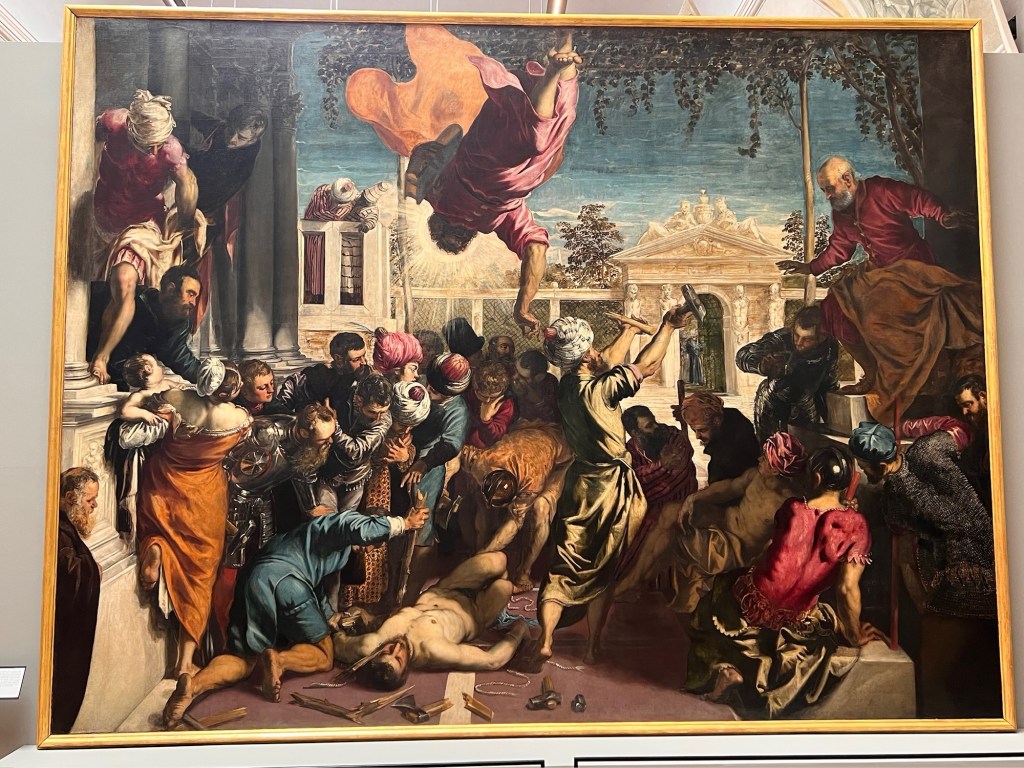
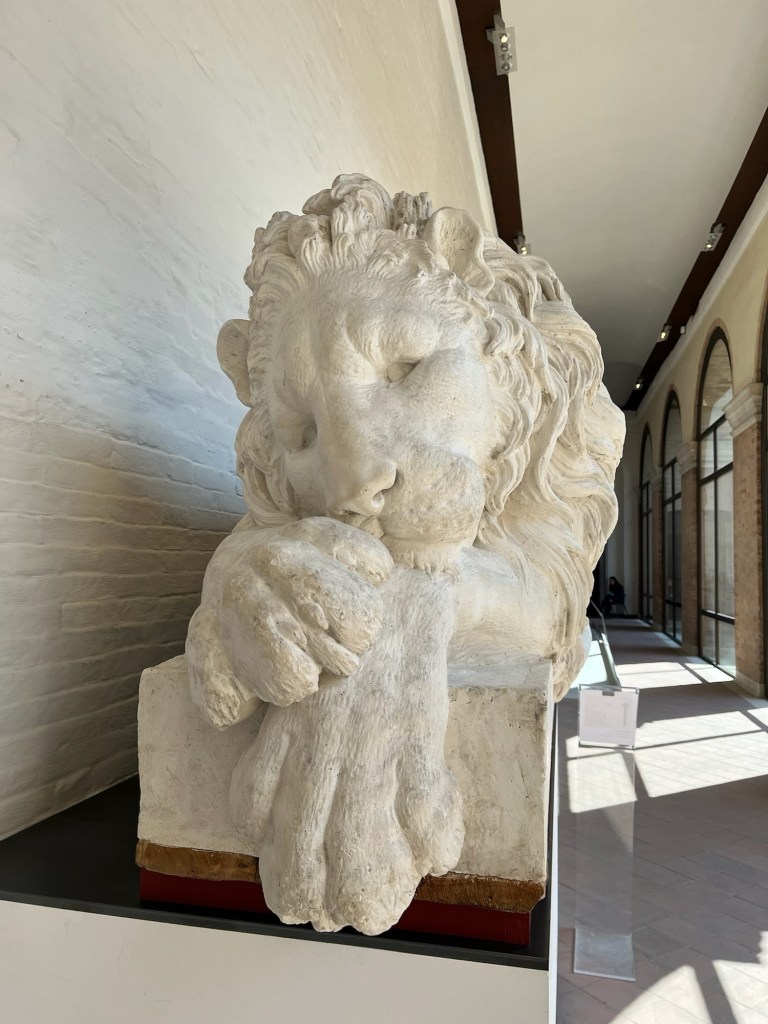
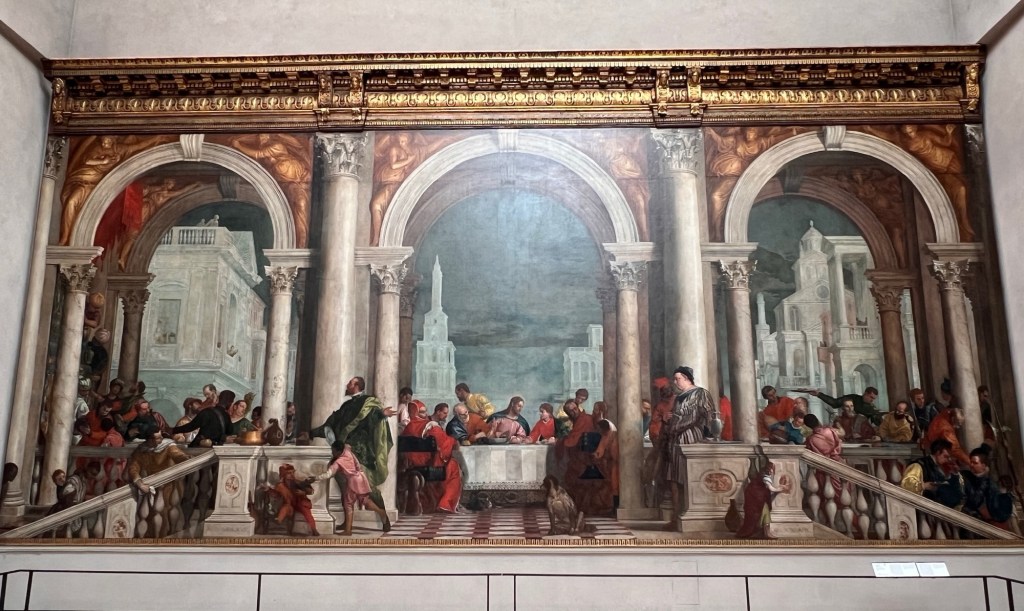
Although most paintings needed to portray a religious theme, this was a time of riches and festivity. Veronese’s “Last Supper” contained many elements of a lively dinner party. It was not well received by the clergy. Rather than change the painting, he changed the title.
Back at the hotel Mocenigo, we clean up and ramble the neighborhood where Nora finds a great pizza place just over a bridge — this may describe 20% of all restaurants in Venice — and we have a delicious dinner, content to let the world pass by.
Ahhhhhhhh, vacation.
 Two Tramps