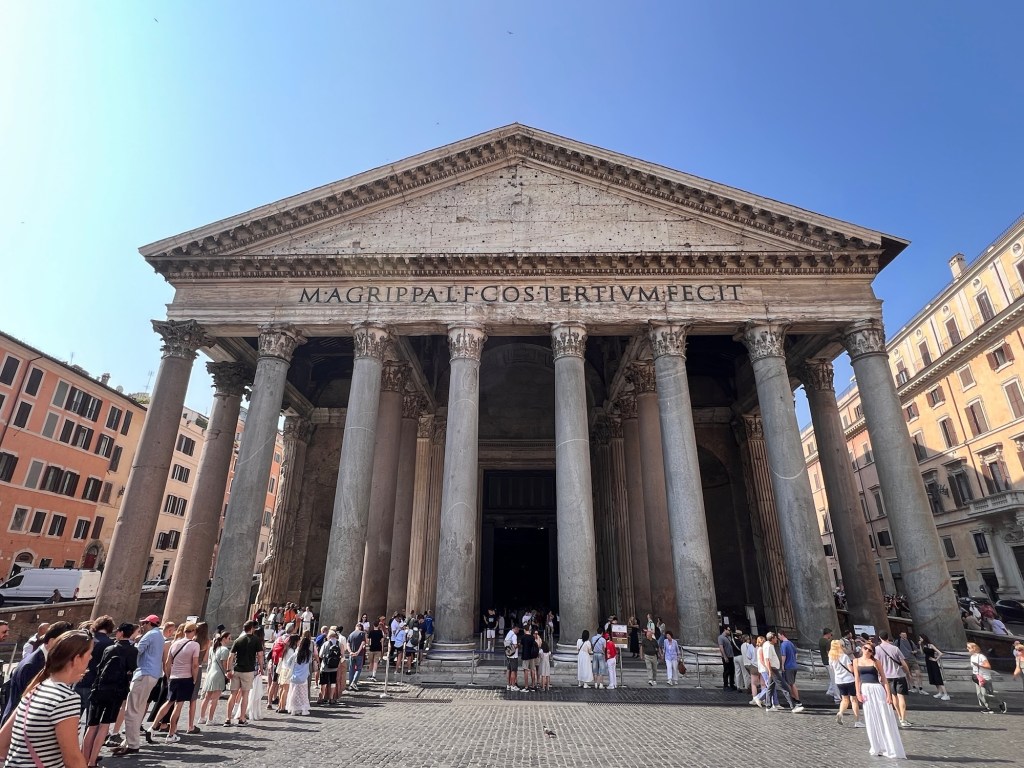
The boot is off. Long live the boot. We rise and walk to the Pantheon so we can be at the head of the already-have-tickets line. Another gorgeous but sizzling day … gonna be 94 degrees later. The piazza and fountain in front of the Pantheon are sparsely crowded and we are the first people in our line, so Cynthia goes off to get coffee, tea and a croissant while David styles his new sunglasses.
Two lovely young Irish women, Siobhan and Naimh, who turn out to be sisters, queue behind us and chat us up. One lives in Ireland and wants to be a vet; the other lives in Paris and … wants to be. They are on a week vacay and bubbly and just rays of sunshine. They ask us, “What’s the secret to a long, happy marriage?”
Great question.
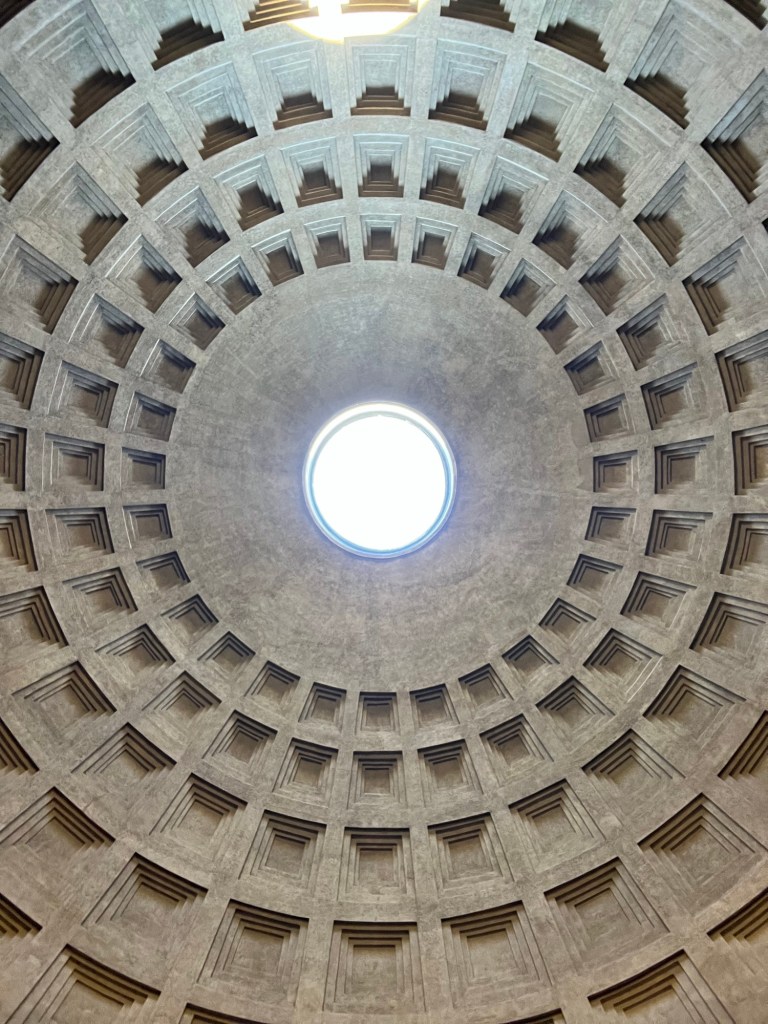
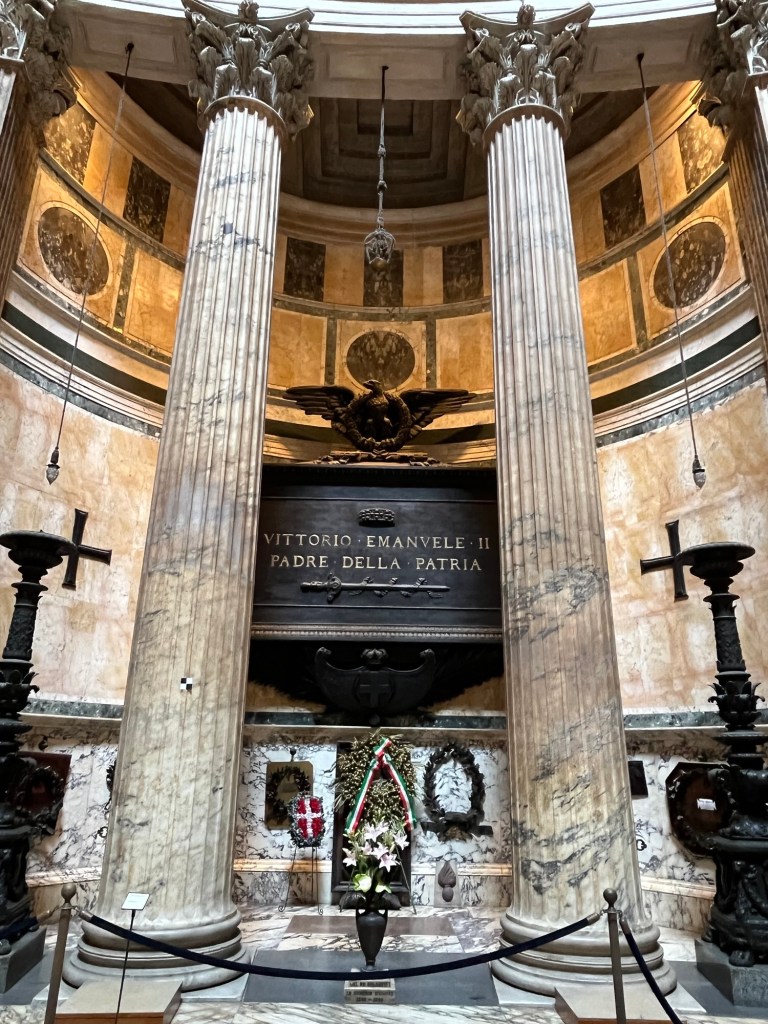
We ARE practically the first people under the Pantheon’s huge dome: a place and experience that actually hushes all who enter. The mostly coffered dome is exactly as high as its diameter: the perfection of its proportions maybe having something to do with its effect on visitors. Tombs of Raphael, who asked to be buried there, and of Italy’s first two kings grace apses in the curving wall. After waking around inside, we sit in one of the many rows of chairs in front of the altar, which is exactly across from the entrance, and quietly take in the space.

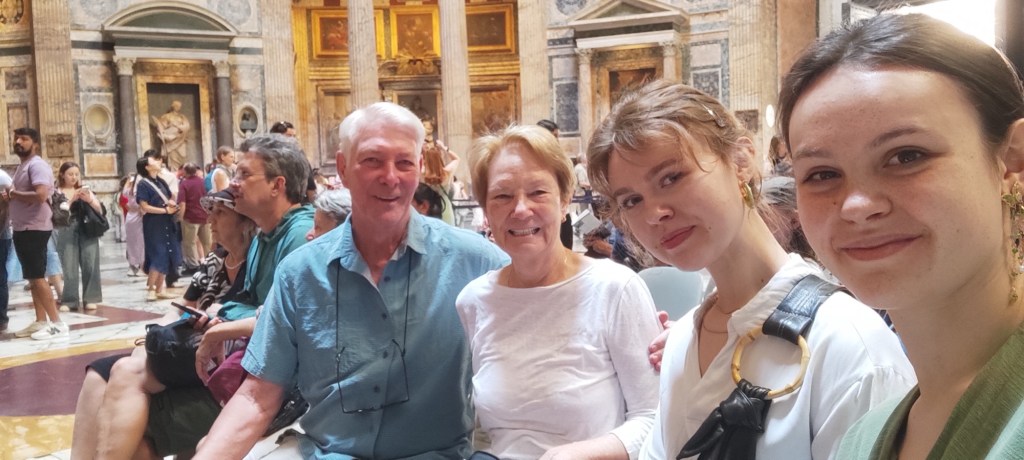
We take a selfie with the girls and leave, walking throughout the jet-black cobbled narrow streets of the Campo de’ Fiori neighborhood — considered Rome’s historic center — visiting a number of churches that thankfully do not require tickets and are guarded by docents who steadfastly refuse entry to women with bare shoulders.
The first church we visit is the Chiesa de San Luigi dei Francesi. An interior chapel has three Caravaggios to die for. Another interior space, the Chapelle Saint Louis, was designed and painted around 1664 by the female (!!!) architect Plautilla Bricci.


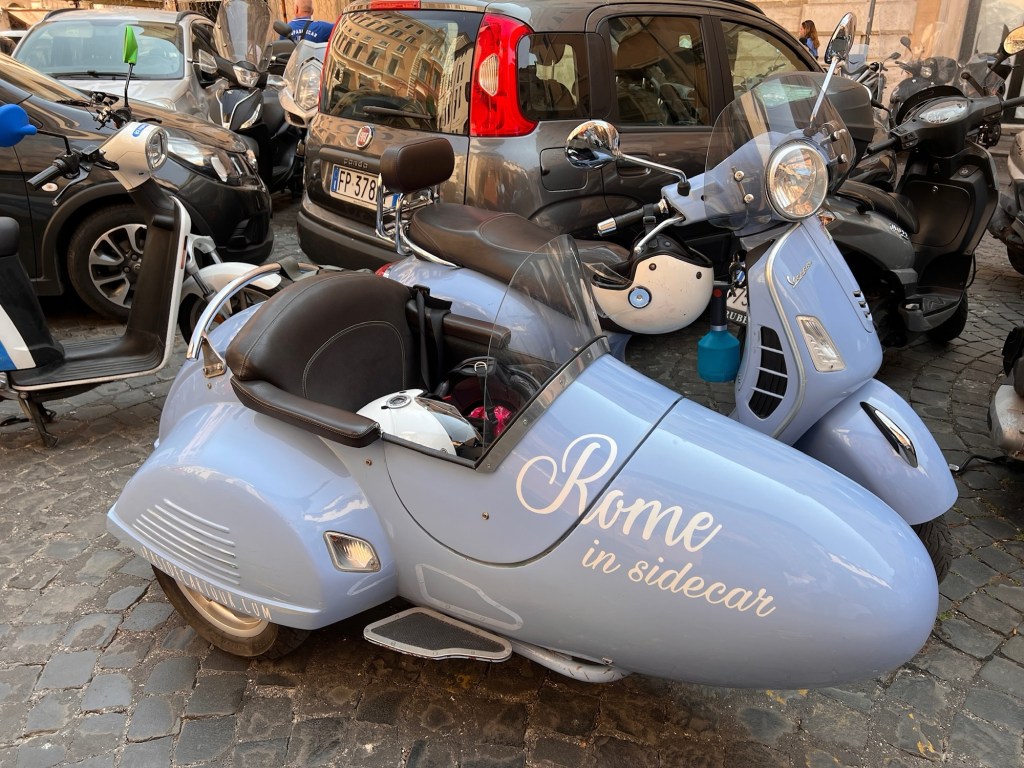
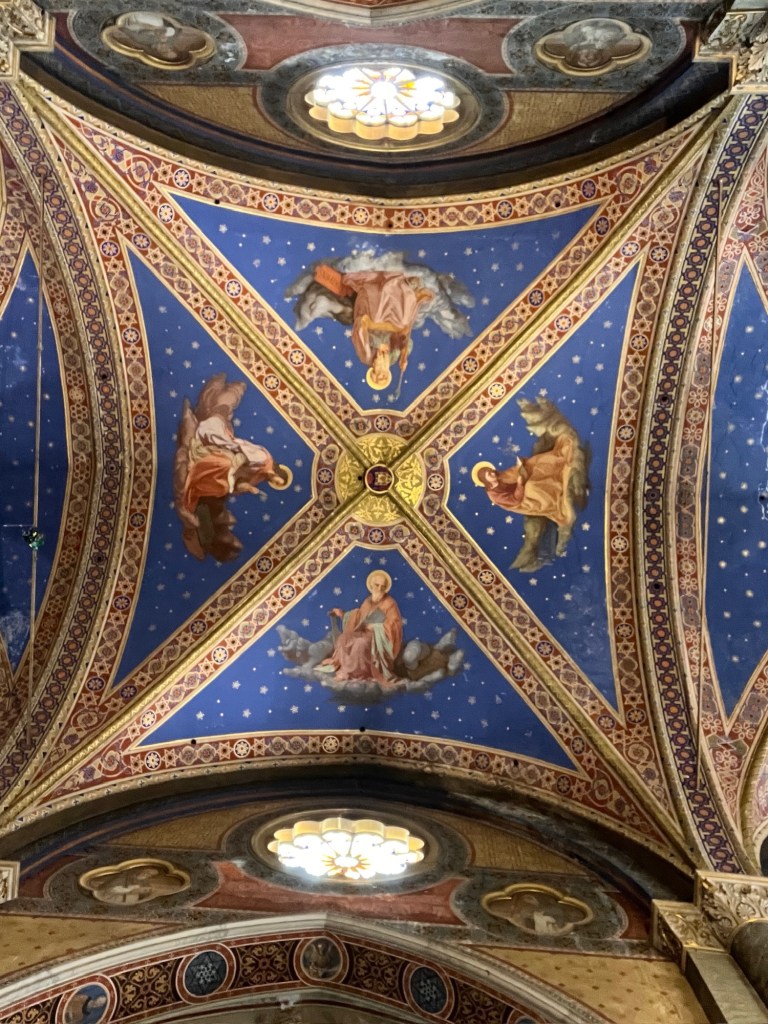
We move on, past a stand of “Rome by sidecar” motorcycles with lounging drivers, to the Chiesa de Santa Maria Sopra Minerva, a very large church that has a statue of Christ as “the Redeemer” by Michelangelo and ceilings that look painted in brilliant lapis lazuli.
We leave and happen on a print store where we buy a copy of Barry Lawrence Ruderman’s Haemisphaerium Stellatum, an ancient map of the constellations north of the equator, depicting the people and animals the stars represent.
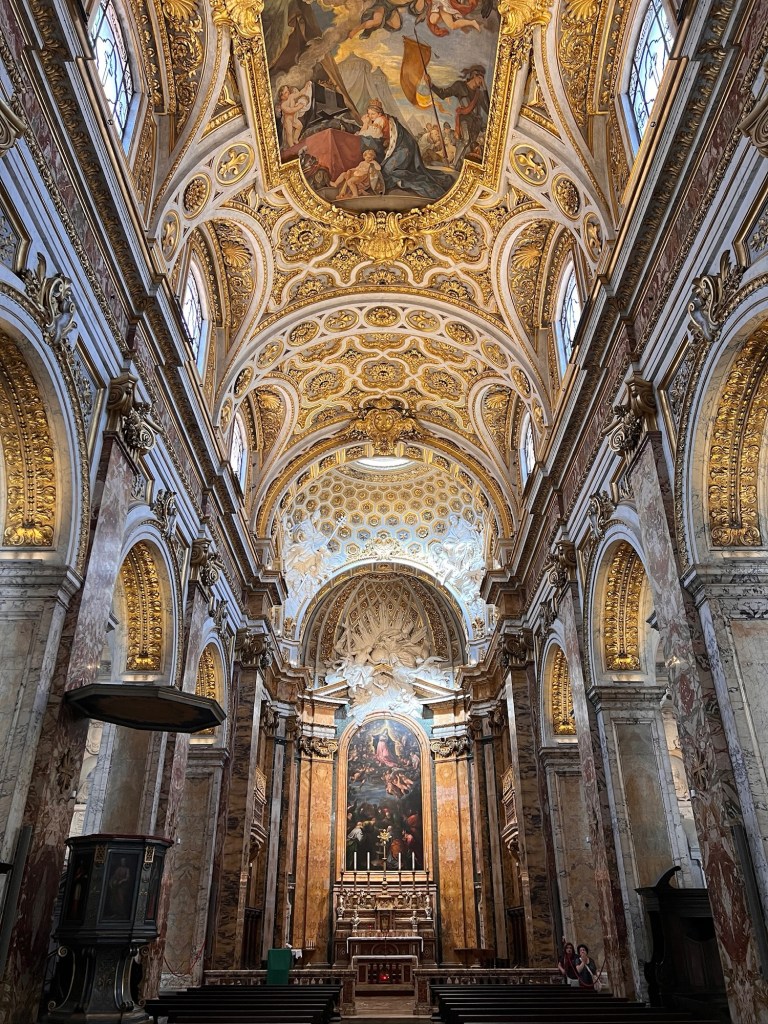
We move on to the Church of Saint Ignacio, touted as having an excess of baroque illusions, which it does: for example, a troupe l’oeil dome painted on a flat ceiling, and a ceiling that is painted but has scores of three-dimensional figures flying and crawling around clerestory windows.

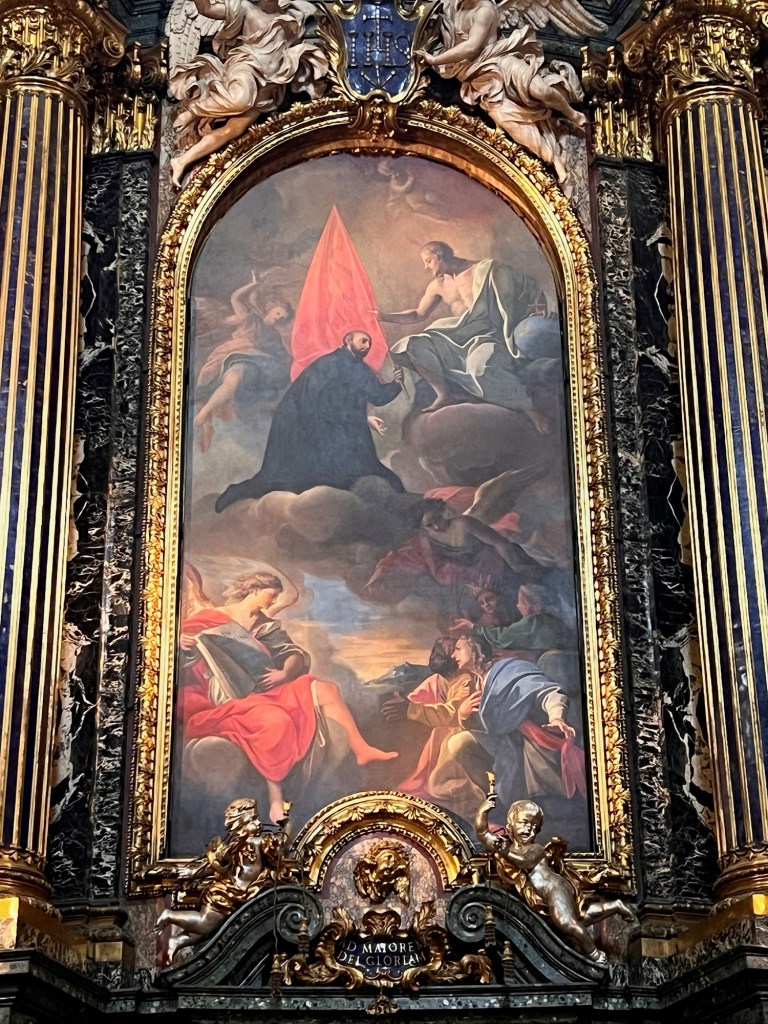
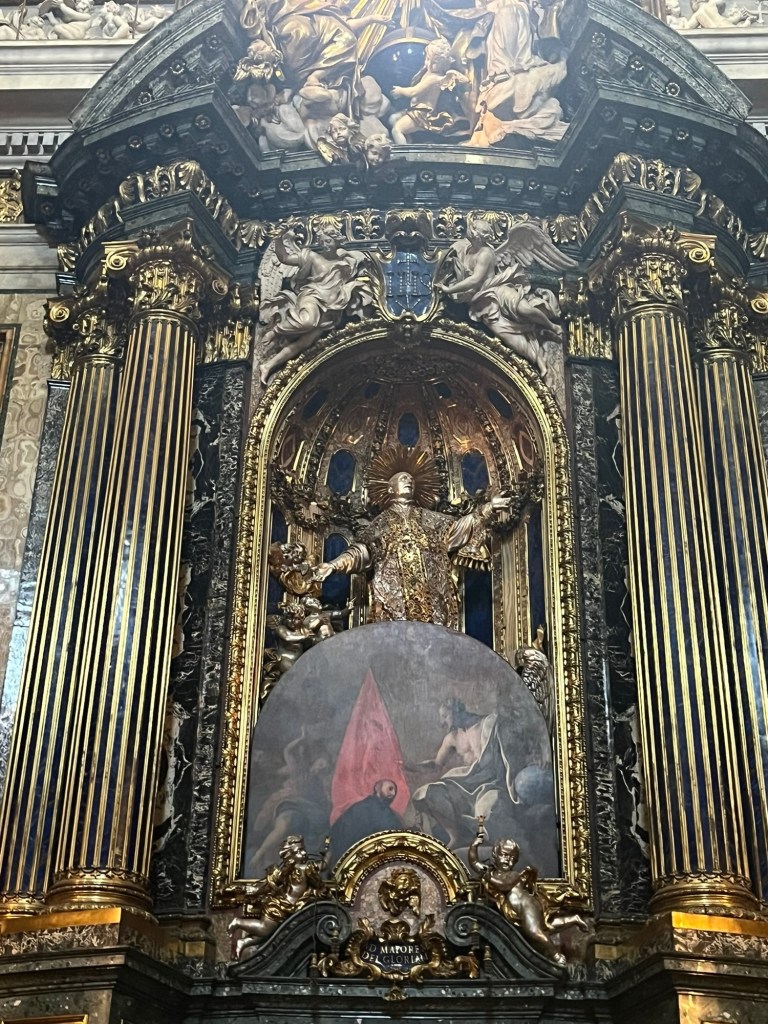
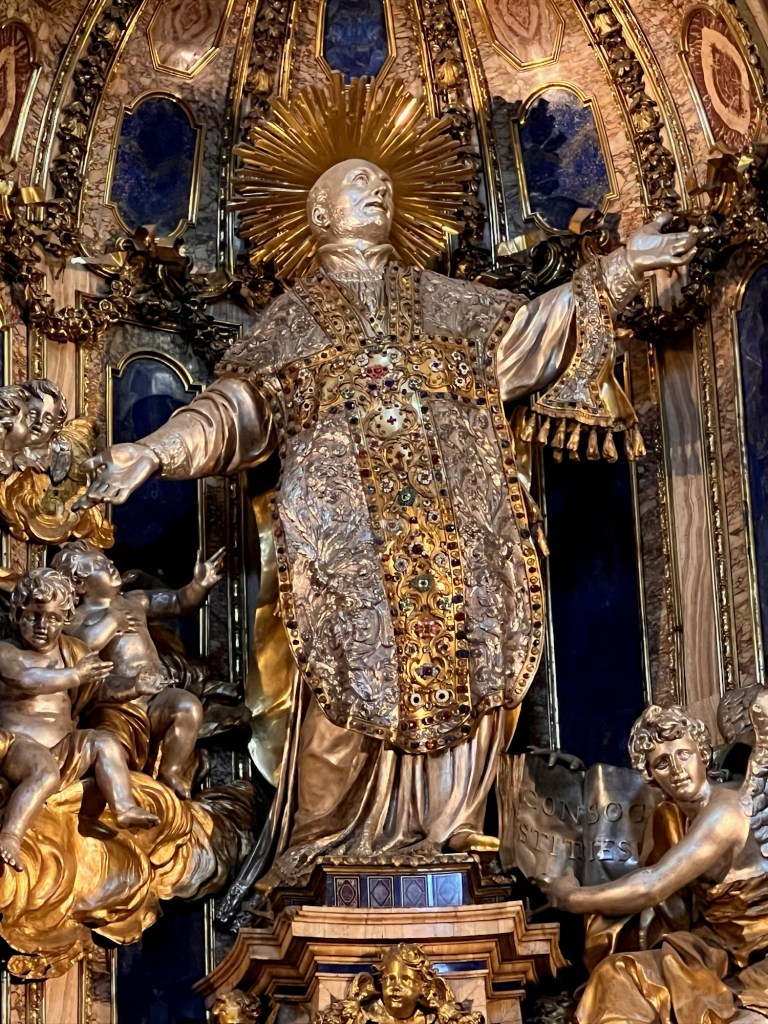
We repair back to the apartment to escape the worst of the afternoon heat and re-emerge to return to the Campo de’ Fiori to see the Chiesa de Gesu’s Big Surprise when a very large painting by Andrea Pozzo lowers itself with musical accompaniment into the raised tomb below, revealing the gold, larger-than-life gleaming jewel-encrusted statue of Saint Ignatius of Loyola, who commissioned the design and building of the church Circe 1551.
Needing to satisfy our jones for massive swirling crowds, we meander to the Trevi fountain where you now have to get in a one and pay to stand at the its front lip. Otherwise people jostle each other for pole positions along an iron fence on the street above the fountain, snapping photos and hurling coins over the heads of those below them and, occasionally, into the water.

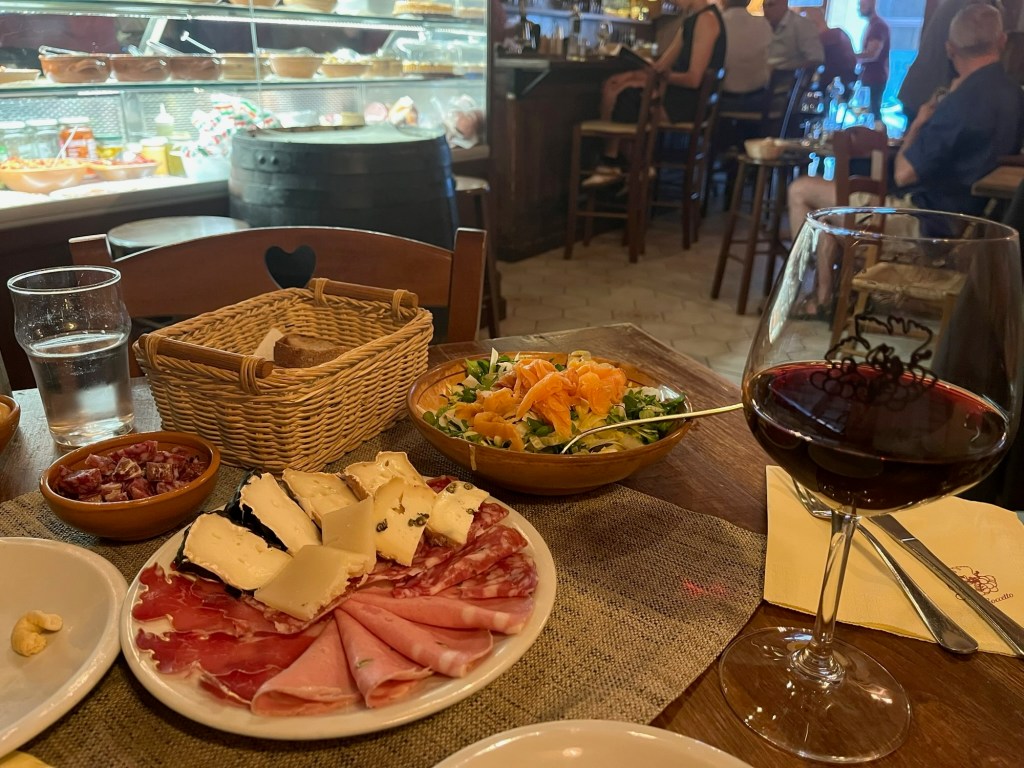
And return to our neighborhood for dinner at Il Gocceto, a wonderful tapas-type restaurant where we drink Rosso and Barolo and feast on a three-cheese-three-salami tray and a smoked salmon with a salad of smoked salmon, fennel and greens on the side. We sit inside at 7:00 when only three of a dozen tables flanking one wall are occupied. By 7:45 the place is packed and turning people away. Lucky us: When we leave around 8:45, the front door is clogged by a scrum of wanna-be diners and flanked by lines on both sides drinking wine and waiting to get a table.
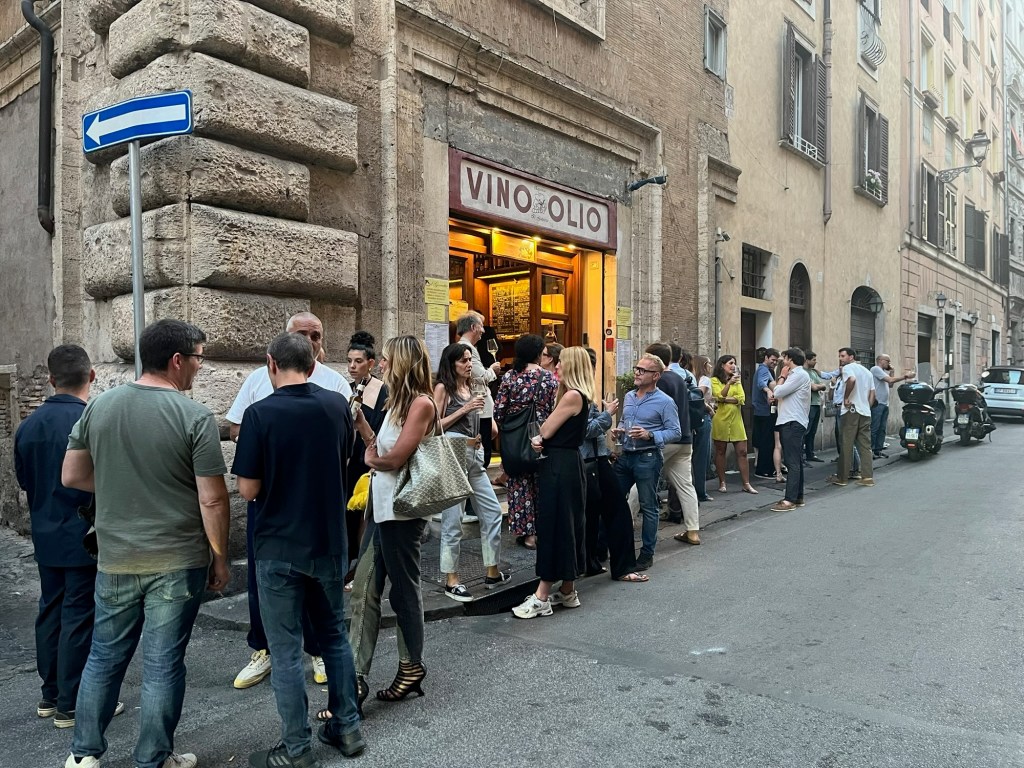
We stroll back toward our apartment and stop for a Negroni and a lemon cello at the corner bar right across the street. People of all sorts and colors and dispositions, alone, with friends, as families, not a single sad face passes by.
Veni, vidi, vici. Good night.
 Two Tramps