The Hudson Cafe on Woodward Avenue, just three blocks from our hotel, is a Detroit landmark, like Scholls Cafeteria was in Washington, DC. Its menu is the size of a small movie poster and covers bagels to benedicts. Cynthia orders poached eggs that arrive swimming in water and taste like … water. David’s over-easies were perfect as was his coffee. We finish and quickly find the #4 bus north on Woodward, which will take us to the Motown Museum.
Our eleven o’clock — one o’clock, two o’clock, three o’clock rock — tour has about 20 people — some from Mexico, others Italy, a couple from Venezuela, everyone else all over the globe — are entertained by Andre, our singing guide who inspires a woman in our group, clearly on an emotional pilgrimage to revisit her youth and lost loves, to sing as well. She’s a young Aretha. Absolutely stunning voice.
Berry Gordy, Jr.’s, music empire physically covers several houses on one side of the block and one house across the street. Emotionally: the world. “Let me hear you say, ‘Yea!’” On the stairway from the group’s meeting point to the first exhibit is a map of the world covered with colored pins stuck into the places people have come from to see the museum. Two pins in Antarctica; the rest of the land masses and islands almost completely covered.
Just so you know, Claudette Rogers, featured along one wall of the museum’s photographs, so captured Smokey Robinson’s heart that “My Girl” is literally all about her. She was a song-writer herself.
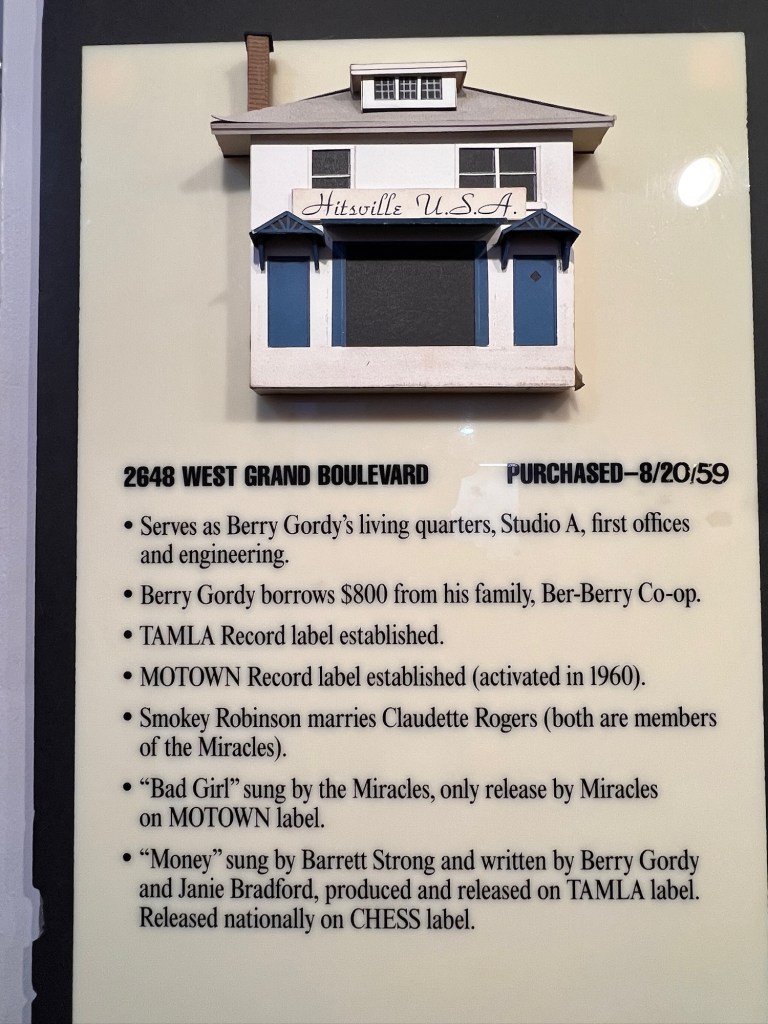
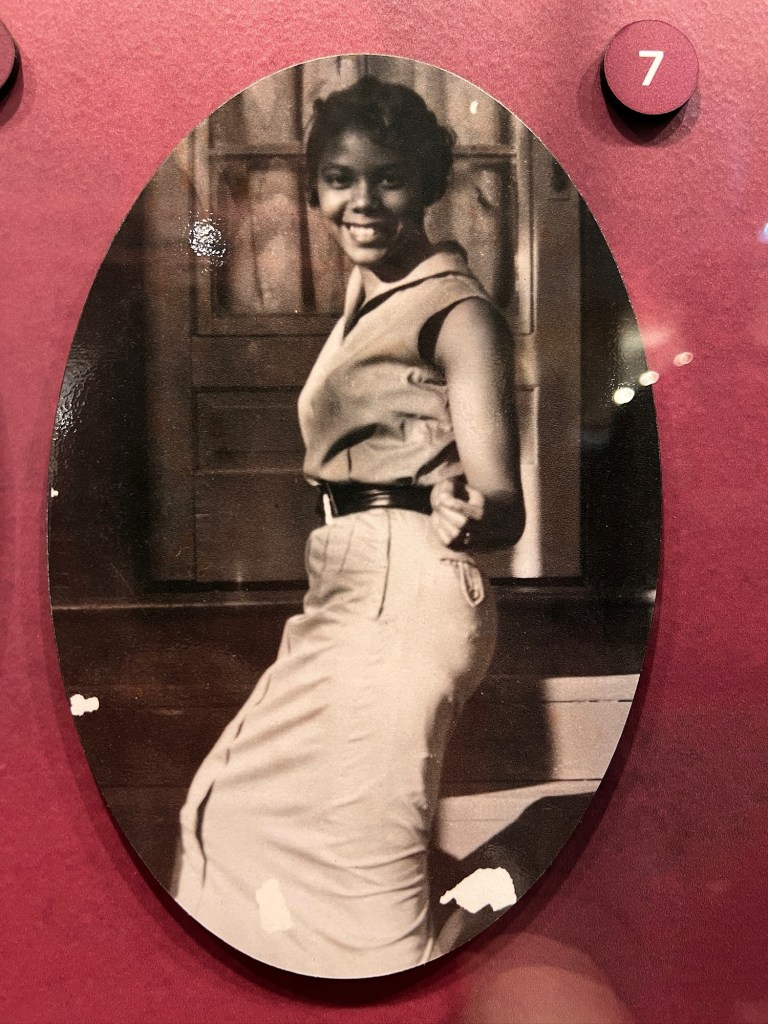
Though the tour only lasts 45 minutes — ours actually was a few refrains over an hour — and though the original house looks small, there is a a huge amount of stuff and history to see … in sometimes serious ways, it exposes the soul of America.
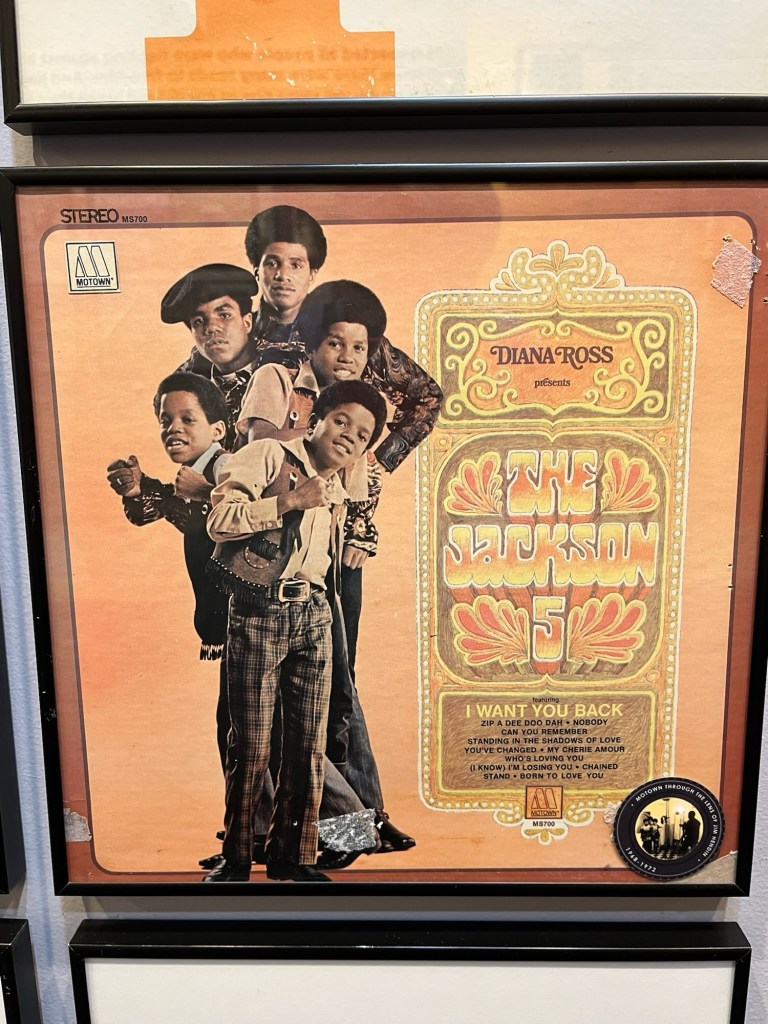
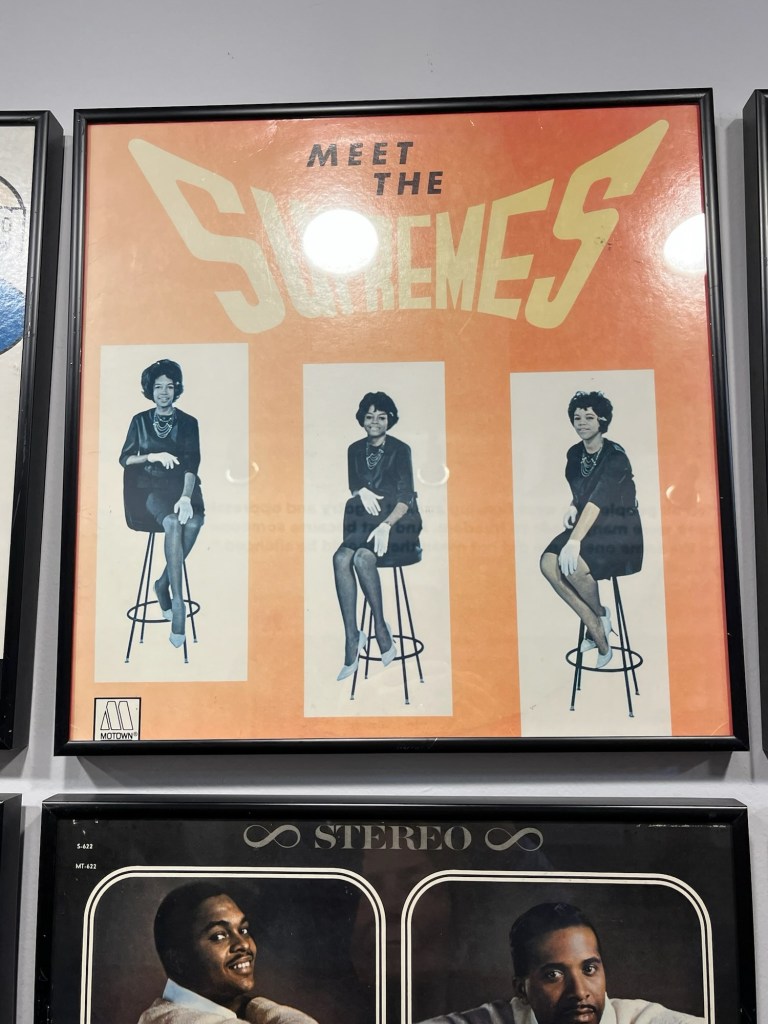
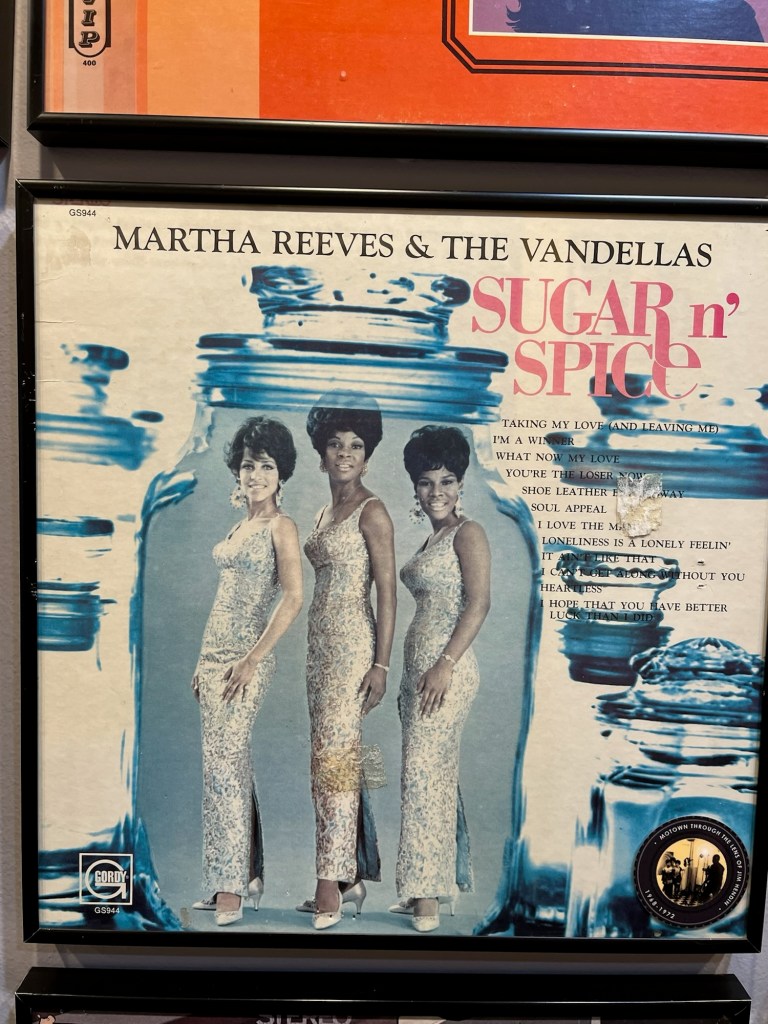
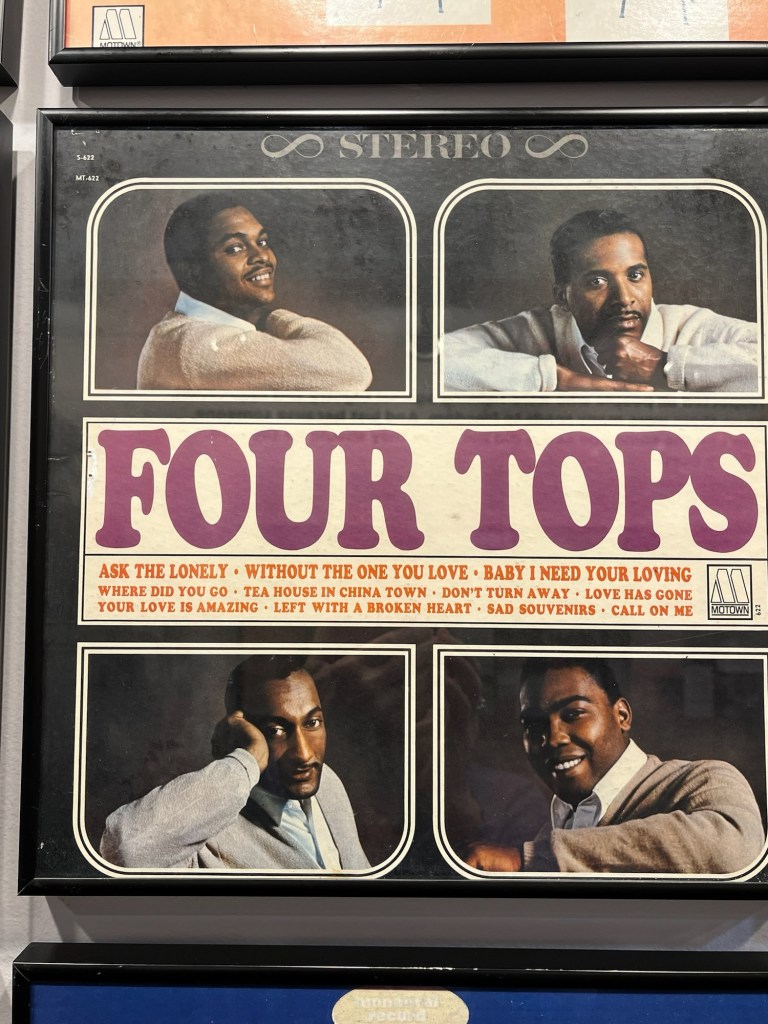
Photographs and artifacts aplenty. We highly recommend any traveler to make the effort to see and hear this crammed, vibrant place a good bit north of downtown Motor City. We finish the tour in “Studio A,” a small basement room crammed with instruments where many of Gordy’s hit tunes first were crafted. Our own Aretha sings a final song with tears glistening on her cheeks.
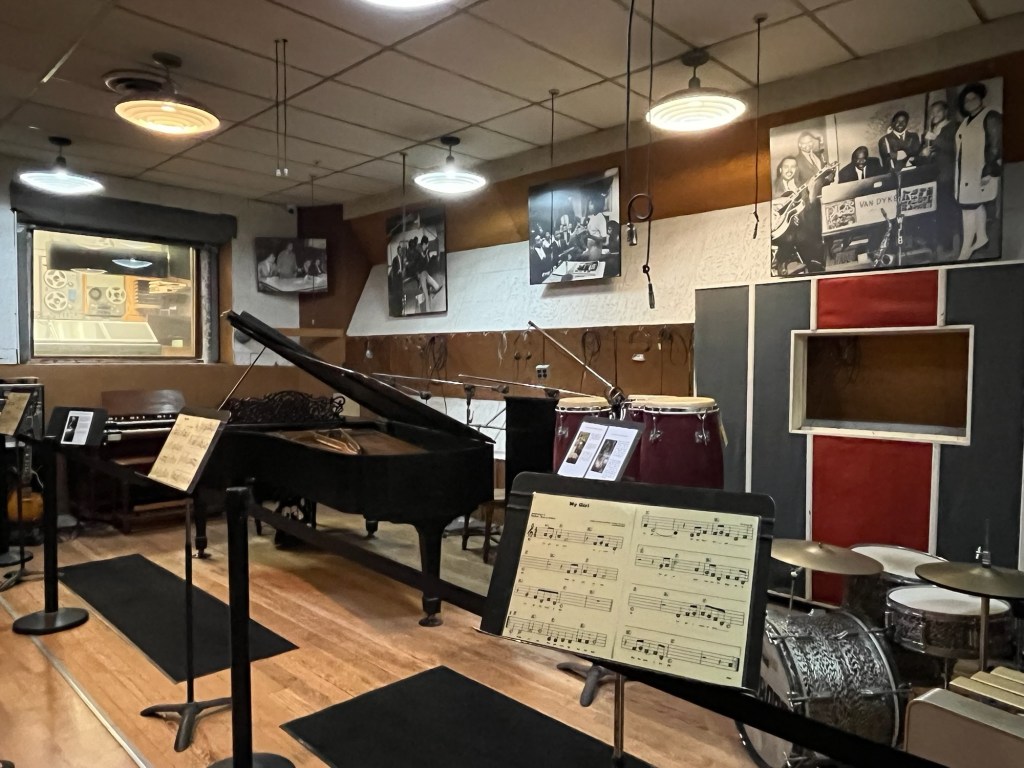
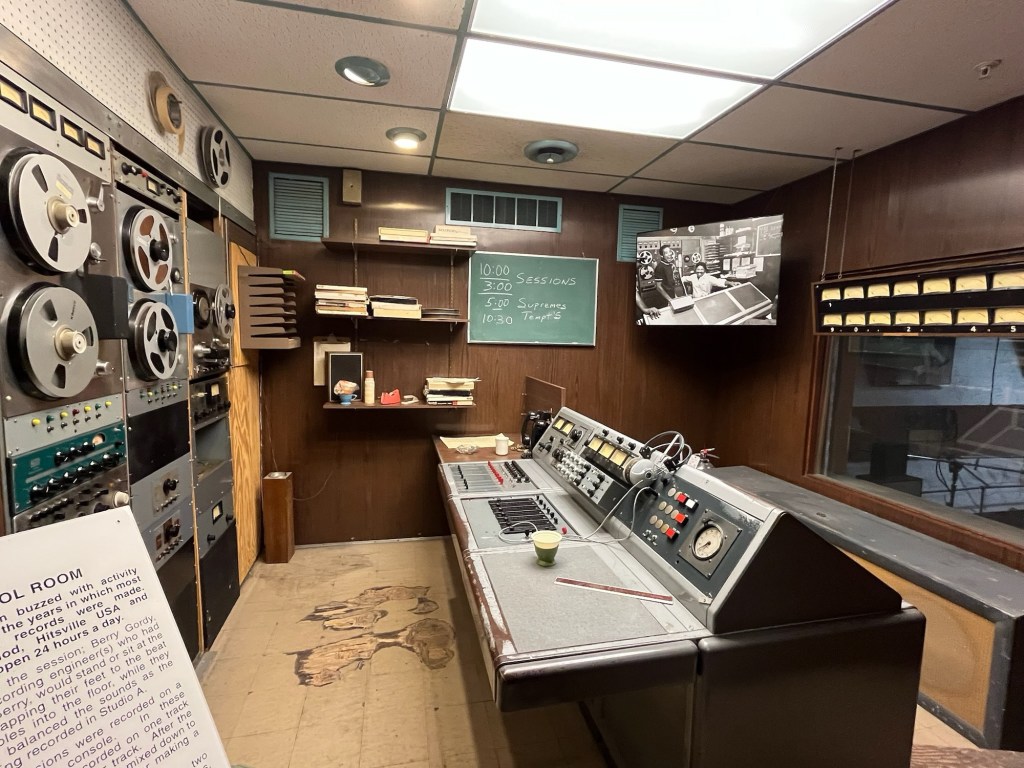
A new and very large museum has broken ground literally behind the original house. In pictures, the new museum looks like a low golden cube. It will be ready, we are told, in 2026. We have little time to ponder this future because we have a one o’clock (two o’clock, three o’clock rock) tour of the DIA — the Detroit Institute of Art, which holds a ton of eye candy and history, including two massive Diego Rivera murals. And we need to get a bus to take us there.

We ask directions of Andre. He says, “Walk down West Grand Boulevard to the main intersection at Woodward and take the Q to the east a couple stops and you’re there.” He neglected to say that the walk along West Grand was exactly one mile.
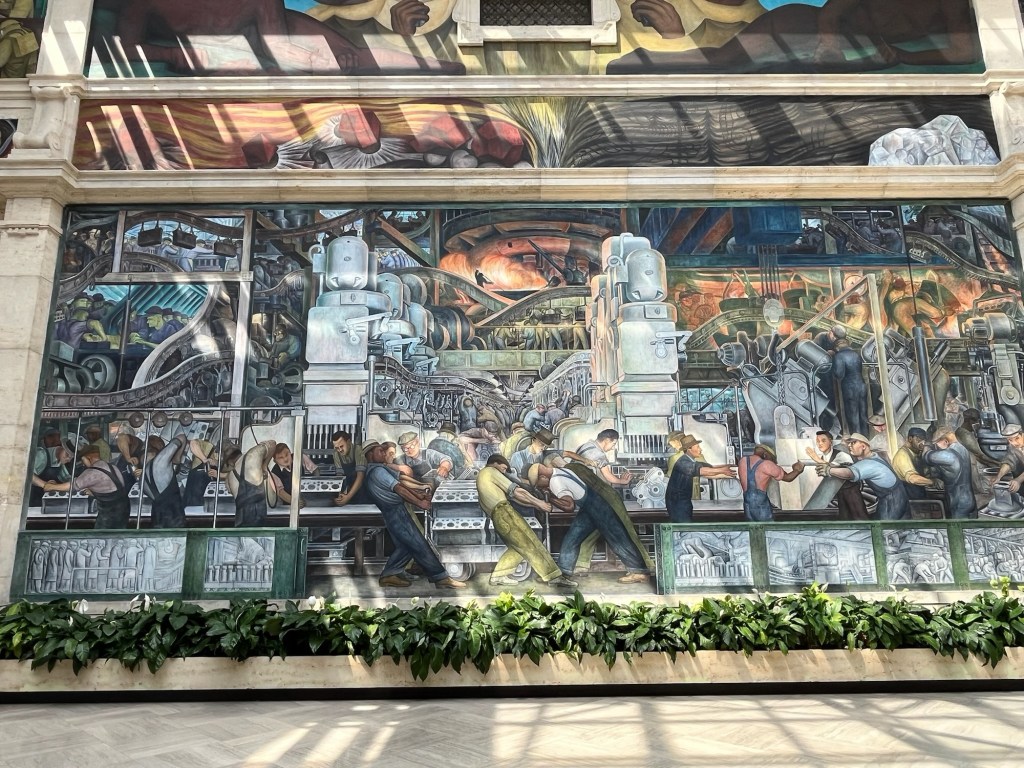
We get to the DIA with enough time to check our bag and break for the bathroom. Our tour begins in a large entrance hall next to the Diego Court where Rivera painted his “Detroit Industry” murals during the 1932-1933 depression years. We have a choice of one of two guides: a local woman or a transplanted Mexican named Miguel who instantly rhapsodizes about Diego’s Mexico City murals. (You guessed right.)
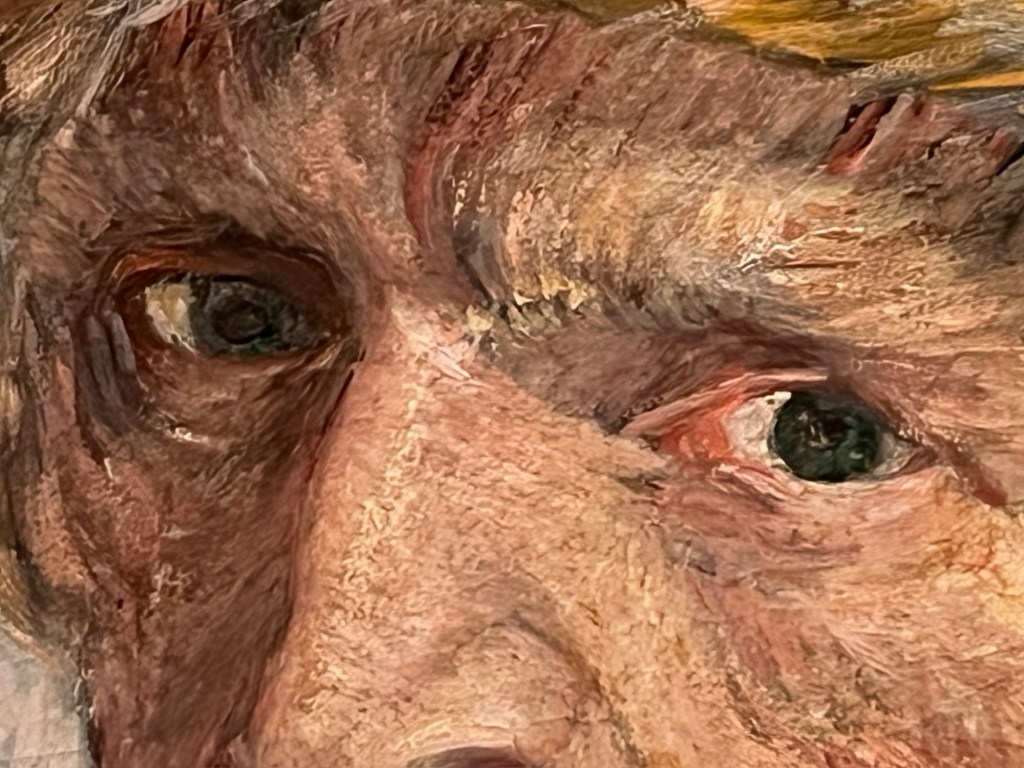
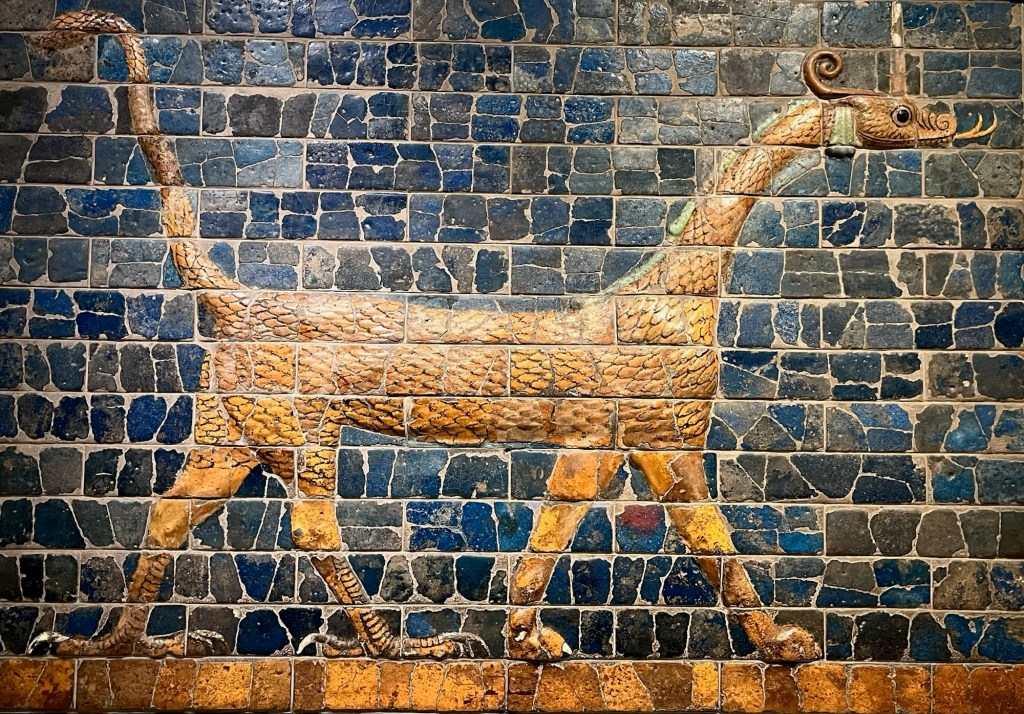
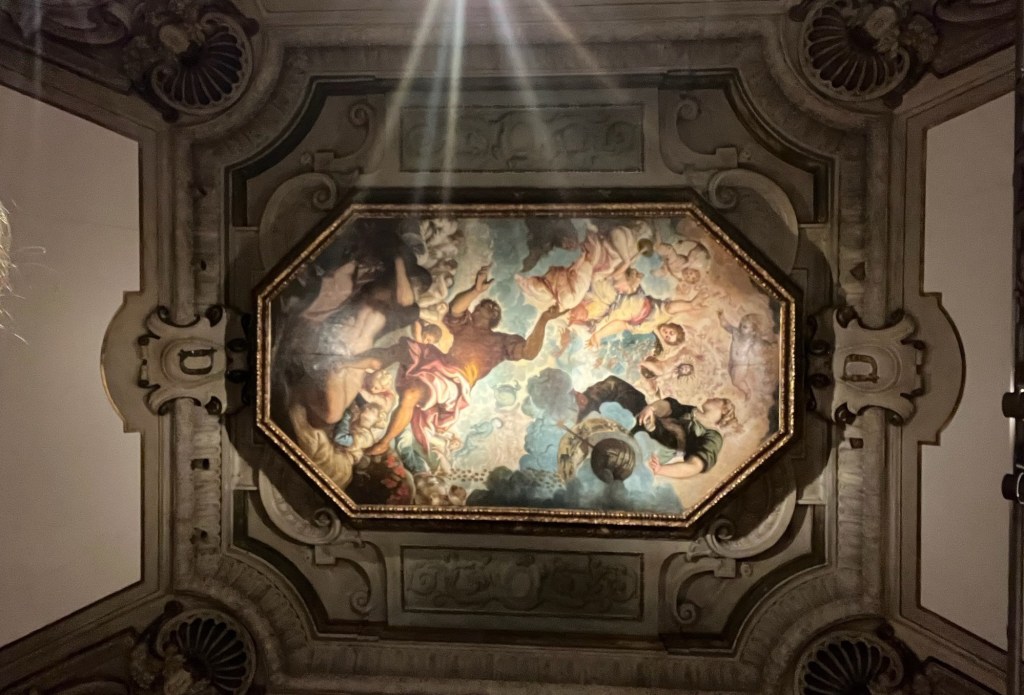
Before we get to Diego’s Court, Miguel shows us some highlights from several time periods: Babylonian ceramics through Renaissance chiaroscuro (Tintoretto … and a woman (!!!), Artemisia Gentileschi), through post-impressionism (Van Gogh self-portrait) to 1930’s carved wood ceremonial bowl by the Yoruban Olowe of Ise.
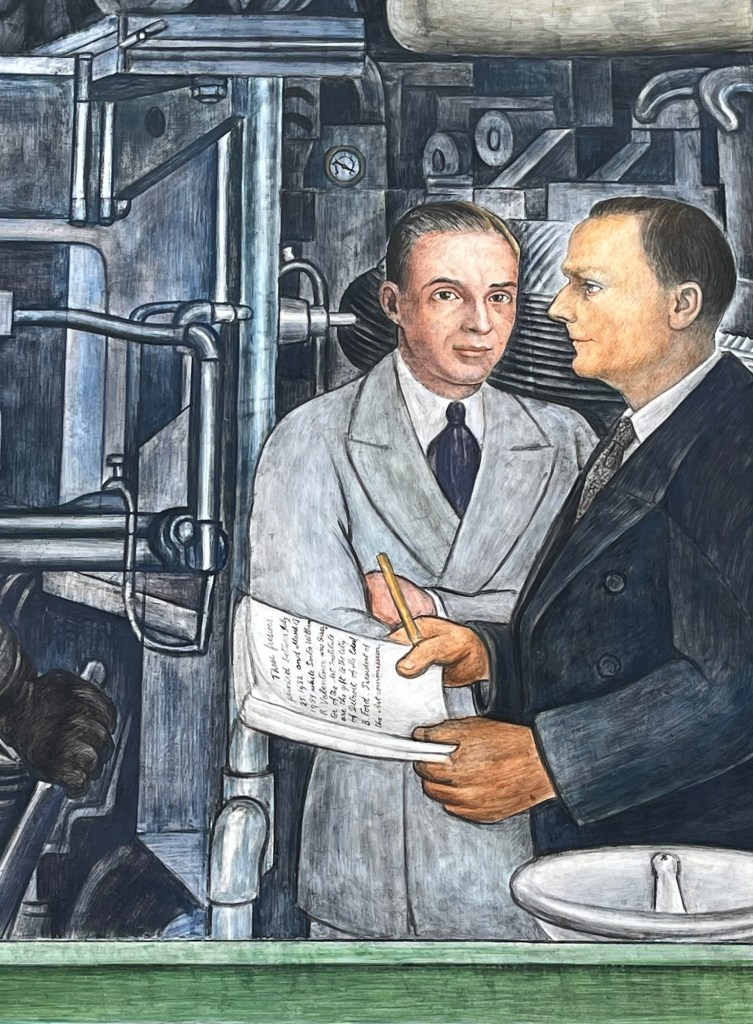
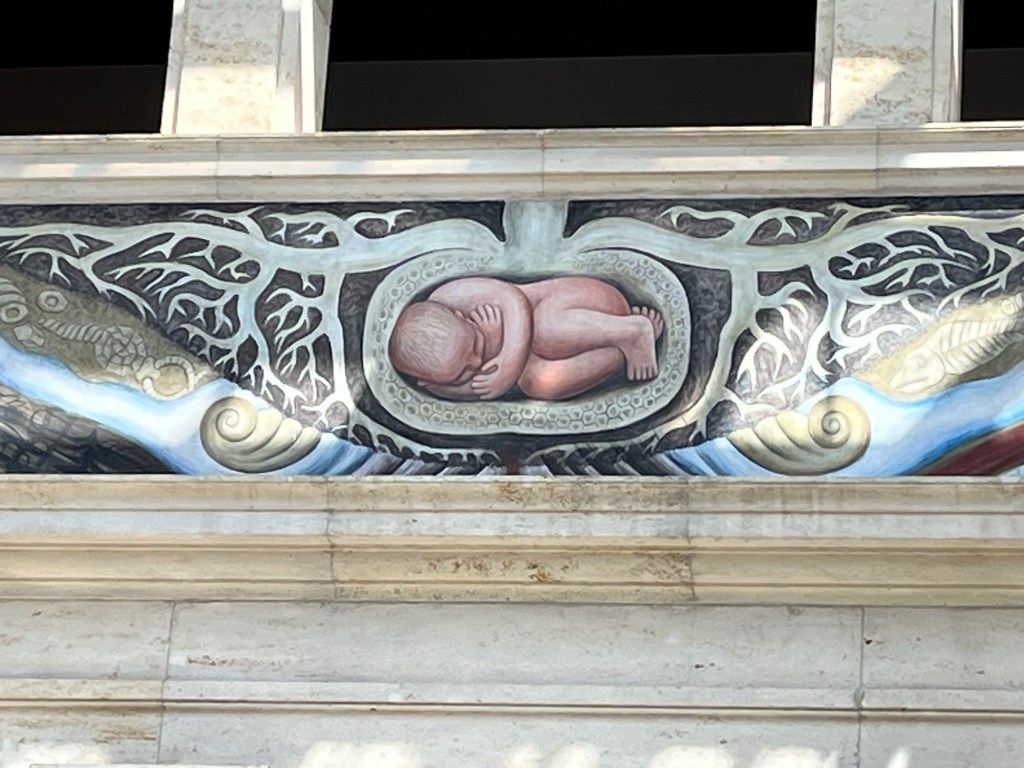
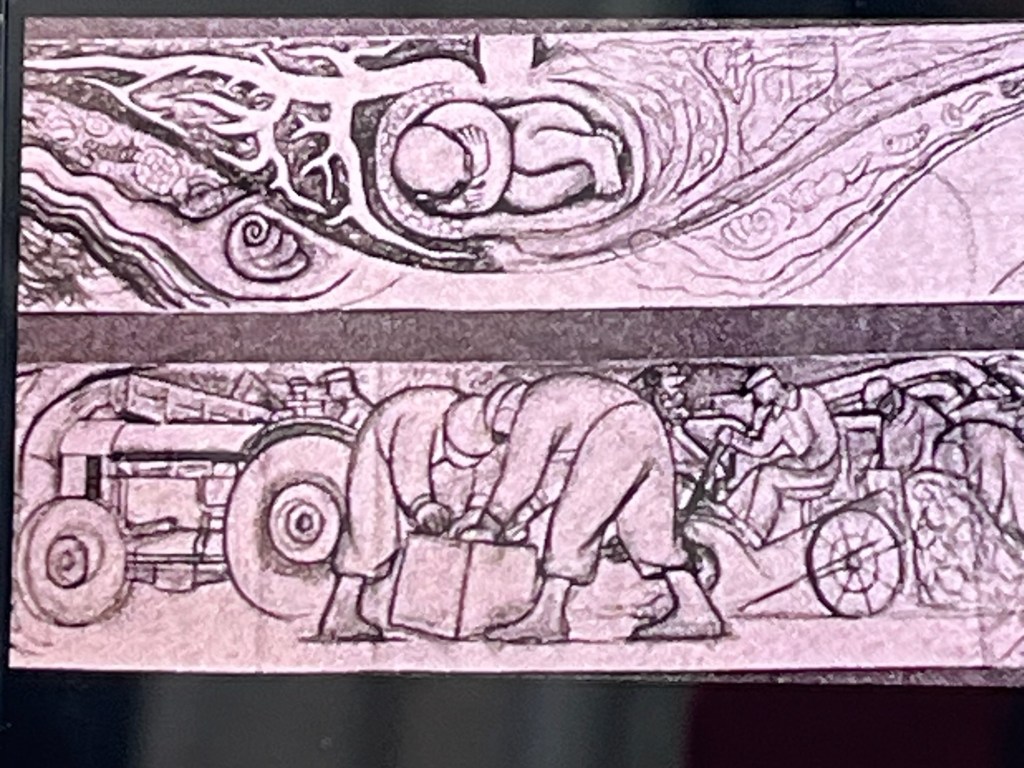
We spend a looooong time in front of Rivera’s murals. Soooo much fascinating about them; you just gotta go. A few facts: His wife Frieda was pregnant and lost her child as he was creating the murals so he changed his design and substituted their unborn child in place of the workers opening the box.
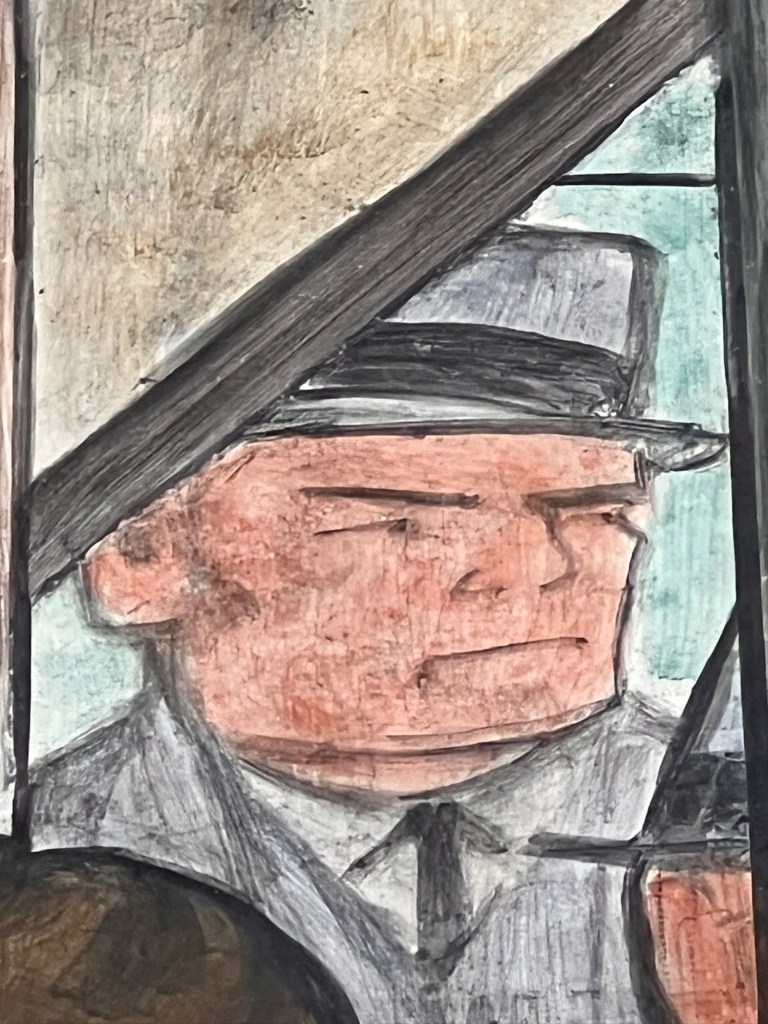
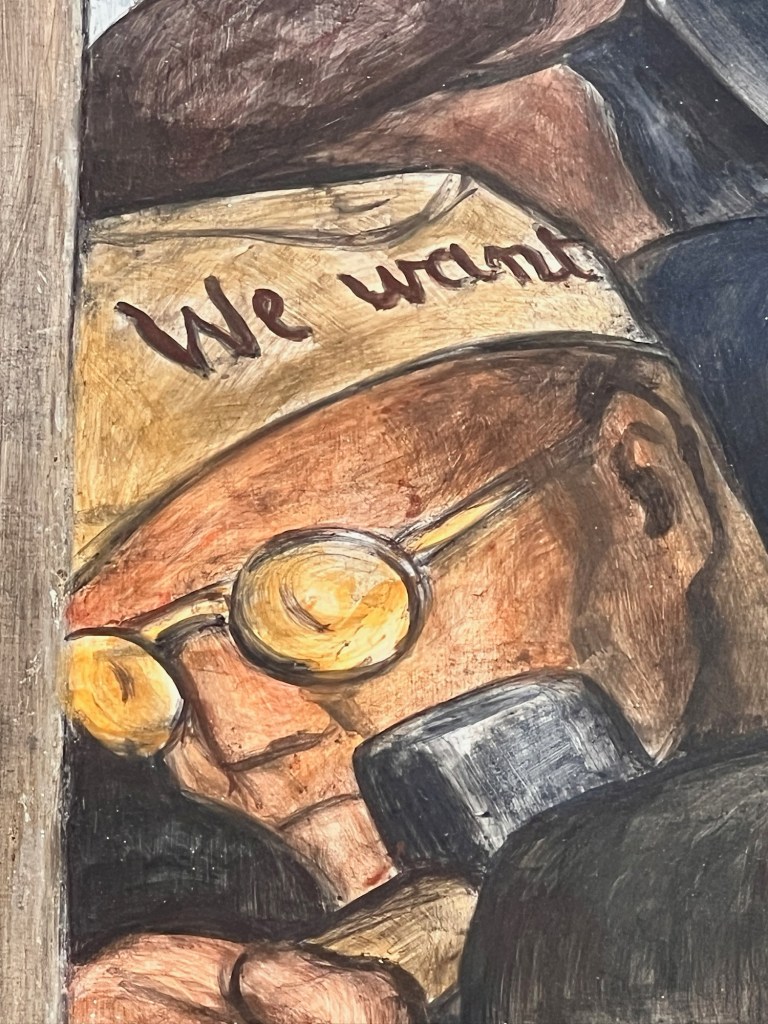
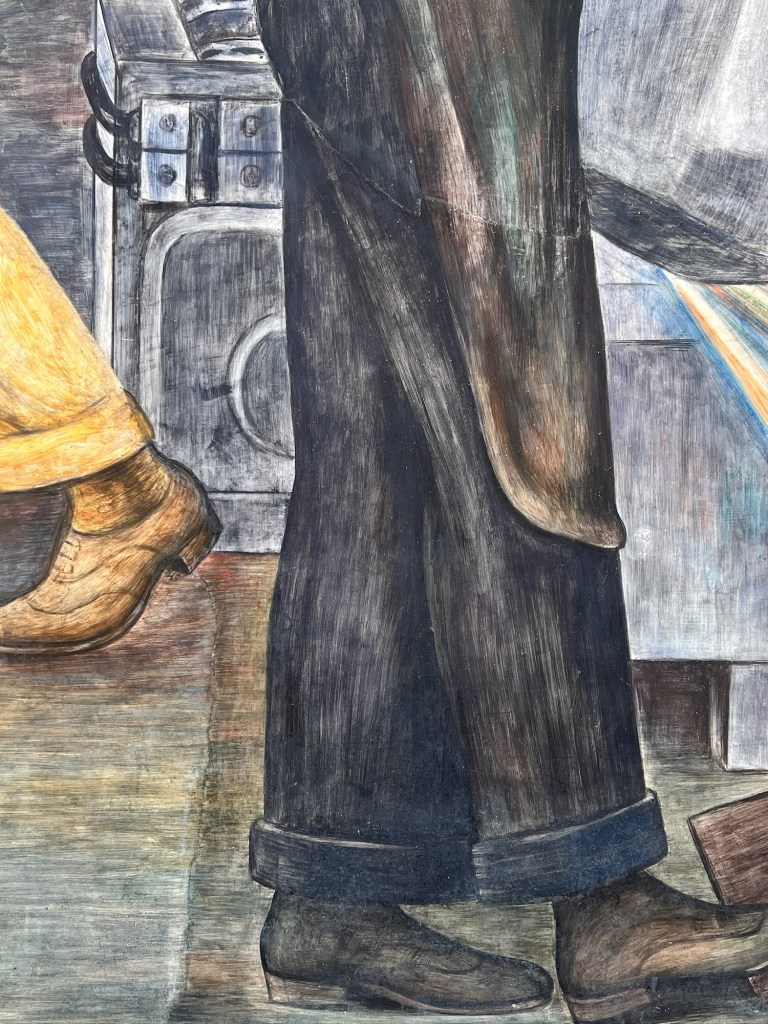
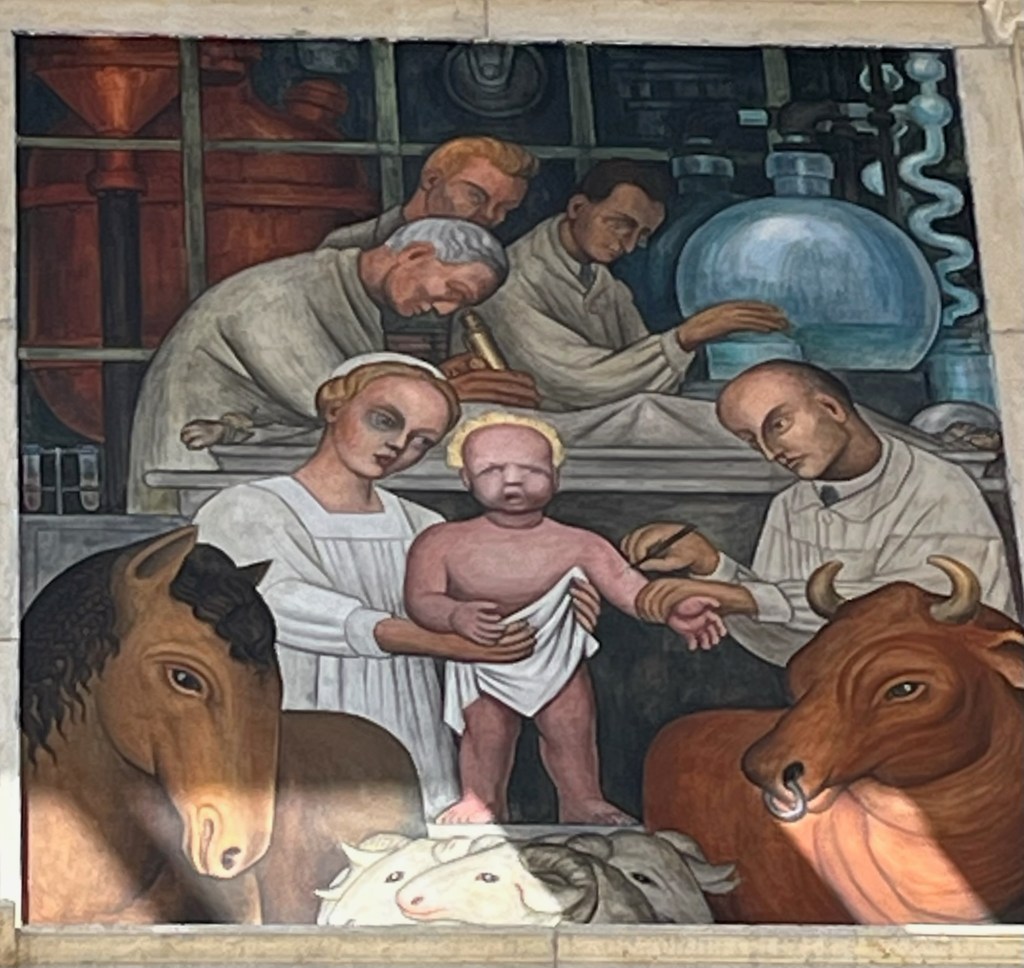
He included the highly controversial panel of the kidnapped Lindberg baby (getting a vaccination … ahem …) with Jean Harlow (as Mary?), the DIA director (Joseph?) and famous scientists. He liked comics so he painted in Dick Tracy and the Katzenjammer kids. He appreciated a good beer so the “We Want” is a worker’s plea for some suds during prohibition; he painted the murals in 27 different sections so he had to mix new paint every day (hence the seam behind the pant leg).
And then … Kismet. Cynthia wants a coke, so we go to the cafe downstairs and David strikes up a conversation with two guys, one of whom holds the 3-month old of his niece sitting to his right. Cynthia chats them up, too, and says we’re doing a house exchange on Steeple Chase Lane in Martinsburg, West Virginia, to see a week of theater (in shephardstown, WV). One guy looks at the other and says, “I bet it’s the Kovacks’ house. We live two doors down the street.” A half-hour of rapid-fire conversation ensues. Cute baby. New amigos. Cynthia checks out the museum shop and we bus back to David Whitney’s hotel for a quick freshen and change of clothes.
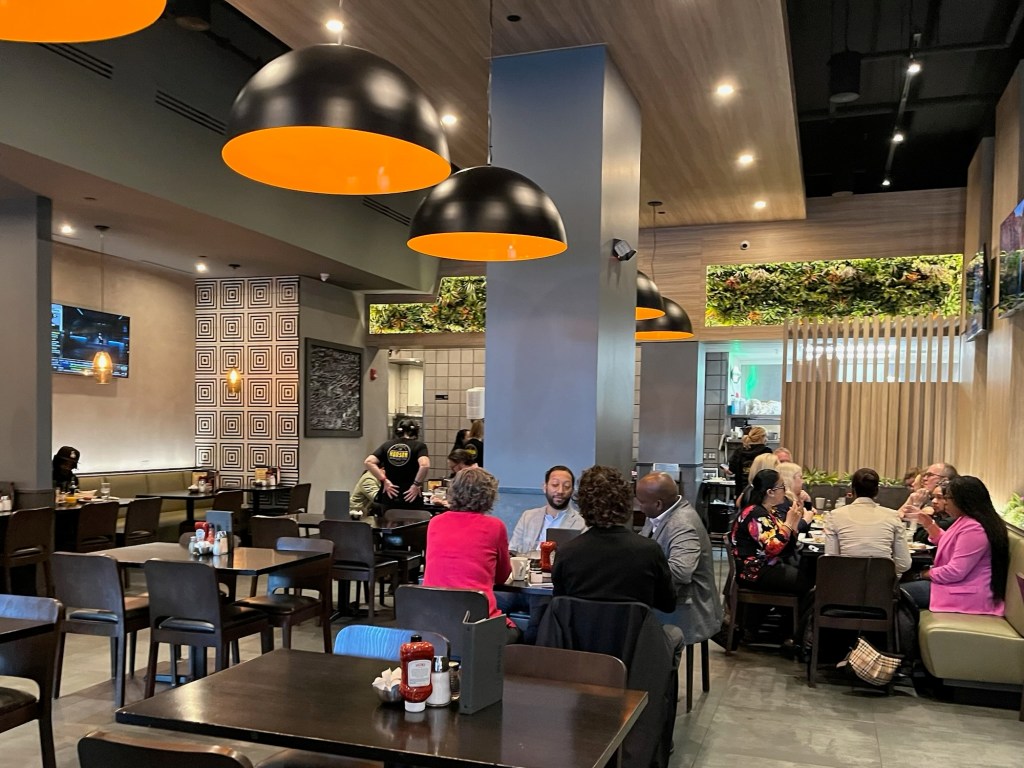
We bus back up Woodward for pre-dinner drinks at the Ghost Bar in David Whitney’s mansion (haunted, hence the name), but are turned away due to a private event. Not a catastrophe and we stroll along some neighborhood streets to get to our destination dinner spot: Selden Standard. As you may see in the photo, the place is decorated minimalistically and, though we are a tad early — ’cause no drinks at the Ghost Bar — it fills completely ricky-tick quick.
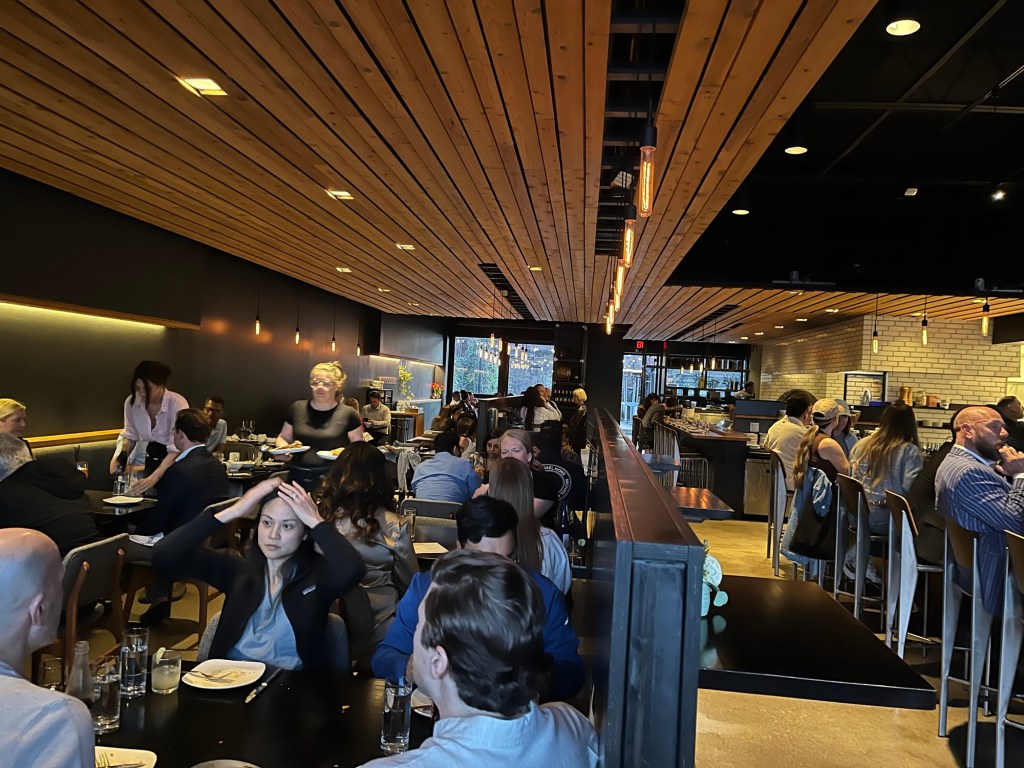
Our waitress patiently answers our myriad of questions about the many small plates and asks if we’d like drinks. David wants a Negroni but what gin? They don’t have Tanqueray 10 or even Hendricks. But wait! They have “The Gray Whale,” which we tasted at the Bad Luck Bar two nights ago. Result: The most interesting Negroni in quite some time. (Did David get two bottles of the Whale from MacArthur Liquors the day after he returned home? What do you think?)
The food was wonderful. Even worth the prices. A dozen small oysters and cold broccoli salad as appetizers followed by grilled mushrooms in an indescribably delicious sauce (mole blanco, hibiscus onion and pepitas) followed by some barbecued Michigan country ribs and a side of mafaldine with amatriciana and grated pecorino.
 Two Tramps