Beverly, an absolute trooper, is picking us up at 9 a.m. to take us on a curated tour an hour outside SMA, of El Charco del Ingenio, a 170-acre botanical preserve, basically an area purchased and donated by Federico Gamma and Cesar Arias in 1990 (don’t know them but give them their dues).
Sidebar: We have found going to botanical gardens wherever we travel — Sao Paulo, Brazil, to Wellington, New Zealand — is invariably fascinating. They represent the most basic history and geology of the places about which we want to learn; their signage or guides tell stories of the changes over long time. After days in museums, however splendid, the outdoor excursions are refreshing and invigorating.
We hook up with a 70-year-young botanist named David Tarrant who, right off the bat, says, “I was a terrible student in England. I was interested in drawing flowers from a very young age. Hated sports. Hated maths. Couldn’t abide history. I was totally consumed with flowers and trees.” Off we go; David, who left England and became one of Vancouver, BC’s, botanical garden bigwigs, pointing out the often narrow but telling differences between this Mexican ecology and the African version: acacia and mesquite trees are similar and the vistas we see in the Charco are much like those David saw in east Africa (you’d think west Africa would be even more similar and it may be, but I’z not been there so cannot say).
Tarrant shows us all manner of plants and trees and tells us stories about the kids who challenged each other back in the 19th century to run along the iron pipe that snaked from the Charco’s reservoir to the fabric factory in town several kilometers away in the heat of the day when the 3-4-foot diameter pipe, above-ground and resting on rocks, was “hot as,” my mother used to say, “Tophet” (child sacrifice in flames). We walk along a stone wall of long standing and I ask Tarrant, holding a sample in my palm, what the weird collections of dried seeds and stuff is on the wall. “Coyote poop,” he says. (What a city slicker I is.)
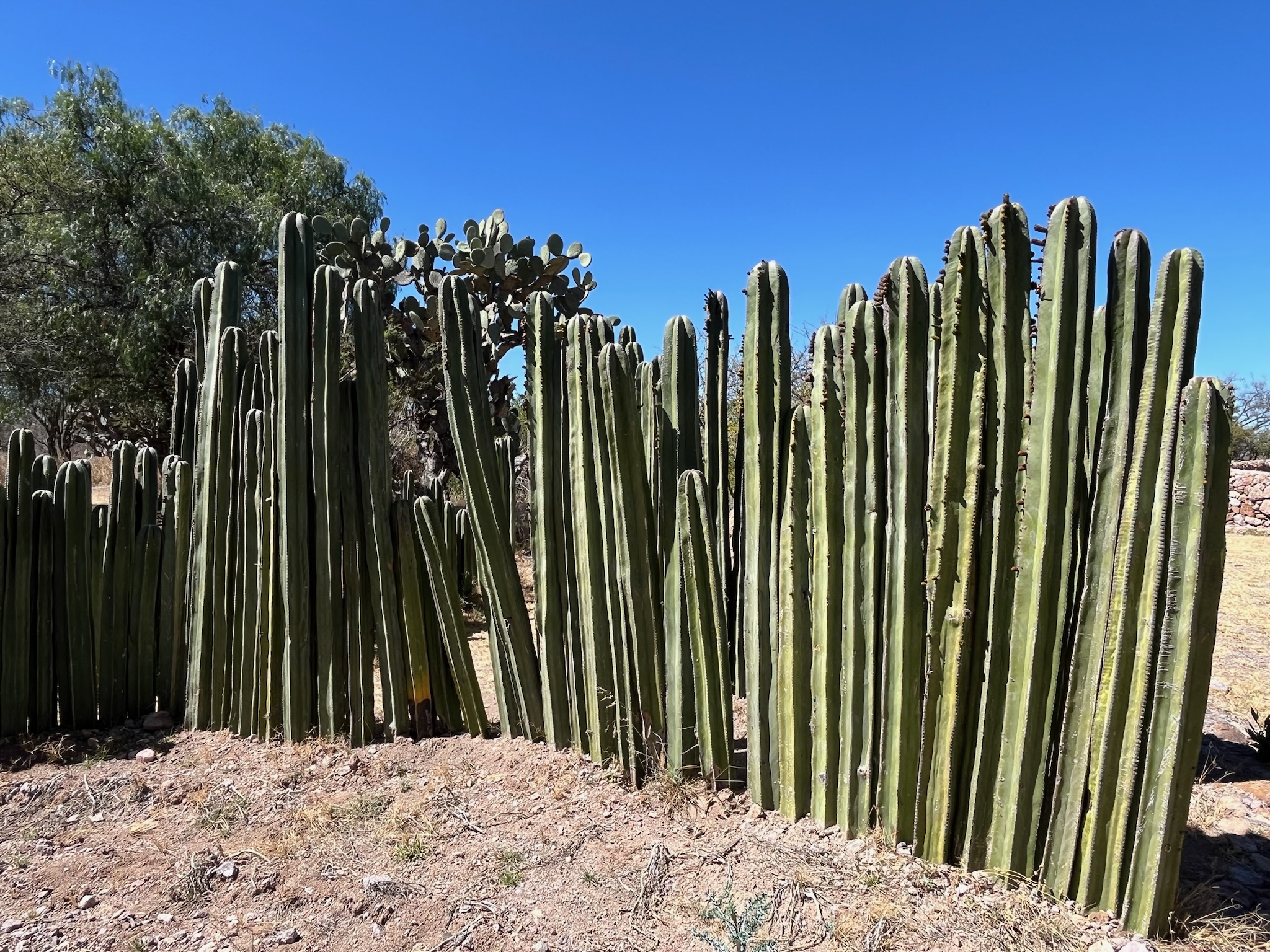
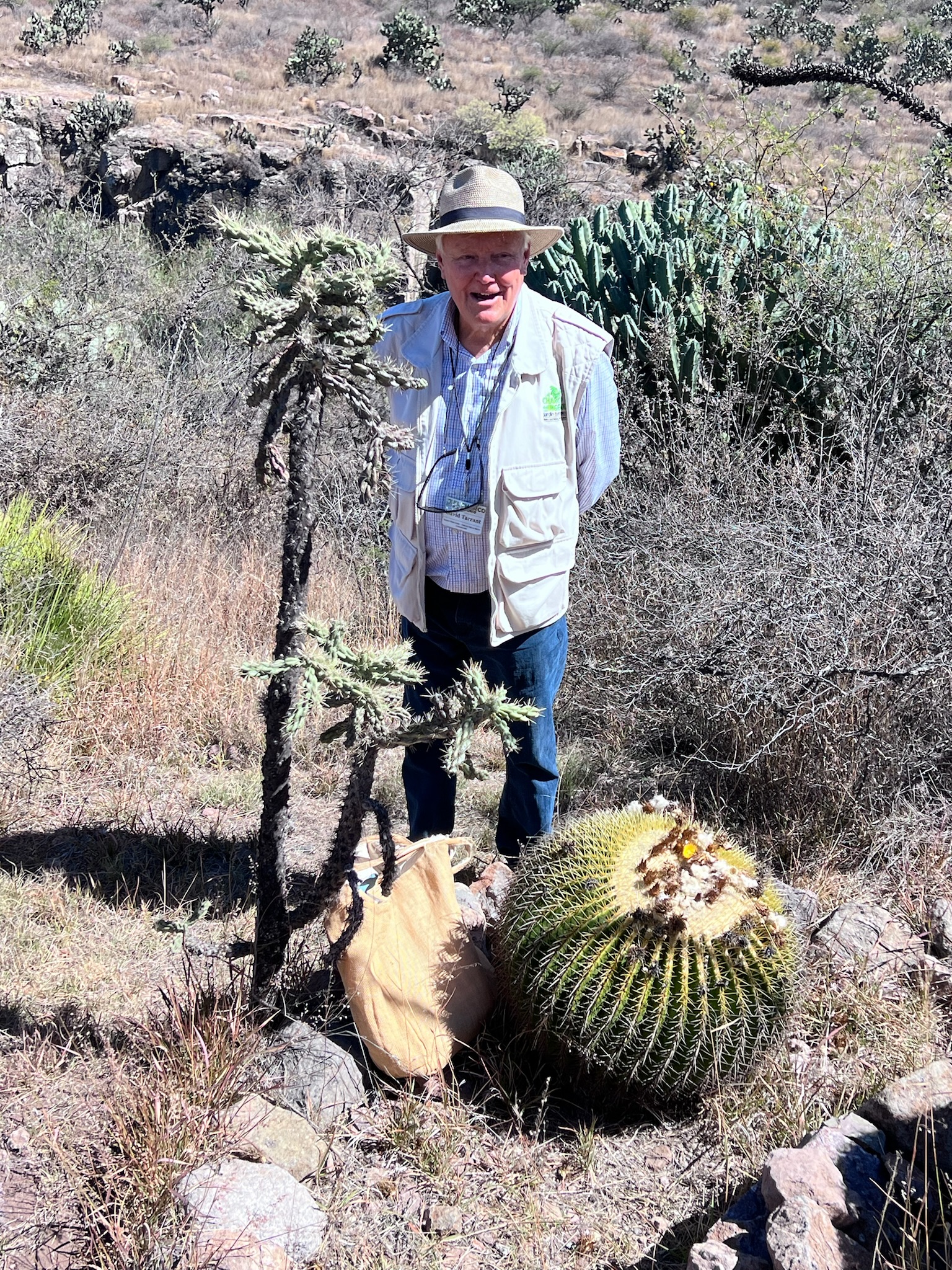

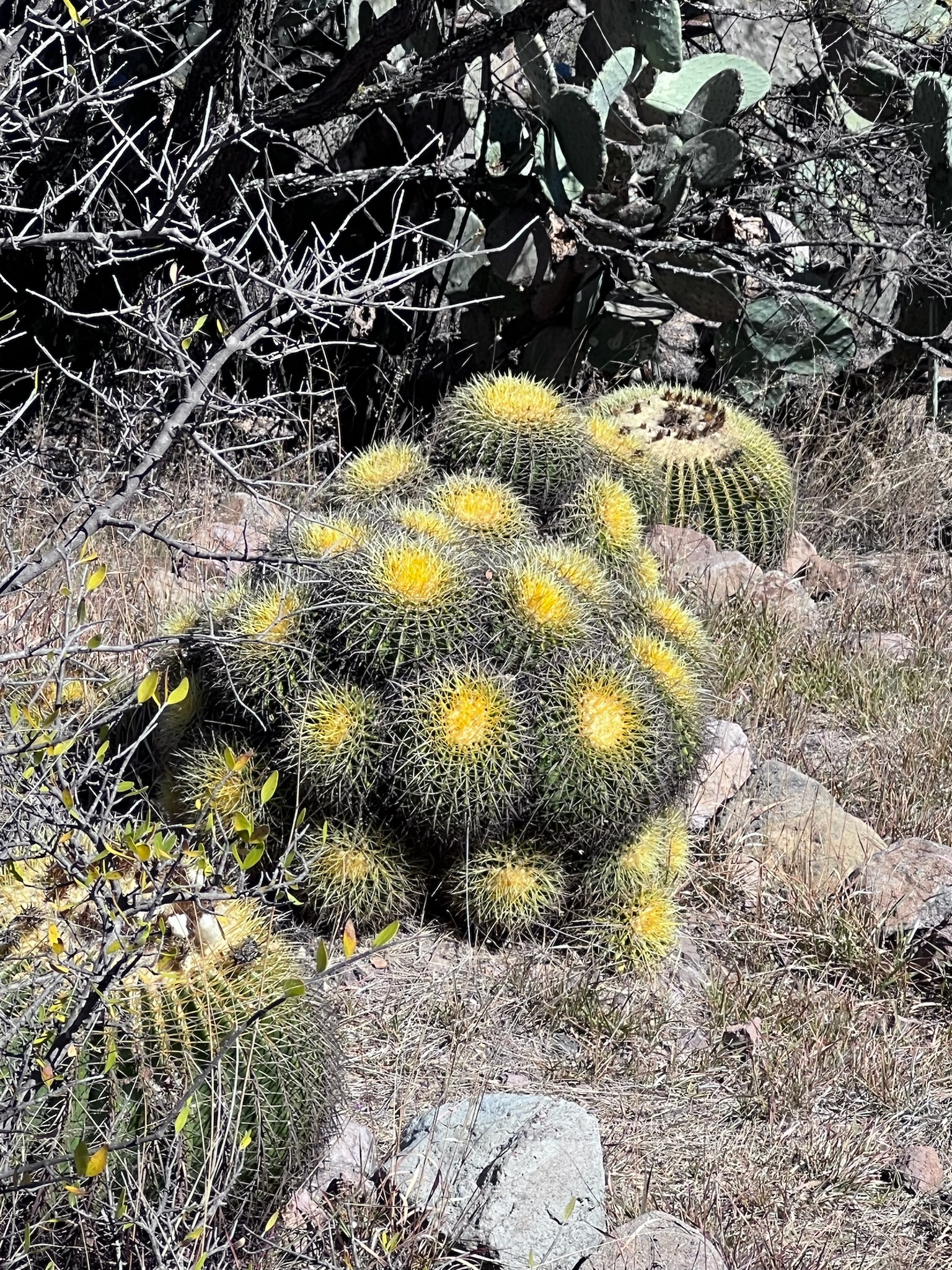
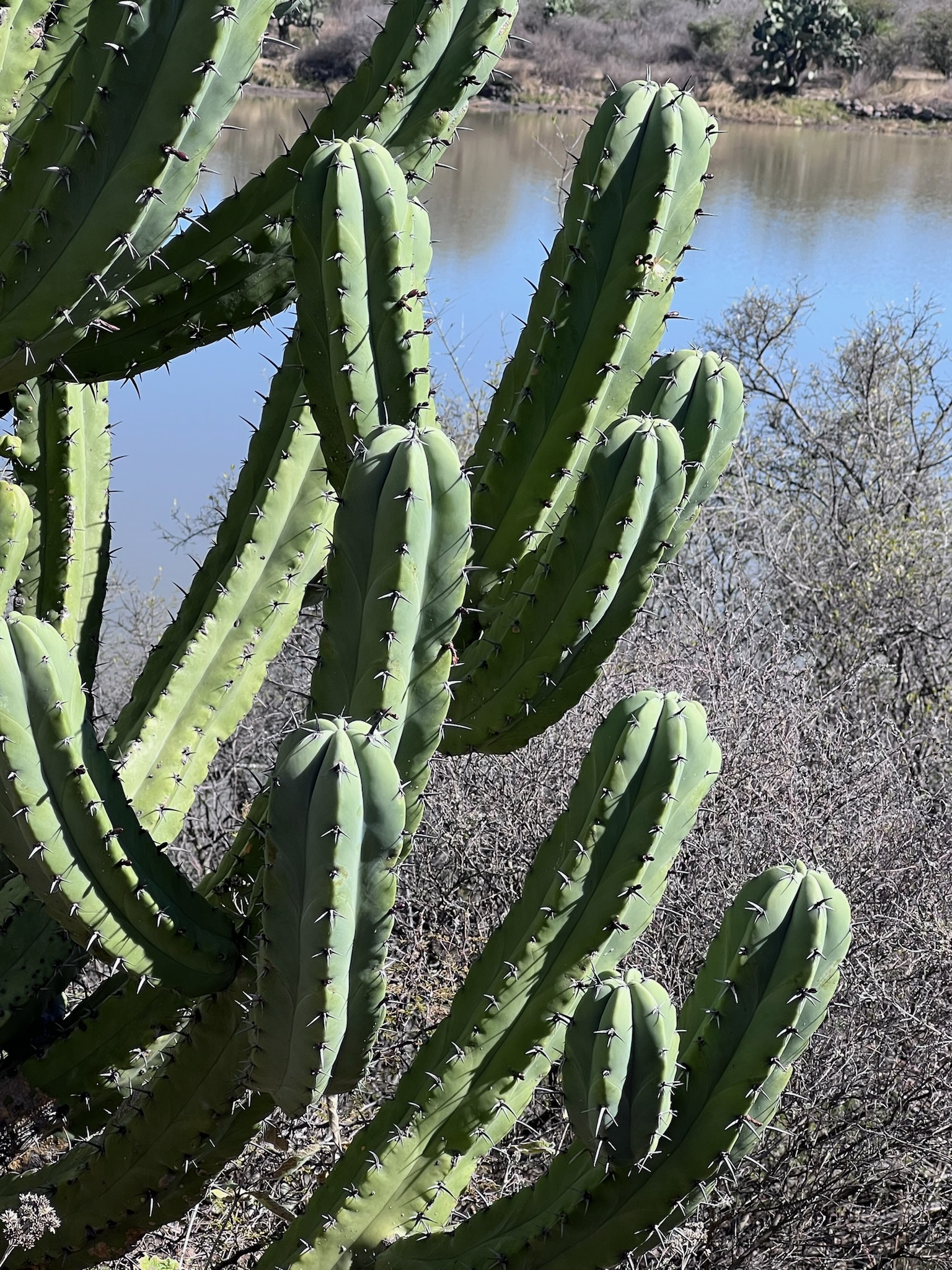
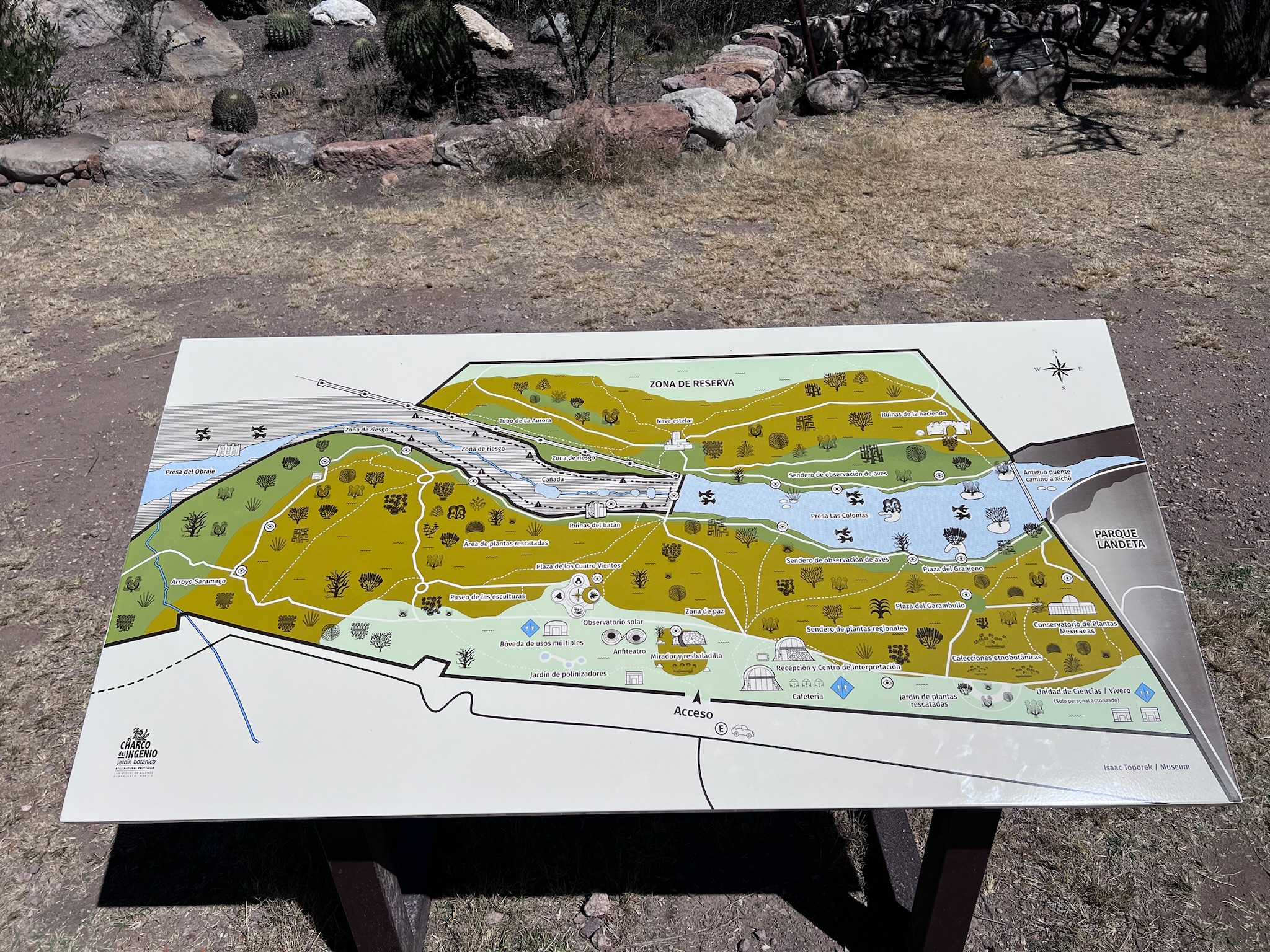
Tarrant is a world-class raconteur and very knowledgeable botanist and by the time we leave, we have forgotten two-thirds of what we should have retained. Beverly drives us to a nearby weekly (Tuesday) indoor/outdoor market where she might find some toys for her grandchildren and Cynthia searches for passsionfruit.
The market is two 15,000 square-foot, corrugated metal and multicolored-tarp-roofed open air structures, crowded, noisy, chaotic in a controlled way. It has live bands that take turns playing, about 100 food stalls that look as though ptomaine sauce is their main ingredient, long tables of clothing simply heaped in three-foot high piles picked apart, examined and tossed unfolded from one pile to another, booths of broken electronic equipment, children’s toys, spices of every hue and intensity, and, (forgive me if this comment seems inappropriate but …) more seriously overweight middle-age women than you want to see. Welcome to the daily workers’ Mexican diet: Tortillas, frijoles, cheese and fat for flavor.
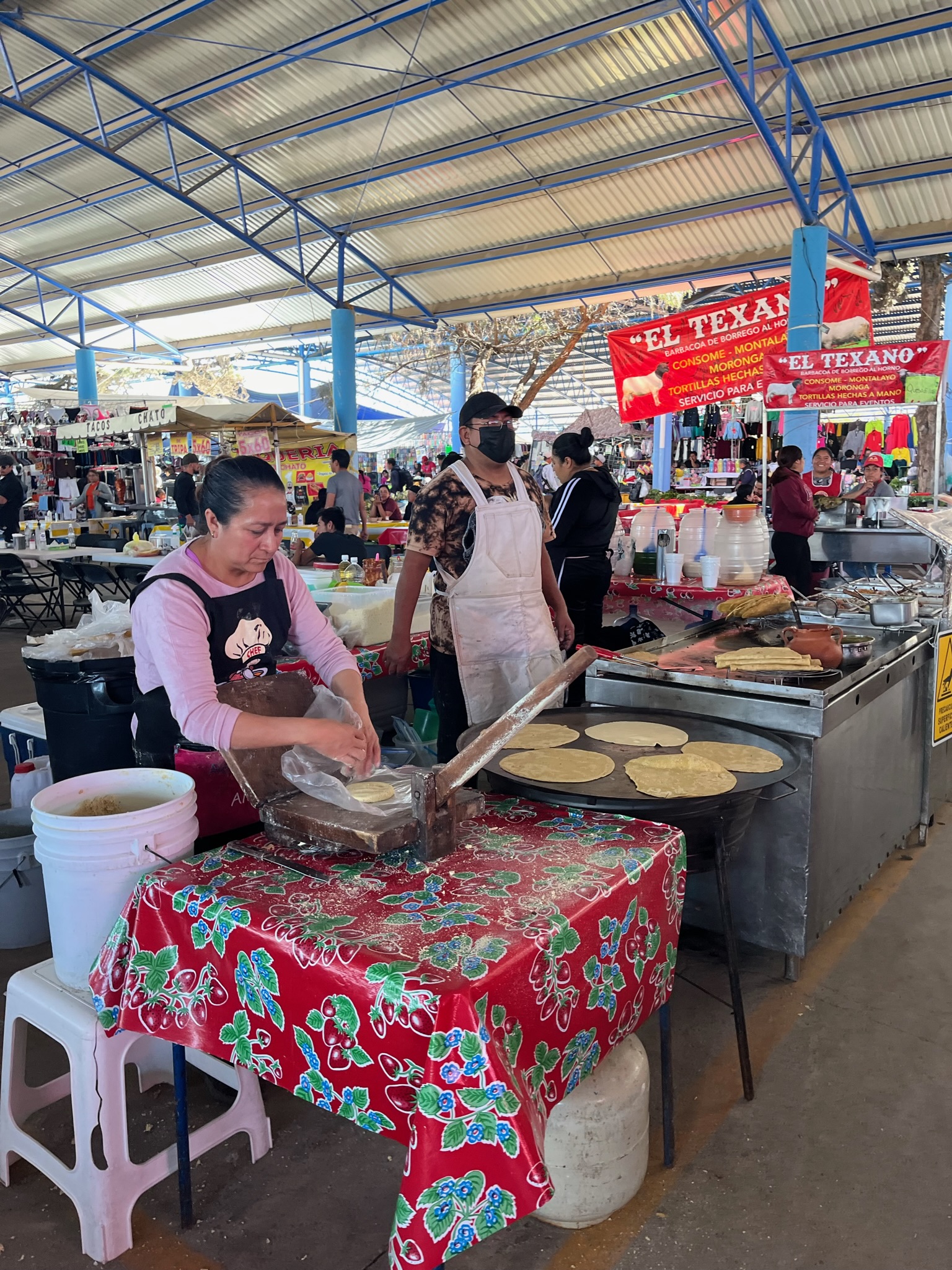
Beverly takes us back to the house where we spend a quiet afternoon and evening. Cynthia is having stomach problems and goes to bed early.
 Two Tramps