David dresses in the chilly early morning, gulps cafe and vitamins in the sweet dining room with a French couple who pretend to understand what he says, and a tasty crumpet from London who’s here for two months and DOES understand him, and sits in Jose Manual’s taxi by 8:10 a.m., going to see Teotihuacan, “place where men become gods.”
Just like along the highways into the city from the airport, fantastic, flowing murals scroll along the concrete walls of the road. Further from town, we drive through valleys between hillsides so densely covered with multi-colored houses — often the soft pink so common to Mexico, but also reds, greens, yellows, blues — the hillsides look like gigantic tiled walls. And over them, are gondolas traversing between and around the hills for miles. A new form of commuting. Some of the gondola stations are huge, supporting lines in three or four directions.
Teotihuacan is the largest ruined city in Mesoamerica (surprising to me, Peru is not considered part of Mesoamerica, so Machu Picchu is not in the running). Anyway, no one knows who built this city originally around 200 AD but no one doubts it was a cultural and economic powerhouse by 400-500 AD with a population of around 150,000 (some say more, others say less). Whoever they were and however many, they all disappeared by 650 AD. So, from being the sixth largest urban complex on earth in 600 (some say), it goes to oblivion about 75 years later.
All that said, I stood in the middle of the site, in front of the largest structure, the Pyramid of the Sun — and looked left to the Pyramid of the Moon 20 football fields down a main road lined on both sides with reconstructed walls and buildings — and looked right about 50 football fields to the ruined ball court and other structures — and I have never felt smaller and more insignificant, more impermanent or, in the short fold of time I have been alive, more meaningless as an individual or American or human being. This place is just so vast in size and exposed to the elements, the main pyramids so large and solid and ponderously heavy … I was humbled.
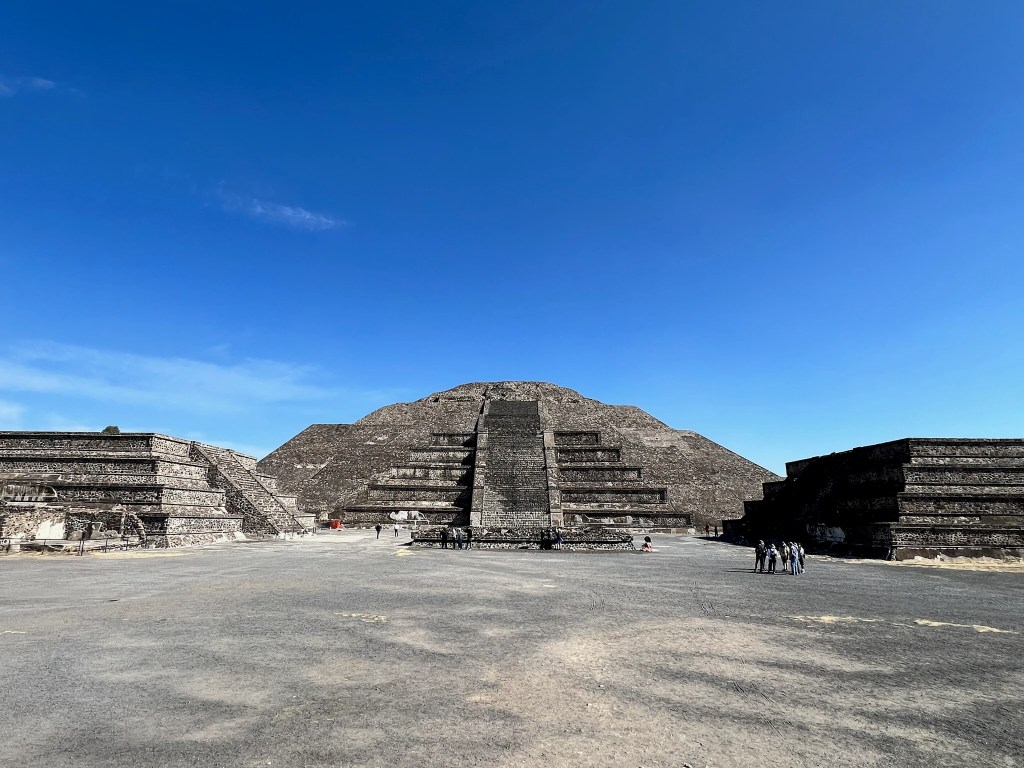
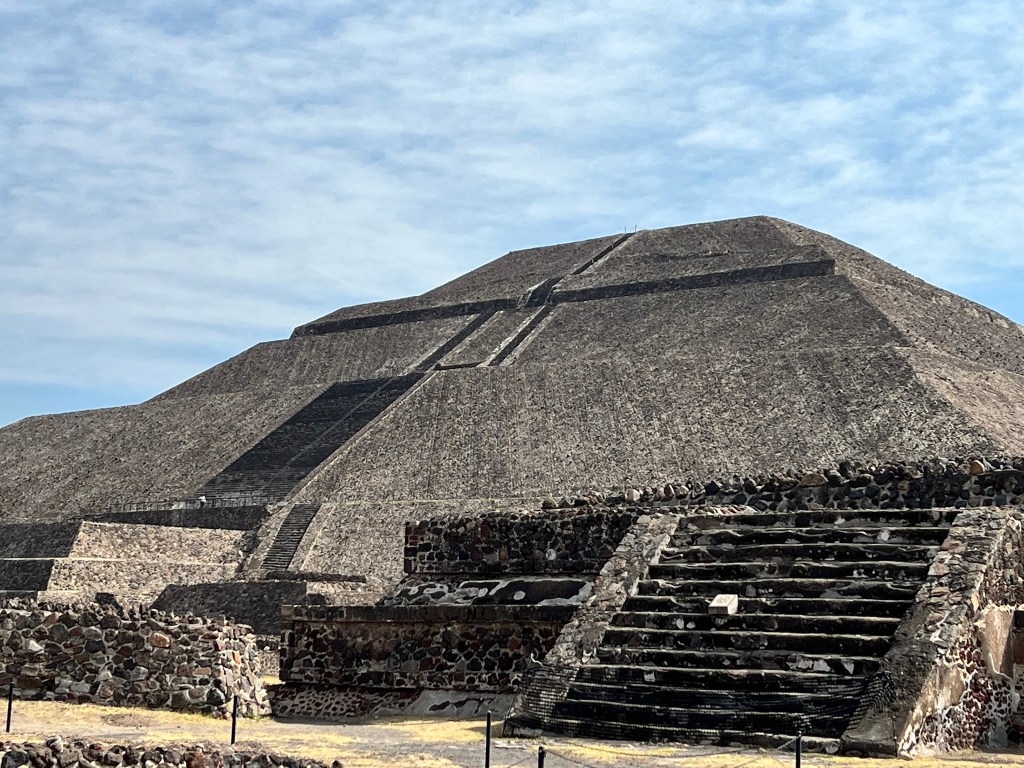

Describing it is useless so I won’t. Even the photos here won’t give you an idea of its scale.
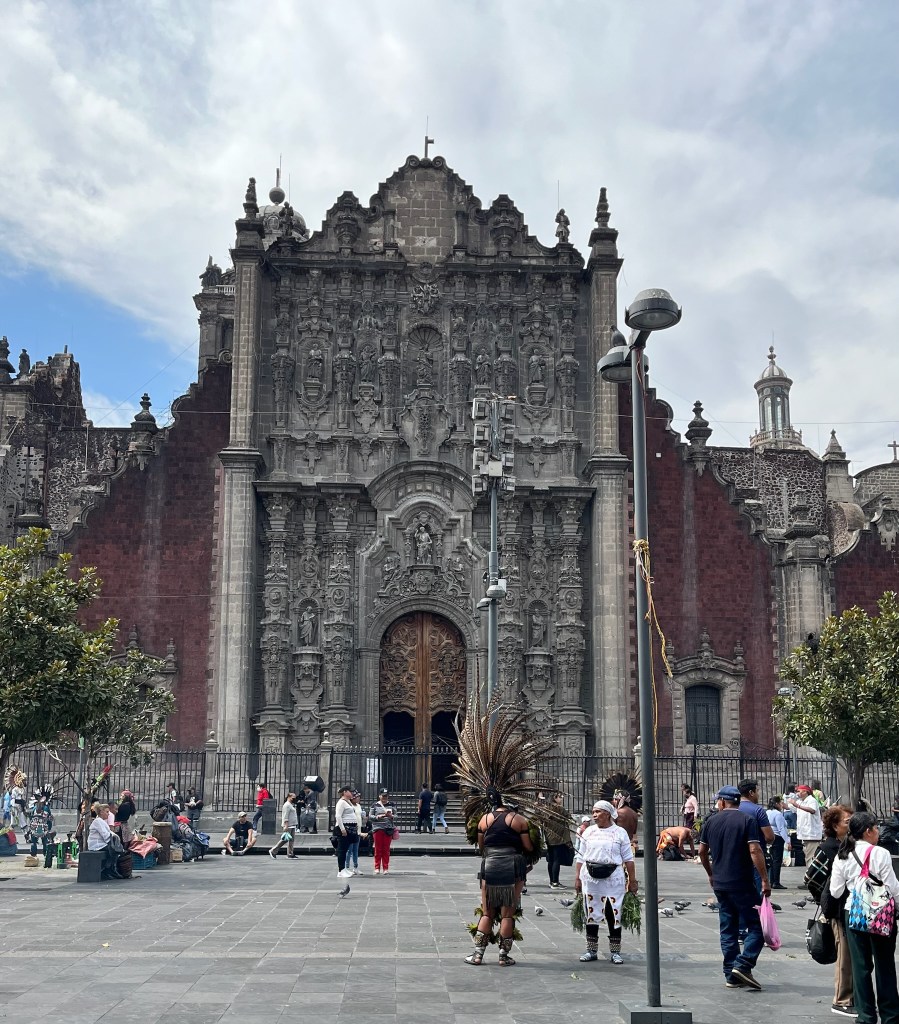
In the meantime, Debra and Cynthia had a lovely brunch at the original El Cardenal restaurant in the historic area. It is very popular with a 20-30 minute line out front. The weather is nice, so the wait is easy. Seated, a server comes to our table with a platter of fresh baked pastries. We each choose one to enjoy while we order and wait for our mains. After brunch we head to the Zocolo and the cathedral. On our way we see a tourist info stand and ask about the Secretary of Education building and the National Palace building. The woman speaks with forked tongue, telling us the Education building is open now and that we might get into the Palace. A political demonstration was planned for today — so the National Palace was closed — but, she says, the demonstration was cancelled, so it might be possible to get in this afternoon. We call David.
Back at Teotihuacan … So … David walks around for three hours and explores the museum — surprisingly good. I find Jose Manuel and we drive back to the city. On the way, Cynthia calls me and says the Tourist Office has told her and Debra that the Secretaria de Educacion Publica is actually open today at 1:30, despite its website saying it was closed for renovation. So, Jose Manuel obligingly reroutes to the Secretaria where I wait for the gringos in tennis shoes so we can see the Diego Rivera murals inside. While I stand in front of the entrance, I try to get entradas and am told by the kind but adamant guard that, indeed, the building is closed for renovation and that the tourist office has been crazy for years. He even points through the inner gate at the walls across the inner court where the murals are, indeed, completely covered.
We ponder what to do next and a stranger approaches us and says he went to a little-known museum in the headquarters of the Valparaiso Bank just a few blocks away and found it interesting. Off we go.
One room is dedicated to portraits of a family whose pater familias had a desk made with a map of his hacienda inlaid in the top of a desk on a dais in the center of the room. His daughter and a son who died young hang on one wall. Call her Maria de Guadalupe Tomasa y Juan Nepomuceno Moncada y Barrio for short.
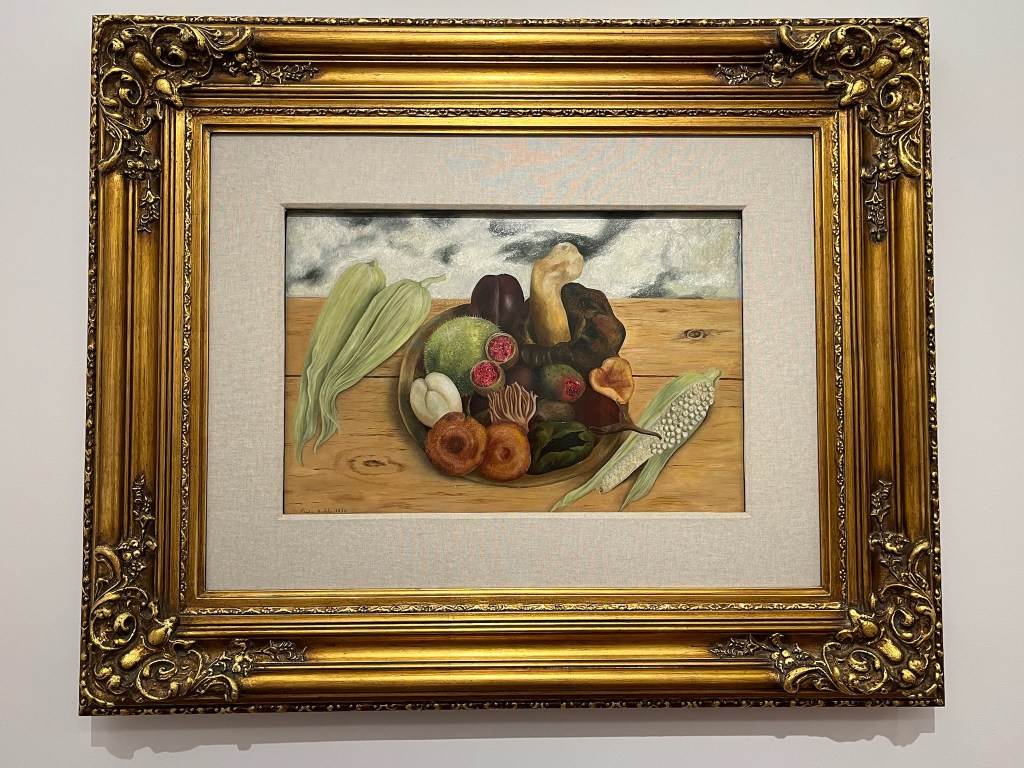
The rest of Museo Valparaiso had some lovely small landscapes and some cubist and expressionist pieces by Rivera and Manuel Lozano and German Cueto that were quite nice.
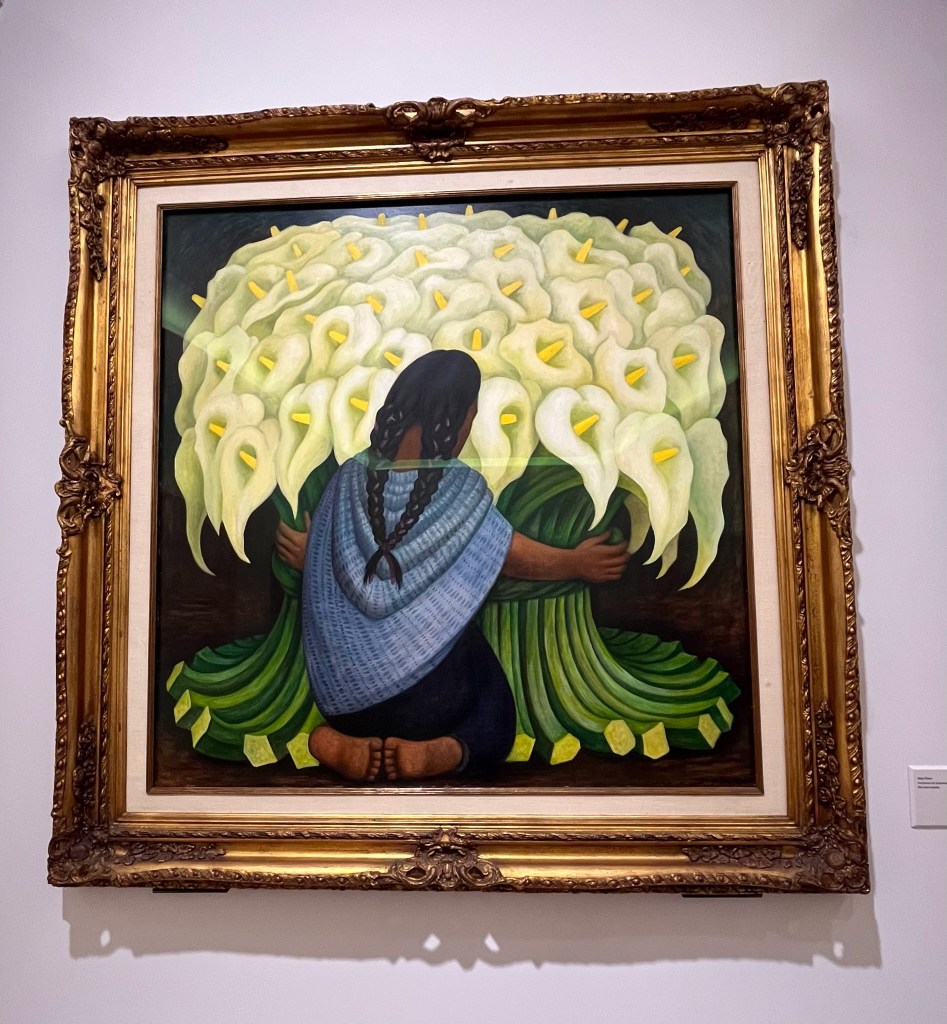

We uber back to Casa Gonzales, clean up, and walk about 20 minutes across Avenida de la Reforma to a crowded neighborhood of restaurants and street vendors, where we find Union Wok. We feast on exotic drinks, dumplings, poke bowls of delicious combinations of all kindsa stuff, hot sake and wend back to the Casa for a good sleep.
 Two Tramps
2 responses to “February 16 Mexico City”
You are indefatigable and intrepid! Look at all you’ve managed after so many conflicting instructions, unexpected closings. You make diversions sound like the plan and are an inspiration to me as Mike and I try to plan a trip to Spain. I will try to be as fluid as you when plans go awry. Looks like you’re having a fun trip. Thanks for the wonderful updates and photos. xosh
LikeLike
You should both be travel writers! Love all the details
Carolyn
LikeLike