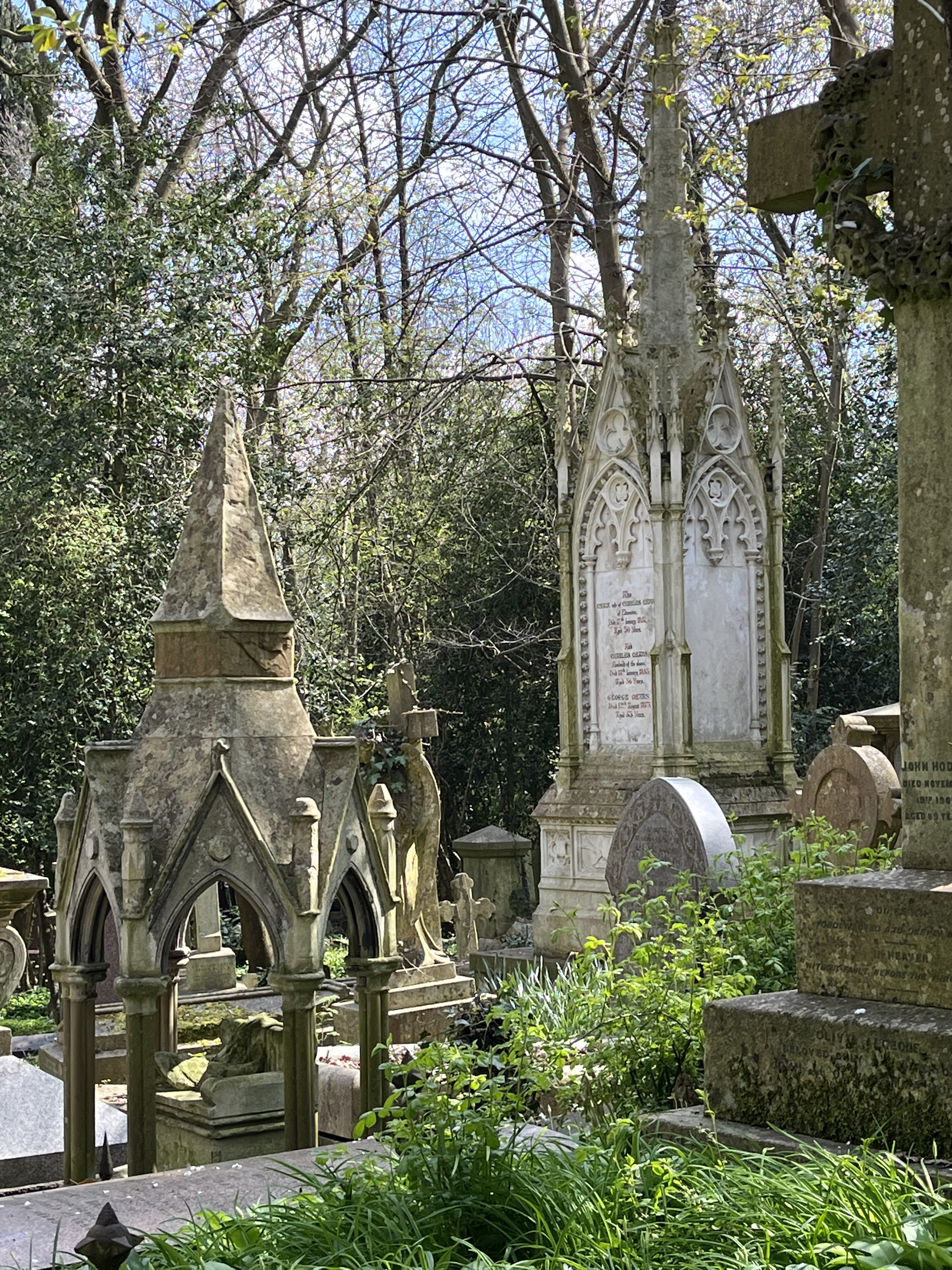

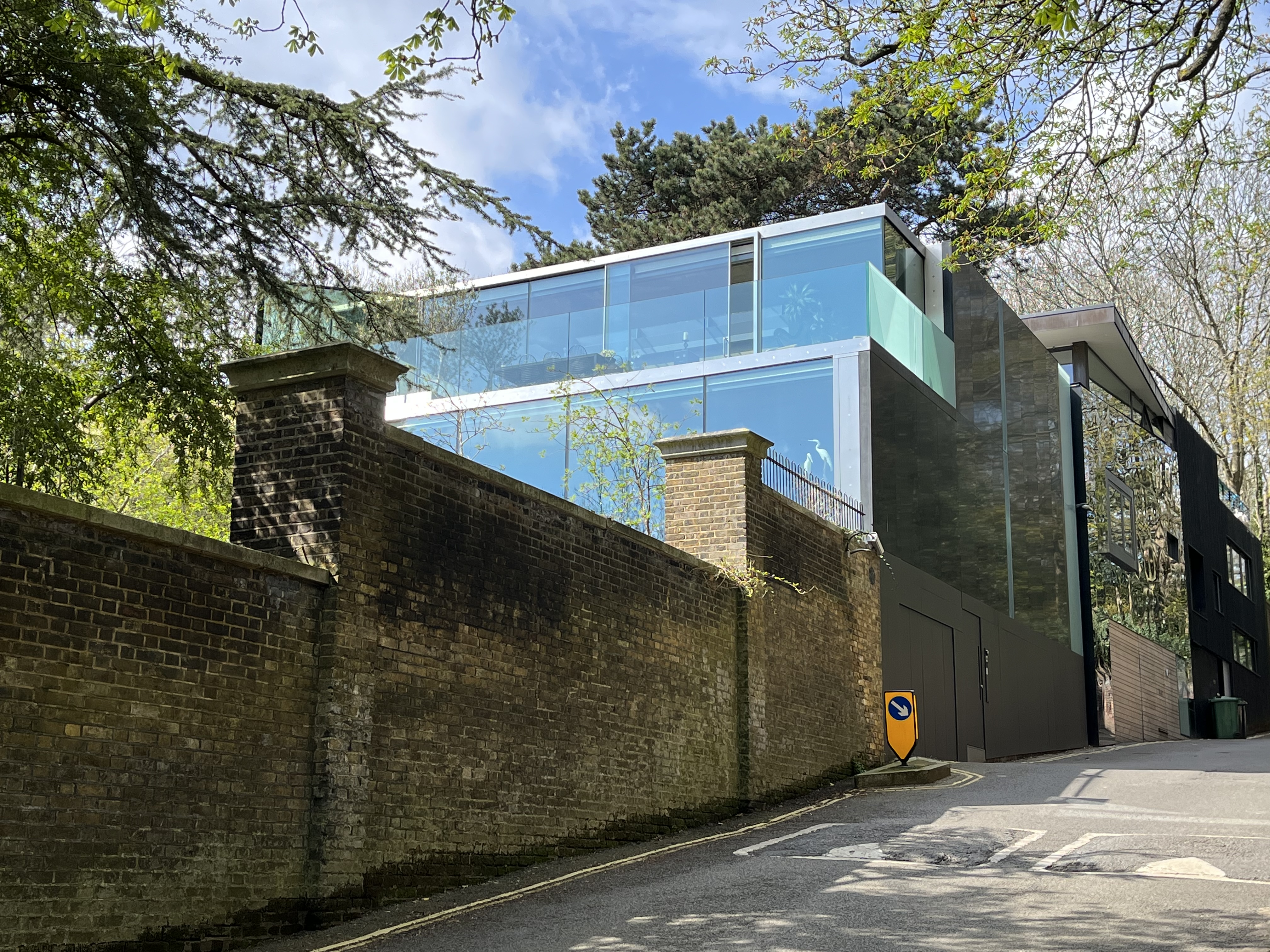

Monday morning’s late breakfast iPhone browsing reveals a day destined for sunshine and bodes well for outdoor endeavors so we dress snugly, tube and bus about an hour north of central London to Highgate Cemetery, designed by David Ramsey. One of seven private cemeteries built to bury London’s burgeoning dead in the 1830s, it sits on a steep hillside 375 feet above sea level so its grand views would attract wealthy Church of Englanders. It’s home to the largest number of notables after Westminster Abby; its preeminent person being Carl Marx.
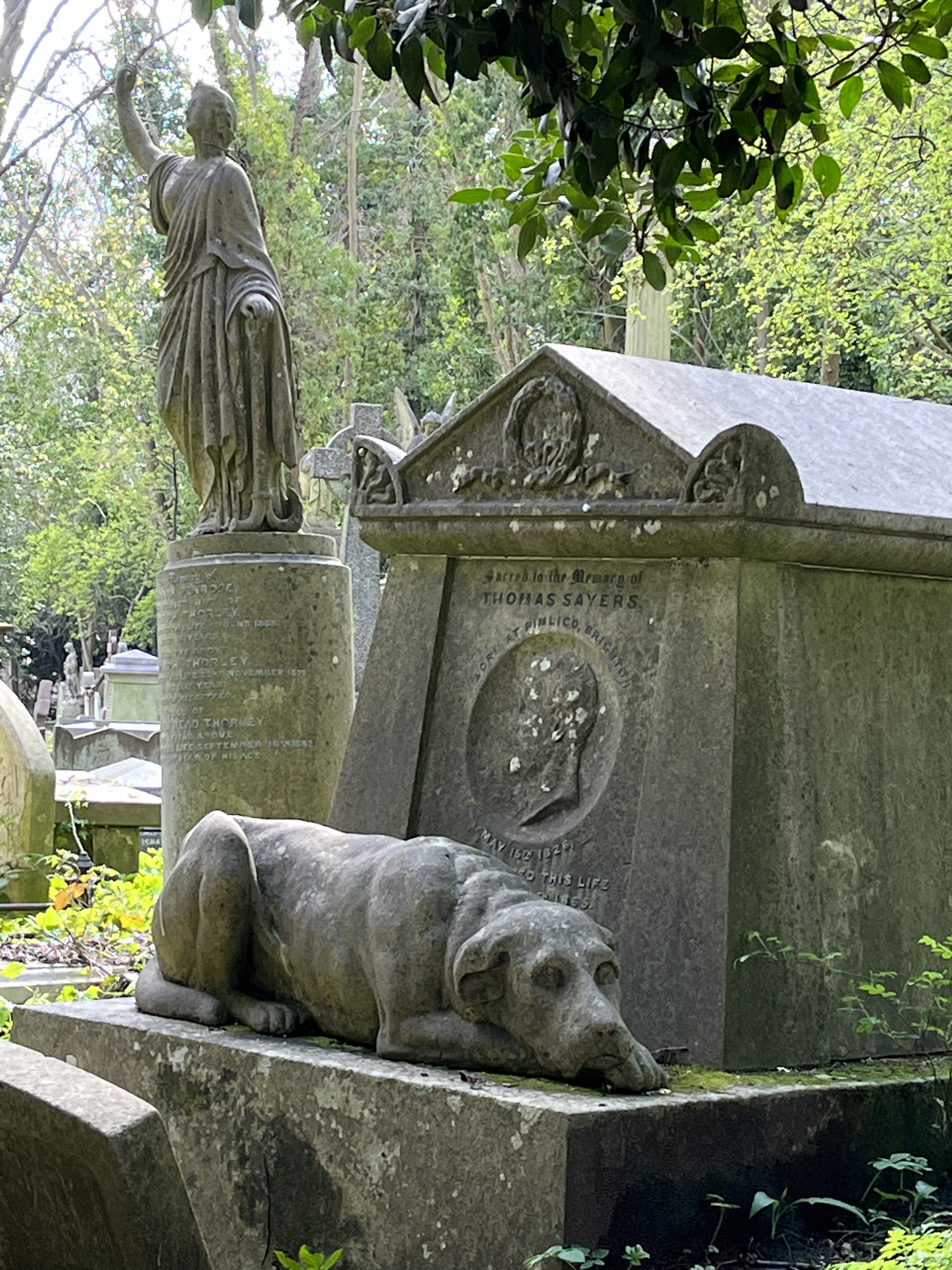
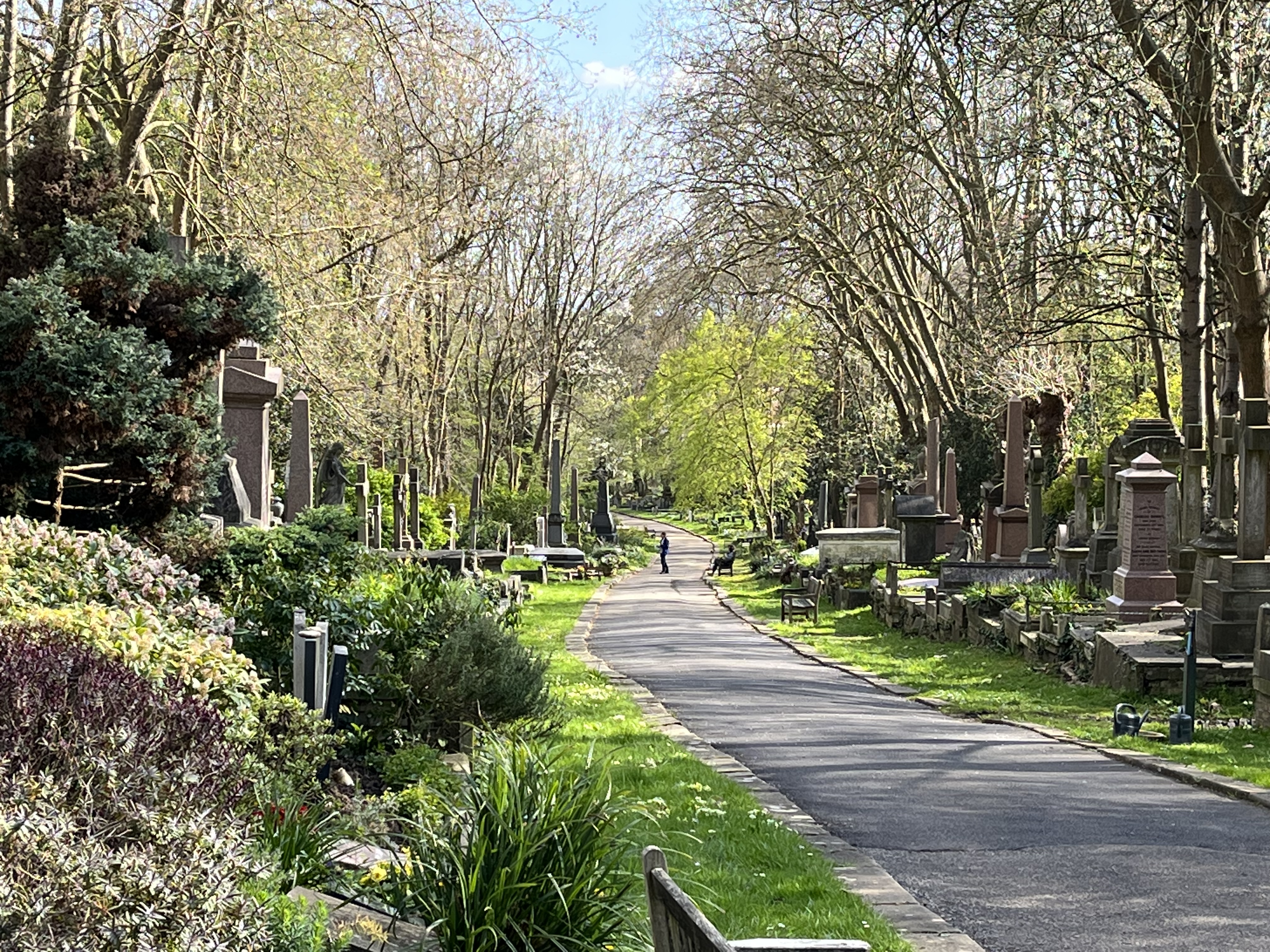
We walk a fairly long way from the bus stop and arrive at the entrances to the east and west cemeteries, where we get tickets for both sides but are crestfallen to learn we are too late to join the last tour. So, Rick Steves’ map in hand, we stroll to the west up the steep hill we walked down minutes before outside the cemetery’s walls. The place is enormous and totally overgrown with trees and shrubs and bushes, vines and reeds and moss on both sides of a winding main asphalt path that snakes between fairly elaborate tombstones on both sides to the Egyptian Avenue, the initial premier selling point for the cemetery’s owners.
Lo and behold, we pass a small group listening to a jolly short fellow in coat and tie with a day glow green broach of Vincent Price on his backpack, telling his throng about how some graves are 17 feet deep so families could stack themselves. He looks quite like the English actor Bob Hoskins, who is buried … where do you think!? And he lets us join the tour and leads us between the Egyptian columns, under the Egyptian arch, through the tunnel with 16 family vaults of 12 coffins each on both sides to the circle of Lebanon, a roundabout of 20 more vaults all topped with an enormous Lebanon cedar tree (long dead and disposed of … in a process we sadly must duplicate for our beloved back yard Norway Spruce (strip the branches then chop chunks from the top down) … that has been replaced by a cute little Lebanon cedar now about 10 feet high.
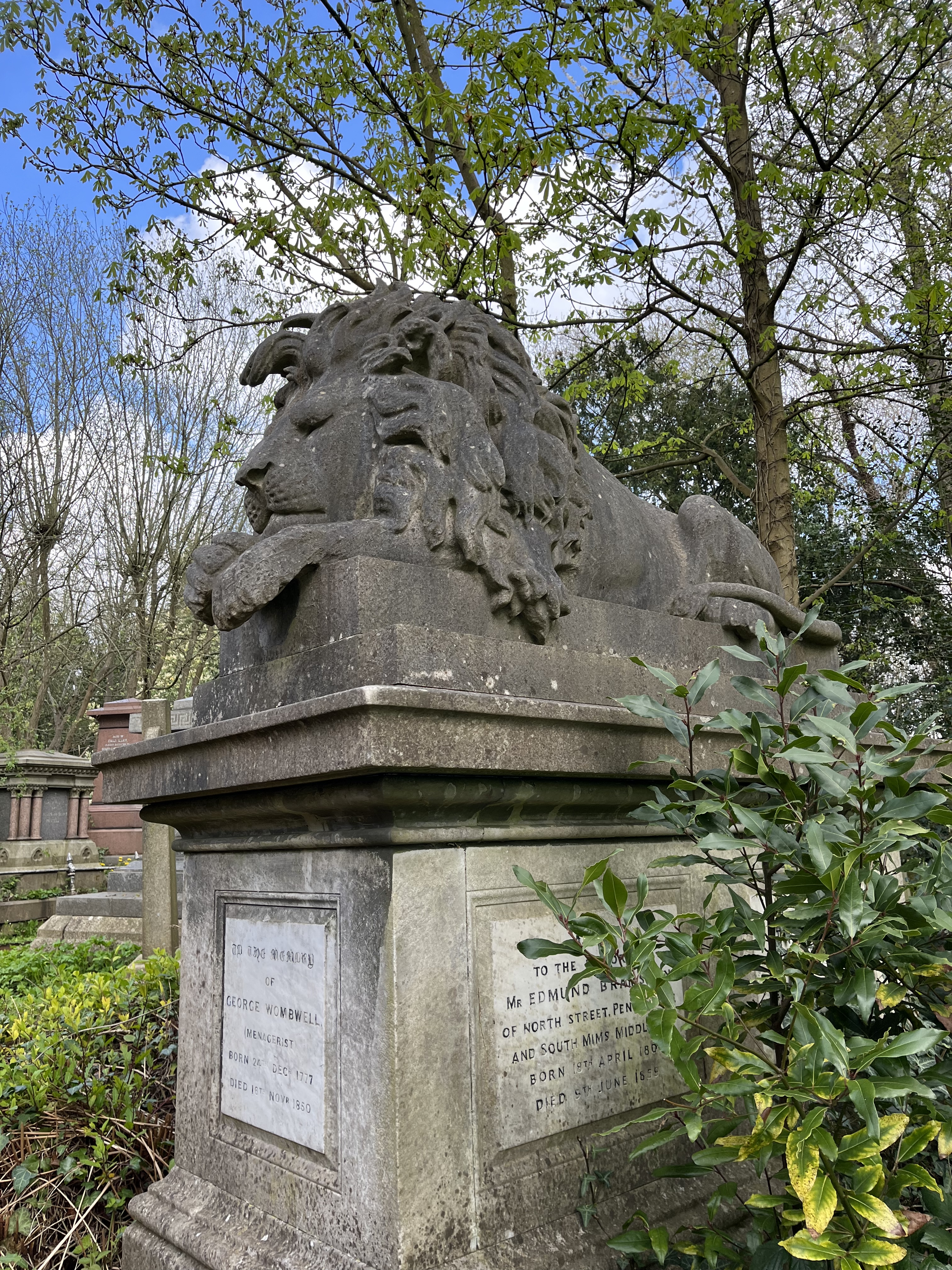
Round the back of this inner circle, Peter, our guide, points out George Wombwell’s tomb. He became a “Menagerist” — basically founder of a traveling zoo — and was buried with his favorite beast, Nero the lion, who was so tame ticket-holders could pet him. (Not so with Wallace, Nero’s replacement, who bit off a trainer’s arm.)
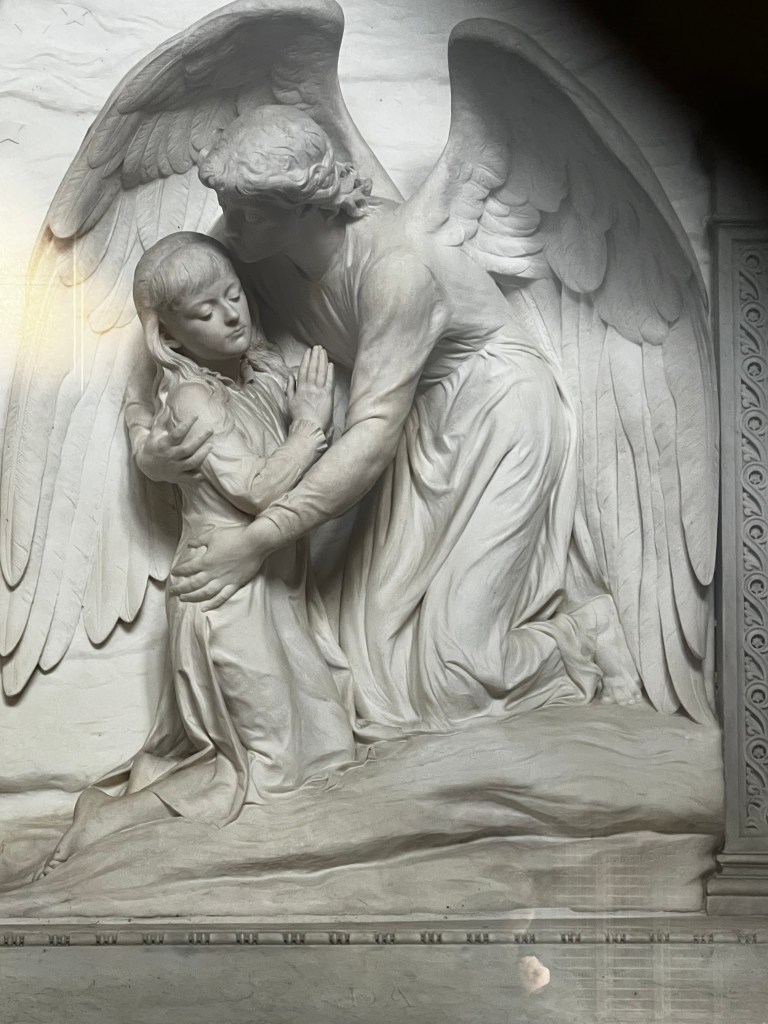
Above the Egyptian Walk, we’re taken to the catacombs and to Julius Beer’s mausoleum, built for his daughter Ada who died at age 7 in 1875. Beer was a banker and newspaper baron and spent a sum equal to 30 million on his Portland stone monument to his daughter. Inside: a very touching stone sculpture of an angel cradling young Ada, designed by Henry Hugh Armstead.
At the end of the west tour, David decides he’s got to see George Michael’s tombstone. He’s there with his mother and sister. Lotta people don’t care for him as a singer but I believe that his “Careless Whisper” is a melodic cry of a broken heart, a torn psyche’s tender crescendo to love lost by a conflicted man who felt he had to hide himself. Argh, enough. Anyway, David runs back up the hilly main path to the intersection where Michael’s supposed to be and cannot find the grave and gets frustrated and asks everyone he sees if they know where George is. Finally, after five minutes of fruitless explorations, a young Croatian with his sweetie point to the corner of the intersection where three white stones sit in the ground, the one on the right inscribed Georgios Kyrtacos Panayiotou. Totally forgot he was Greek.
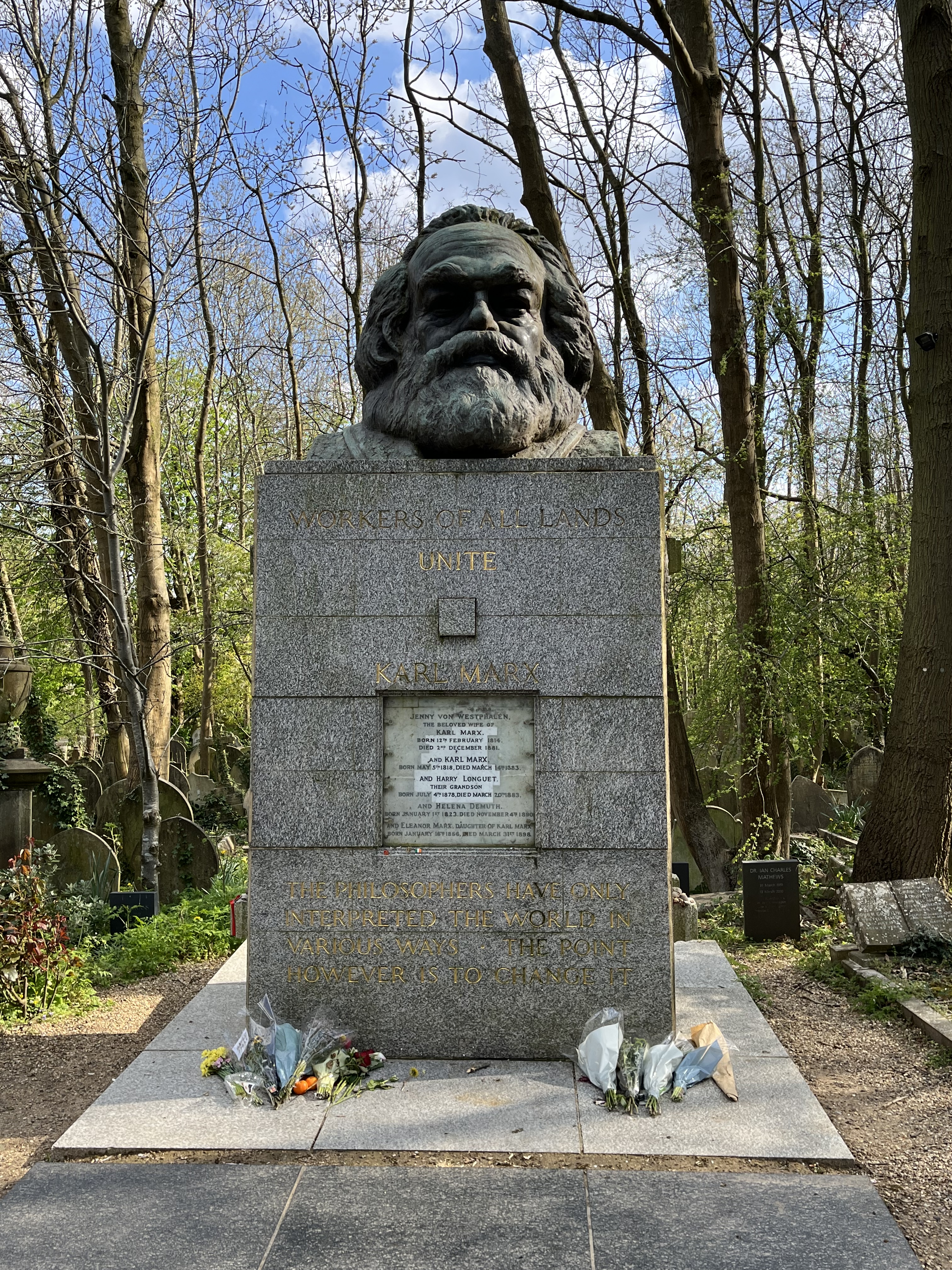
Across Swain Road we go to see Carl Marx. As you can see from the photo, the man clearly had his head about him. Roughly 40 acres with 270,000 bodies and, since the cemetery is private and families were never asked for annual upkeep payments, the whole place has an unusual vibe: forlorn and august, grand and gritty. Well worth the trek to there and back to our hotel.
 Two Tramps