


Bankside Walk, Witness, Hunters Moon
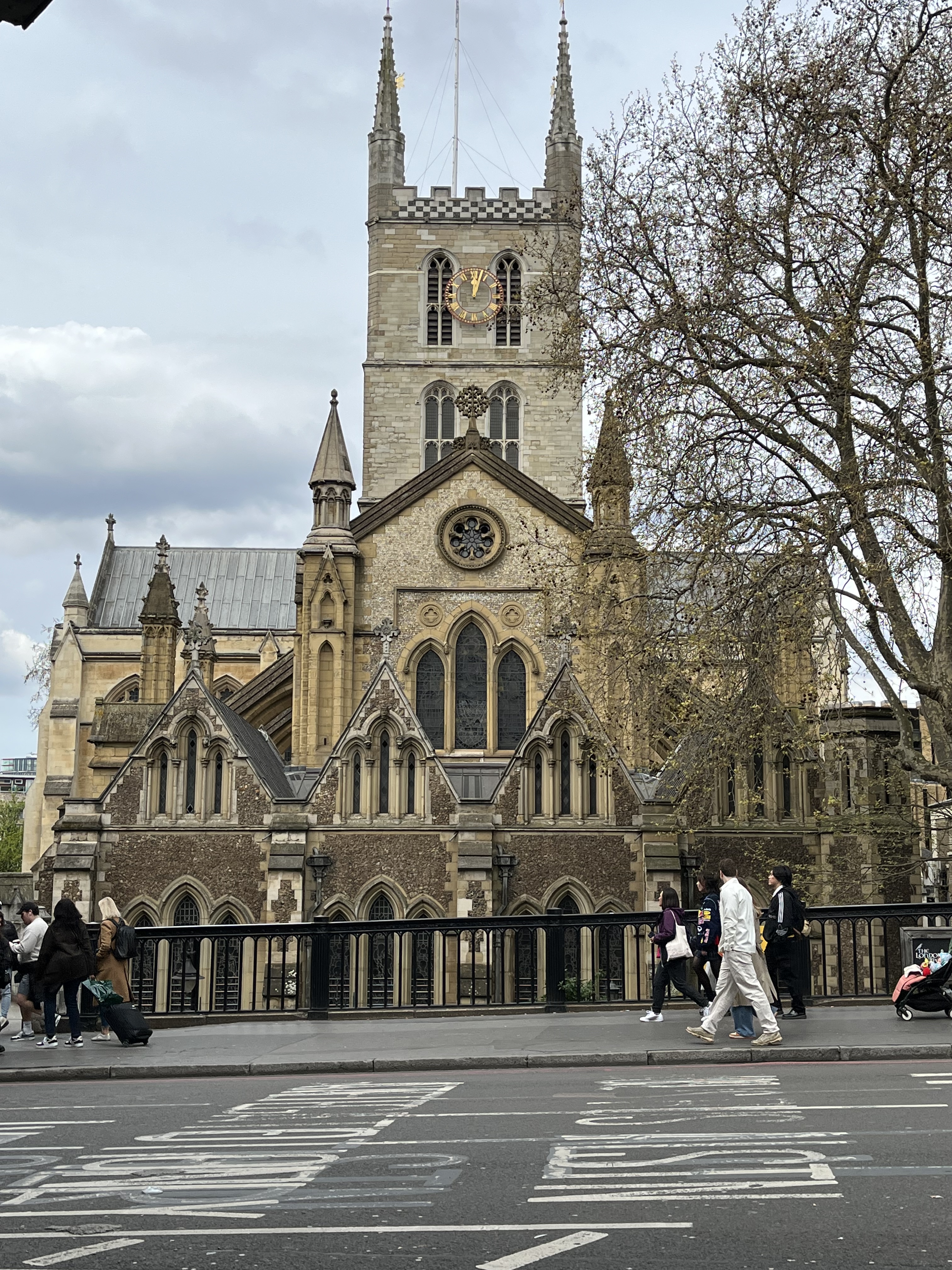
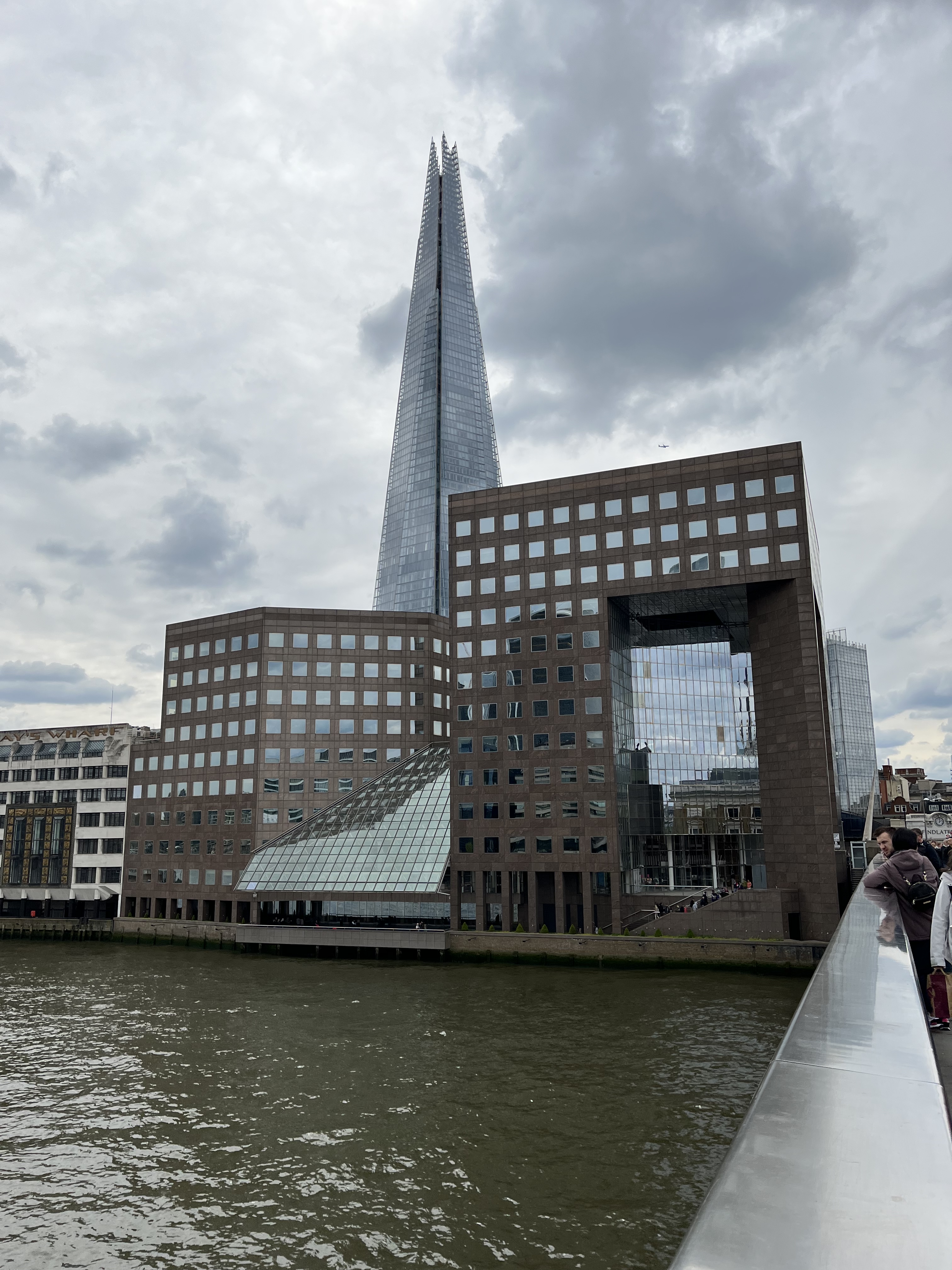
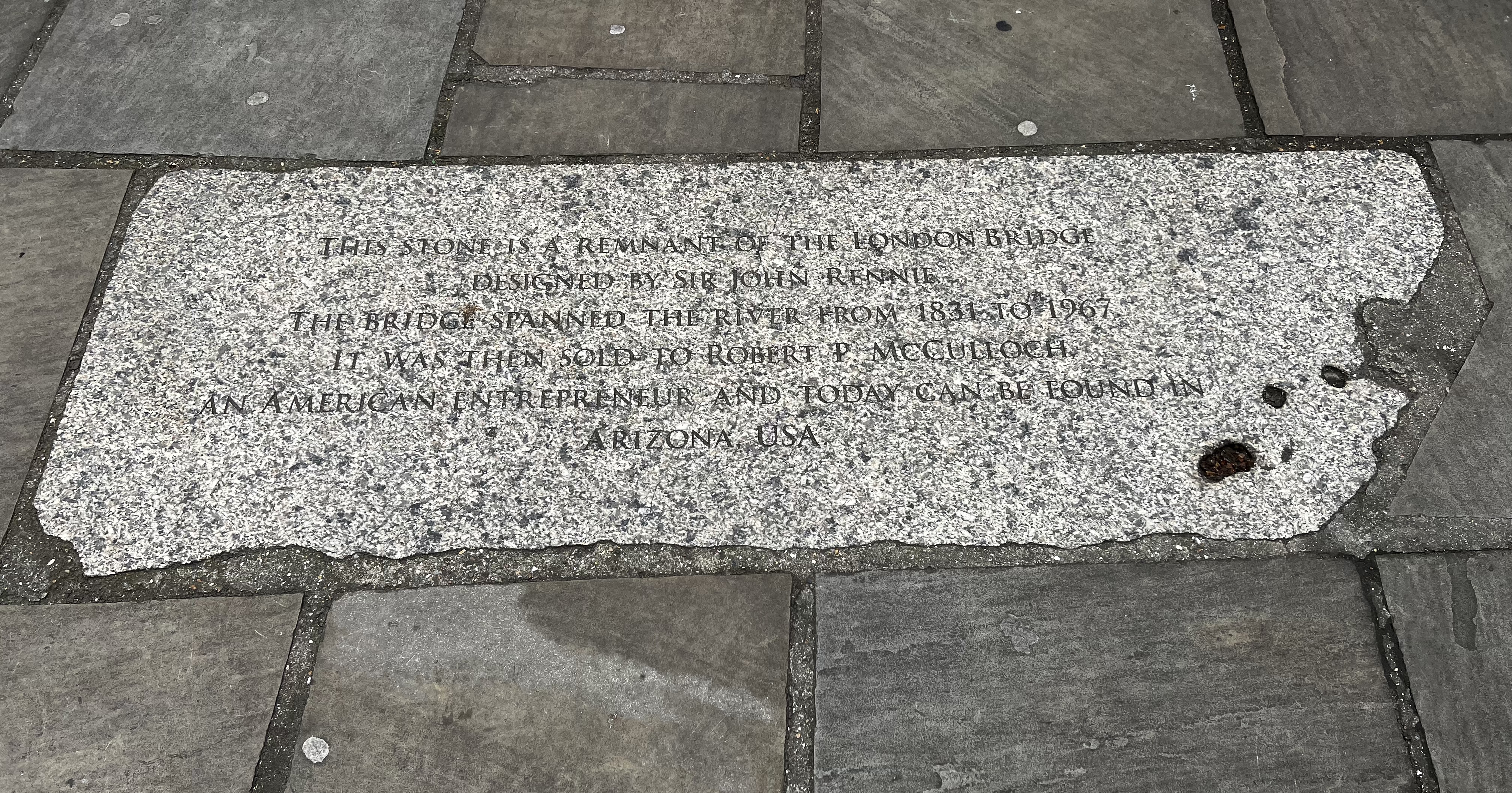
Lowering skies but not a drop today. Good show, we say, “brill, wizard and hunky dory.” We’re off to London Bridge — not the one with towers, but the modern version of the wooden one built by the Romans in 50 AD — replaced a few times, and penultimately sold (every brick) to an American entrepreneur who transported it to Lake Havasu City, AZ. The shard, the tallest UK building, looms over the bridge but we neglect its nonexistent inner charms and descend some steep stairs to Minerva Square, which abuts the river across from the main entrance of Southwark Cathedral where Shakespeare’s bro rang the bells.
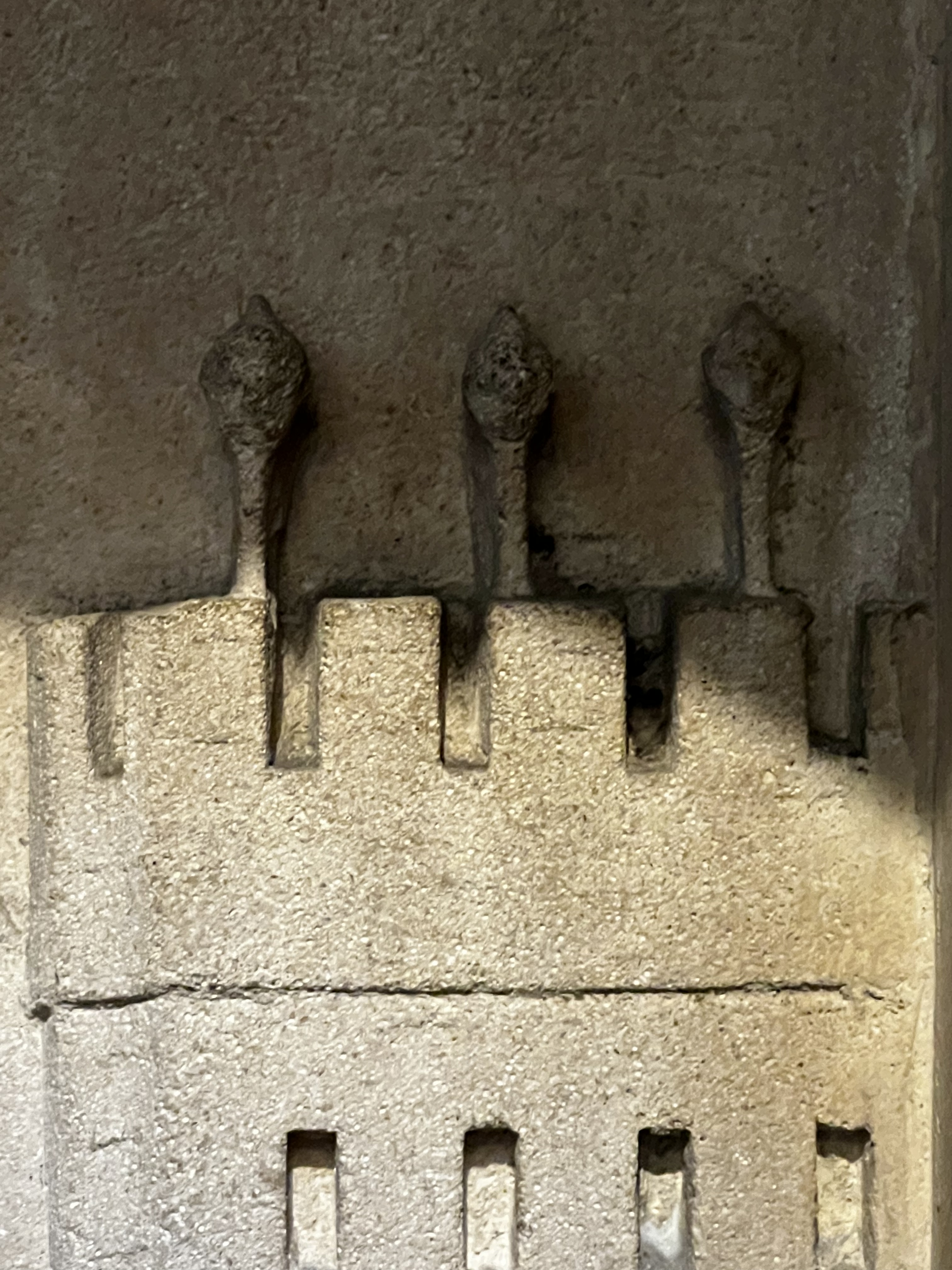
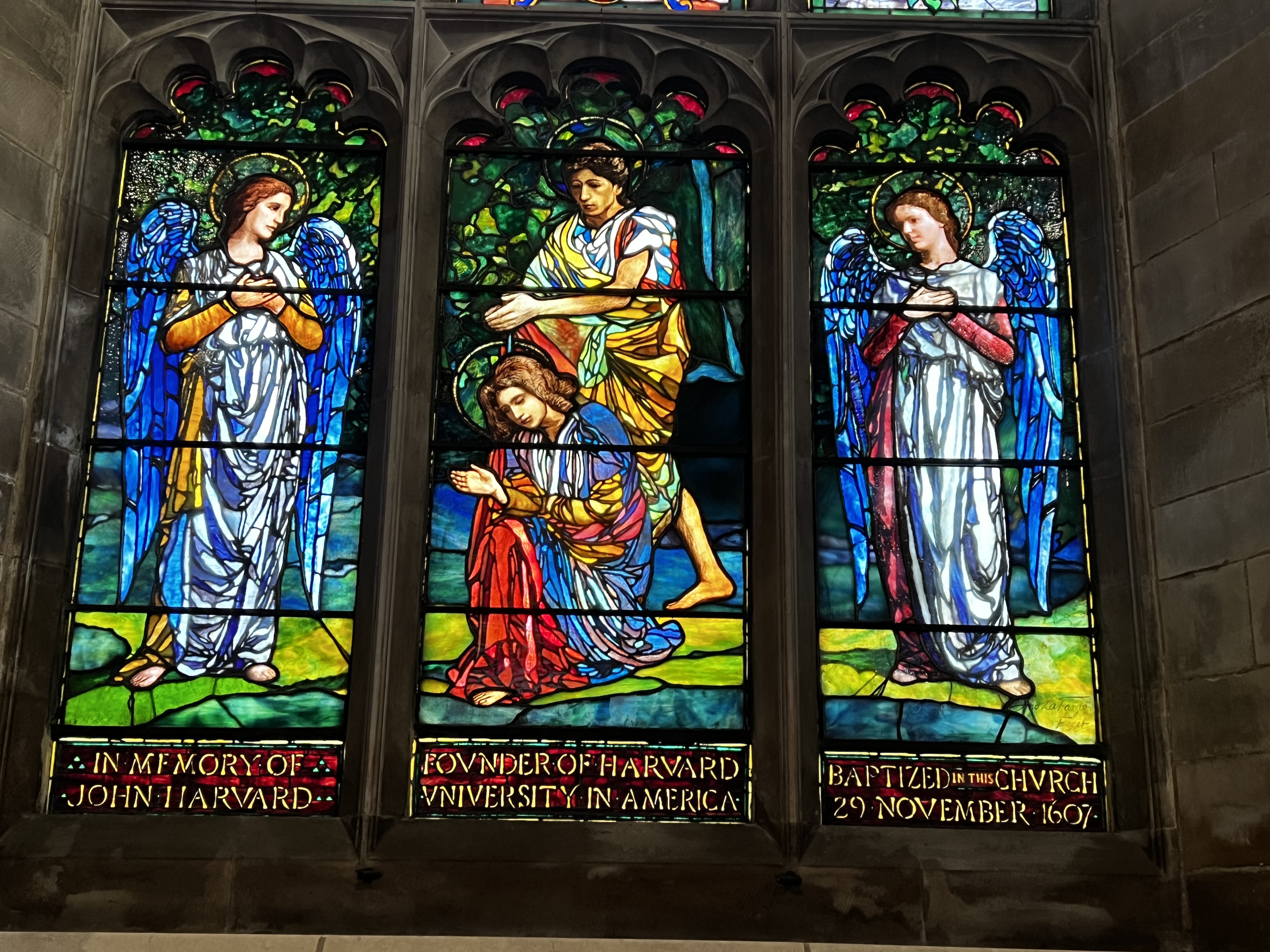
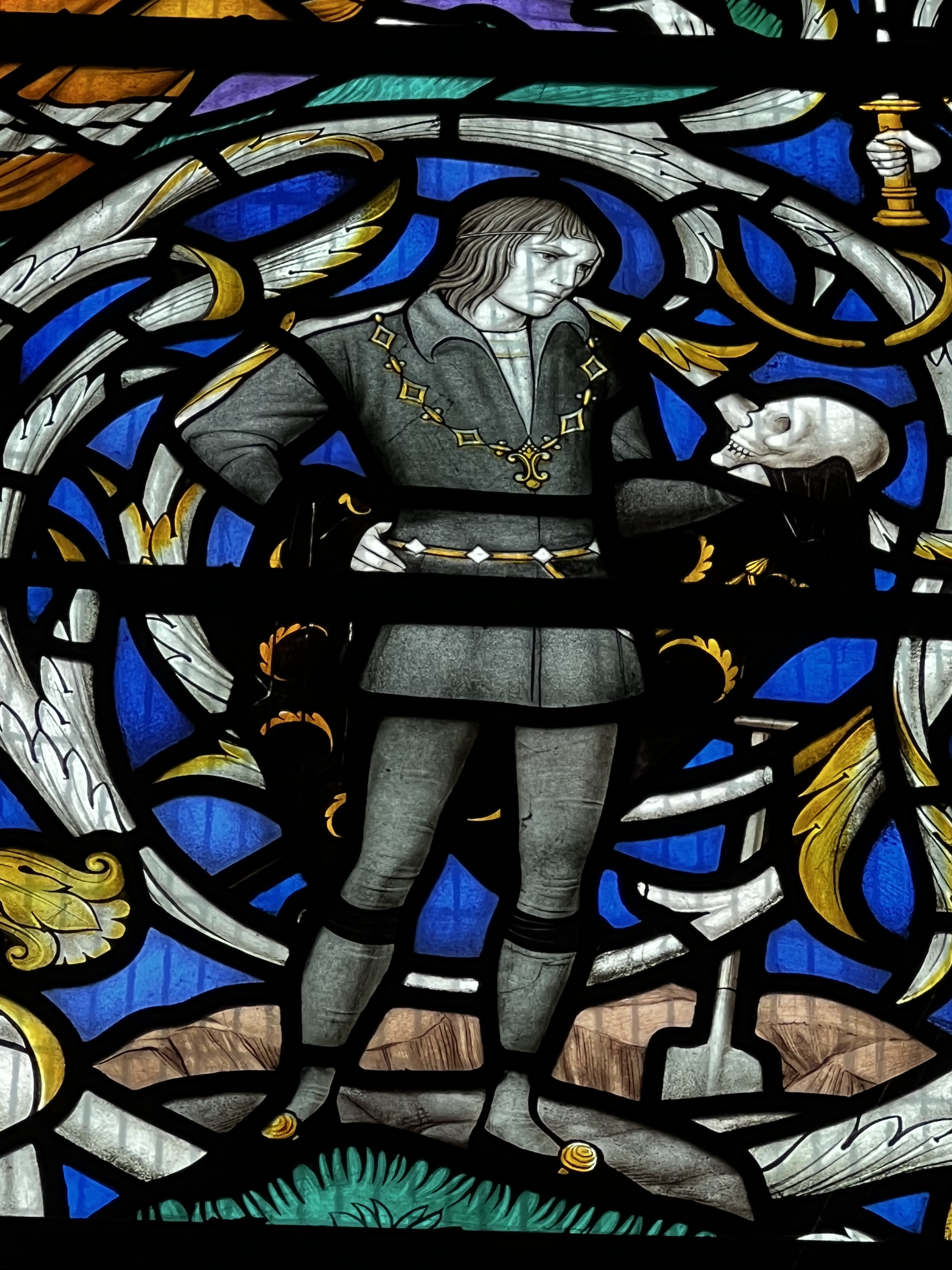
A model of the cathedral where intruders heads were put on pikes (see the pic above from a model) is just up the north nave from a Shakespeare monument beneath stained glass windows depicting some of his characters. He’s diagonally across the transcept from the John Harvard chapel — yup, that one, the inn keeper’s son whose will and library founded the oldest of Boston’s really inexpensive ivied incubators of centuries of both entitled and admirable … in today’s parlance … influencers. But on a few deeper levels, perhaps?
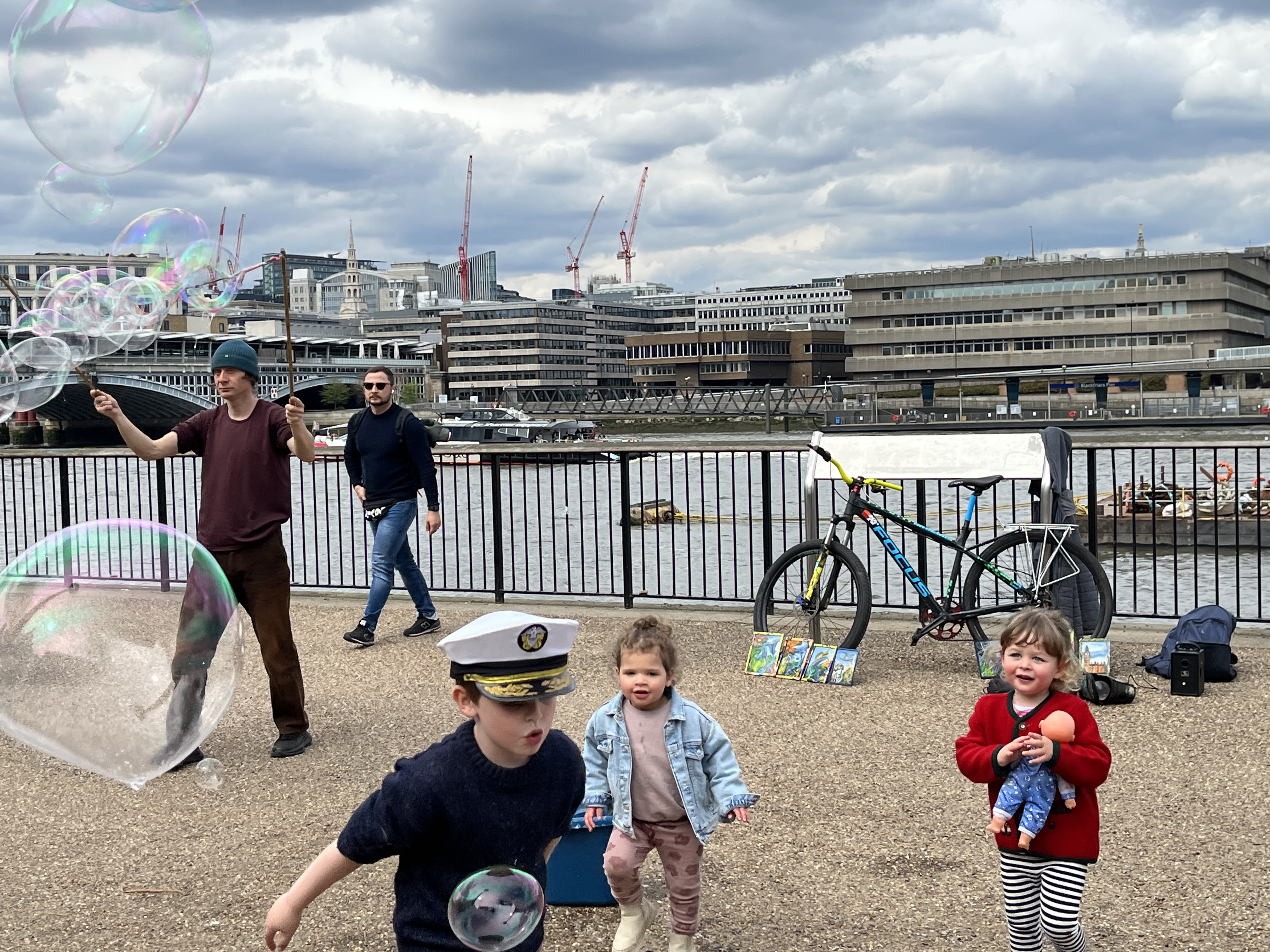
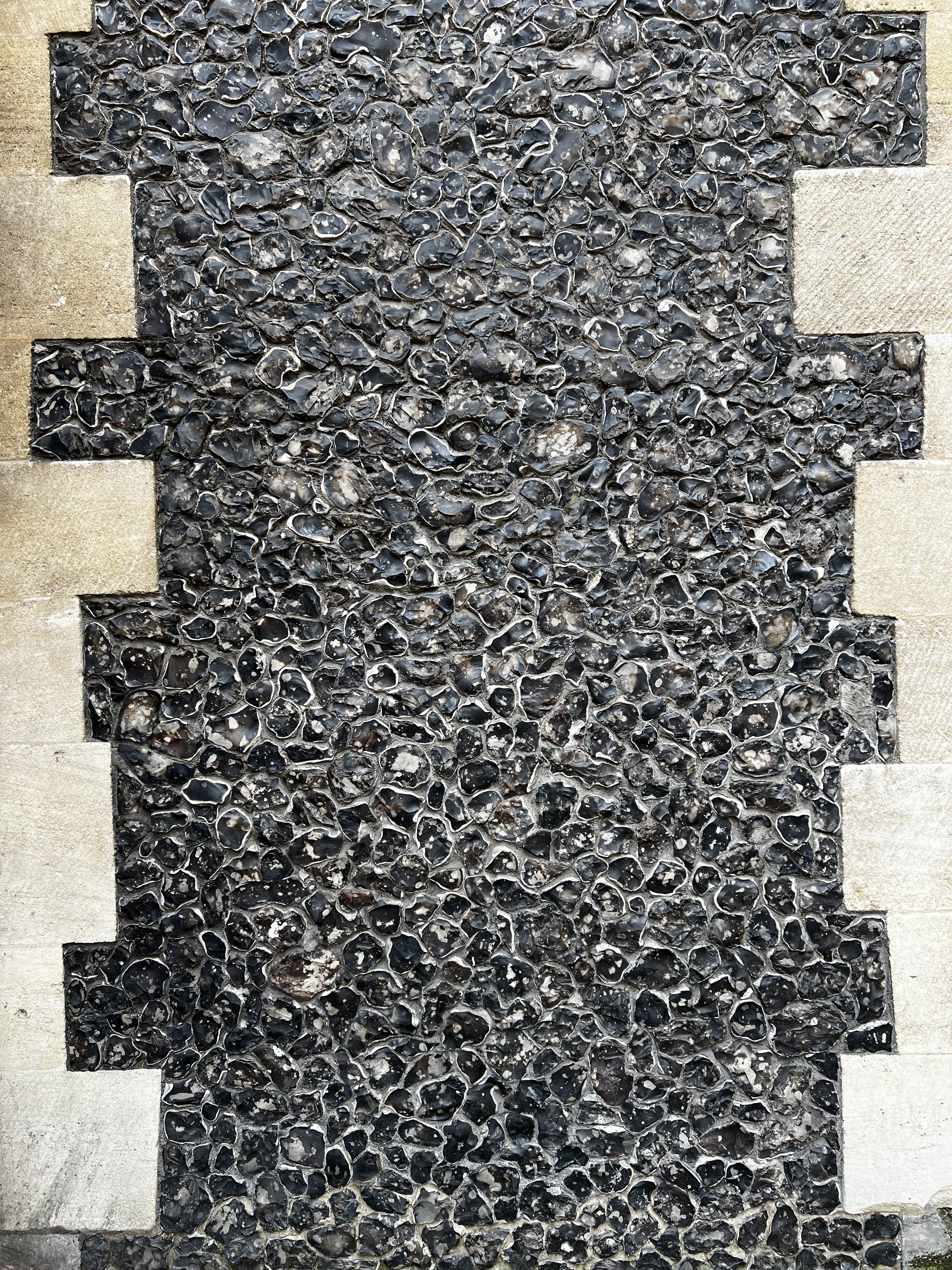
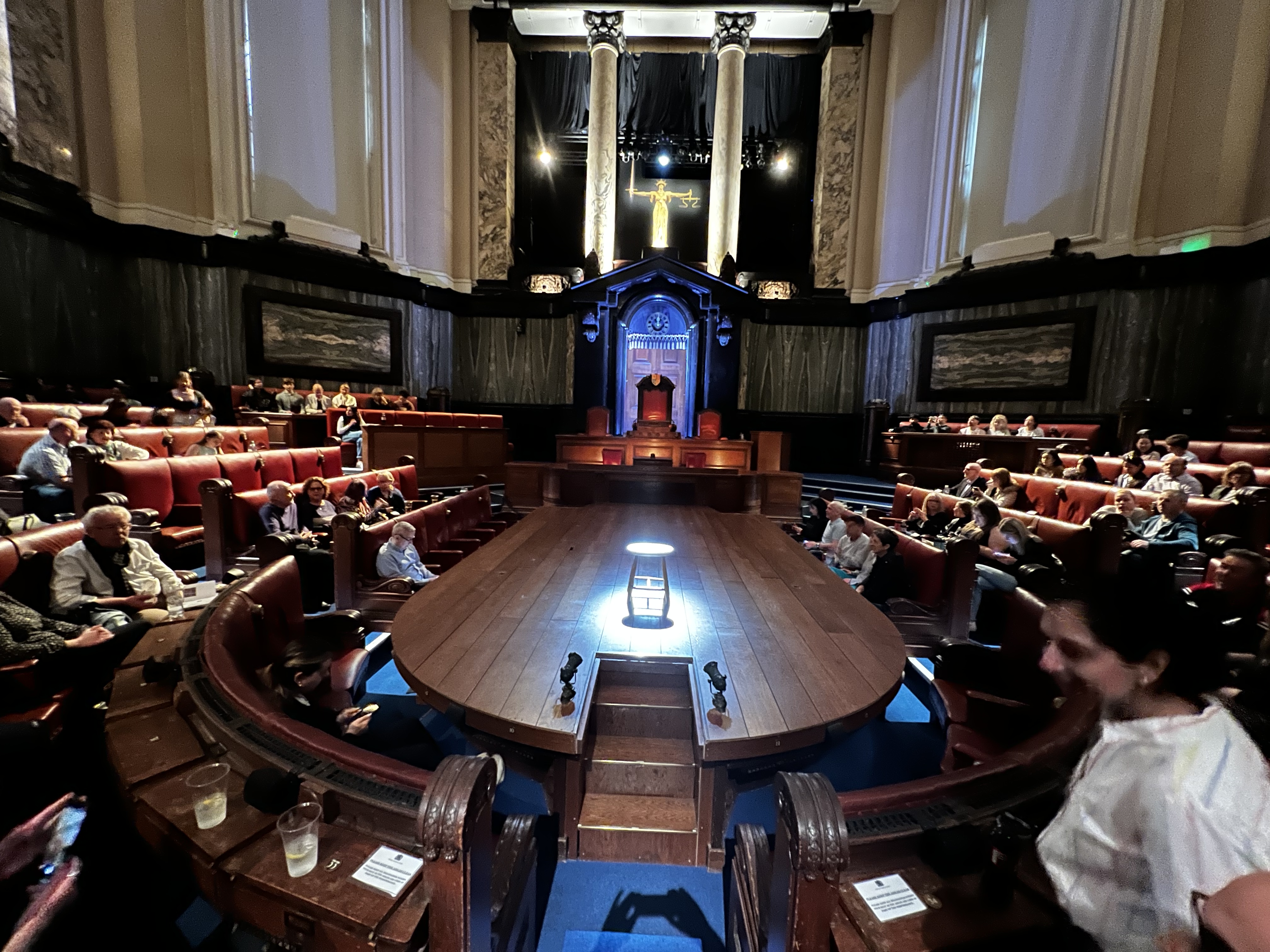
Ok, enough subtle social commentary. Back to the Bankside Walk where, as we stroll out of Southwark Cathedral, we realize its walls are built of flint shards: jet black with grey edges (what the white cliffs of Dover are made of). It was a Sunday-in-the-park kind of stroll, just a fine and fancy ramble through mummers and bubble balloon artists and buskers, past the reconstructed Globe Theater and the bustling Borough Market and the ruins of Winchester Palace, and a spot that describes the 1666 fire that destroyed 80 percent of the Thames River’s north bank homes while south bank spectators grew so depressed they retired to the pubs along the river to drink away their sorrows. We passed the New Tate and the London Eye and got to London’s old County Hall to see the 3:00 matinee of Agatha Cristie’s Witness for the Prosecution.
We leave the performance with just enough time to grab a bus waaaaayyyyyy across town for our Sunday roast dinner at our favorite pub: The Hunter’s Moon. But at the bus stop outside the theater, David realizes that he’s lost his Oyster card (plastic transport card for rail and bus, prepaid, good for a week), his hotel room key and, more importantly, his glasses.
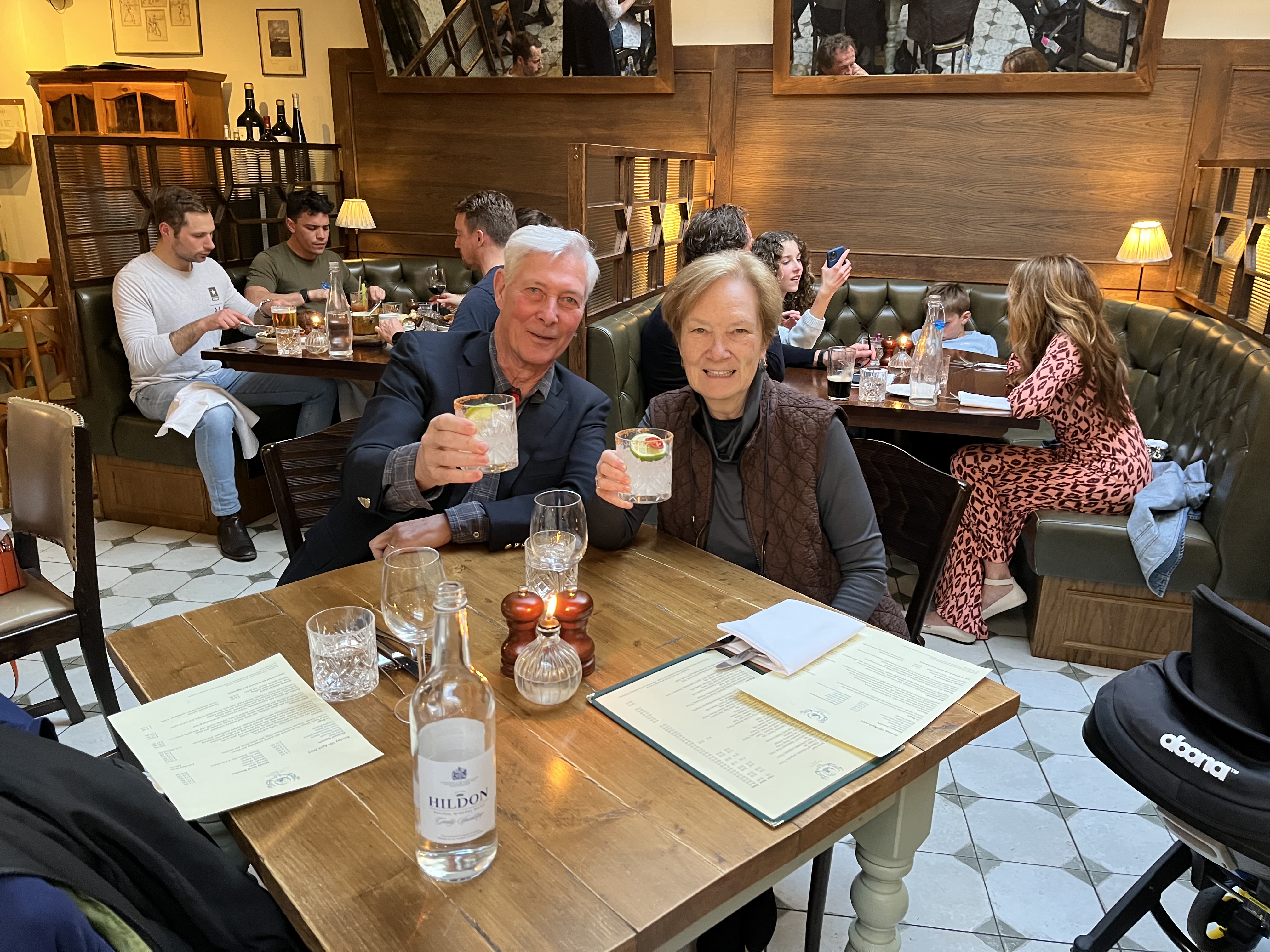
We rush back to the theater, now closed, and accost some understudy actors celebrating their debuts in the performance we just saw. One of them leaves his champers and finds the glasses and hotel key in the office but no Oyster card. We dash back to the bus stop, wait interminable, agonizing minutes for a bus whose driver forgets his way, simply tap on with a credit card — because public transportation in London works the way public transportation should all over the world … easily — and get to the Hunter’s Moon where Harry, the manager, remembers us from last October and gives us a bottle of Piper Heidsieck on the house to smooth us into a nice mellow. Dinner is superb.
And sleep the sleep of the … tired and inebriated.
 Two Tramps